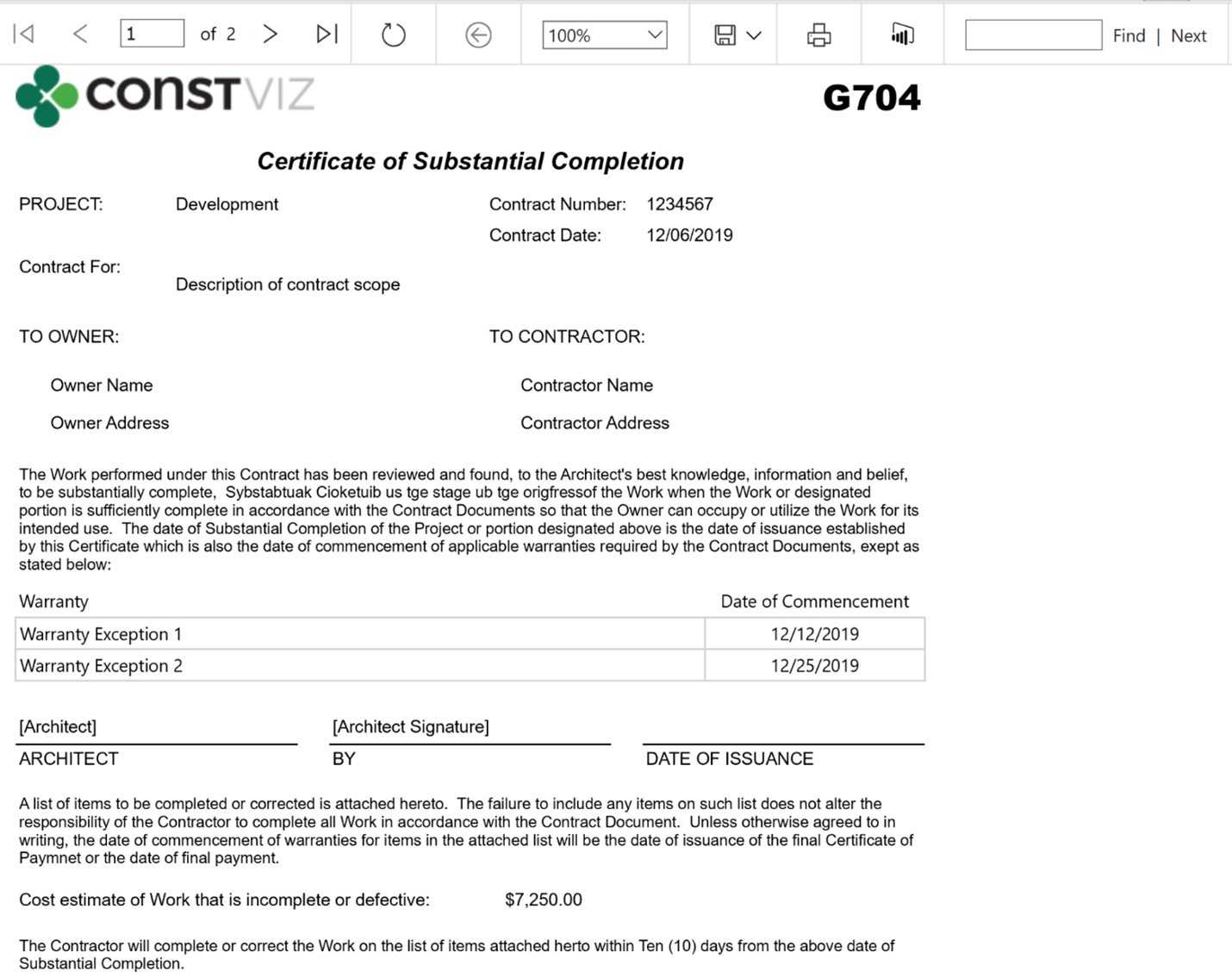
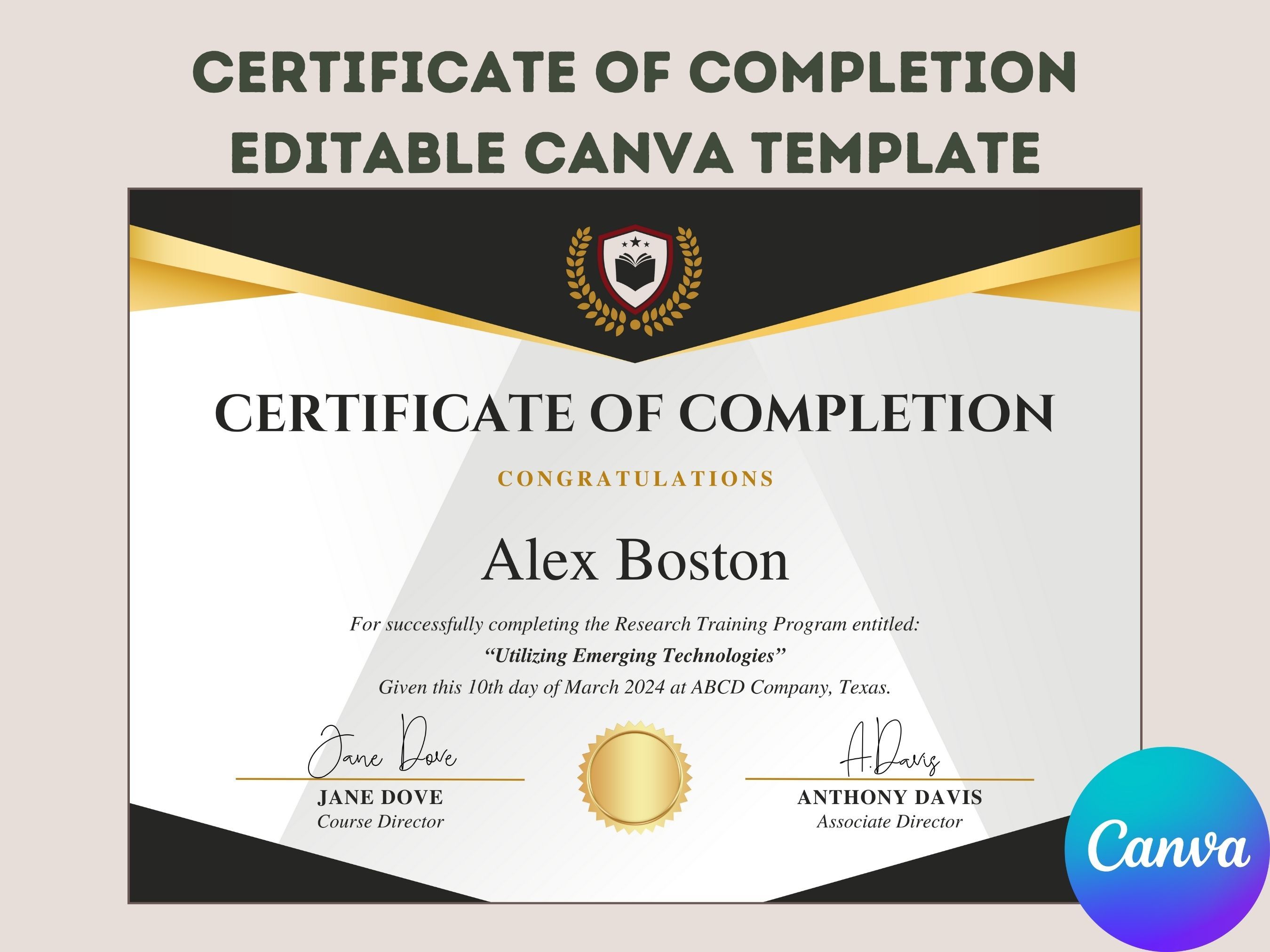
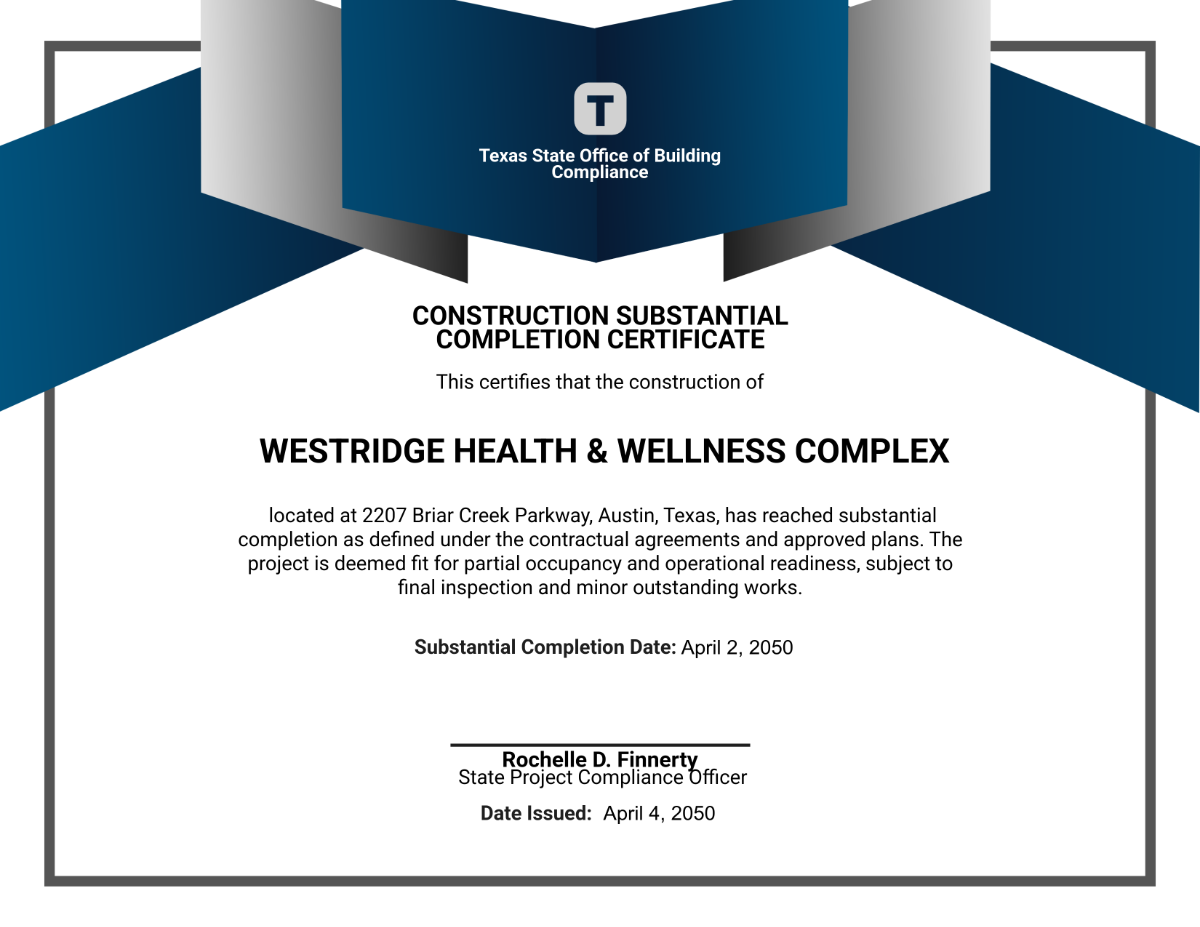
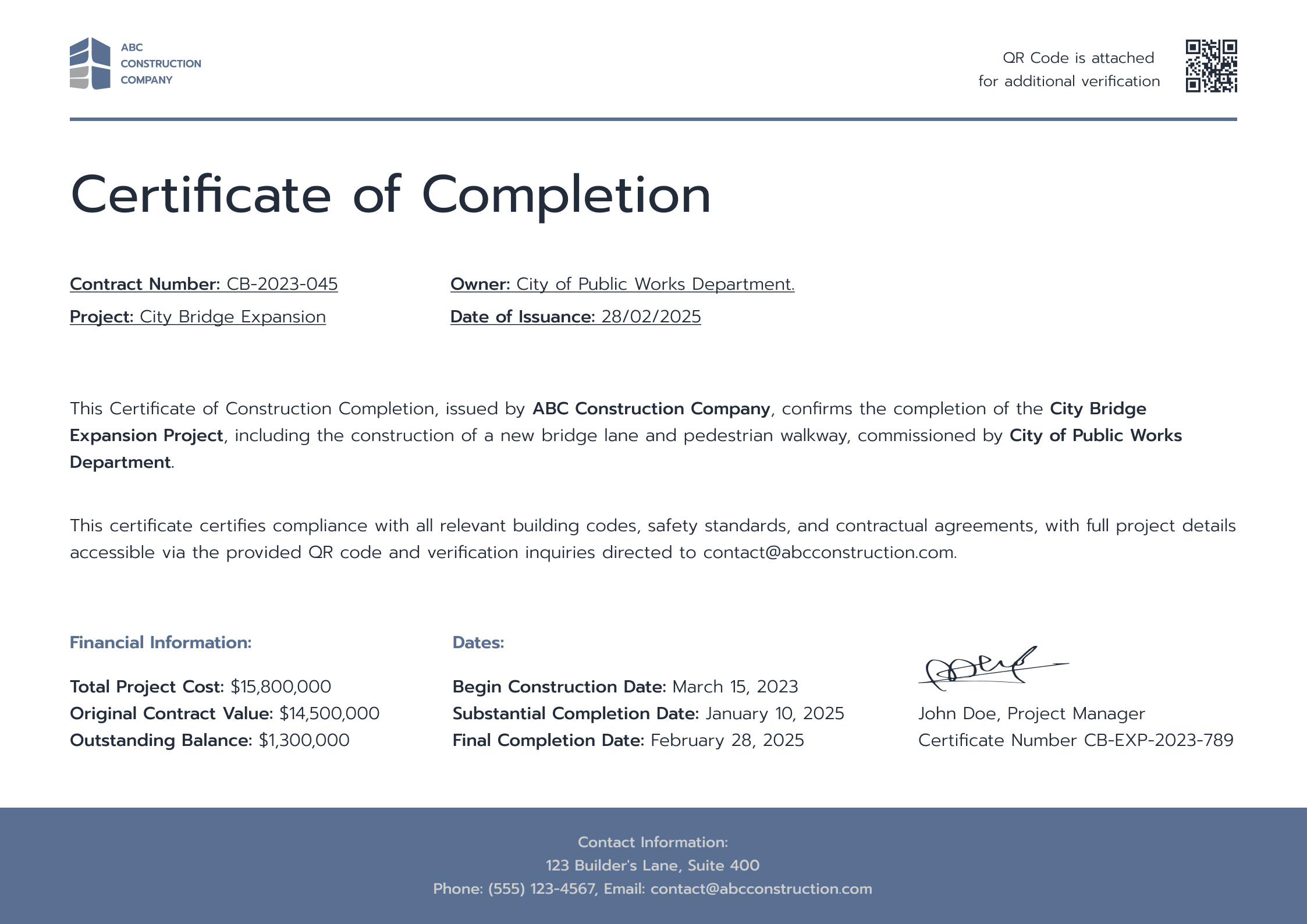
Certificate Of Substantial Completion Template is the pivotal document that signals the transition from construction to occupancy. It certifies that a building project has reached a stage where it can function for its intended purpose, even though minor punch‑list items may still remain. By understanding, customizing, and deploying this template correctly, project owners, architects, and contractors can streamline approvals, secure financing, and avoid costly disputes.
What Is a Certificate Of Substantial Completion?

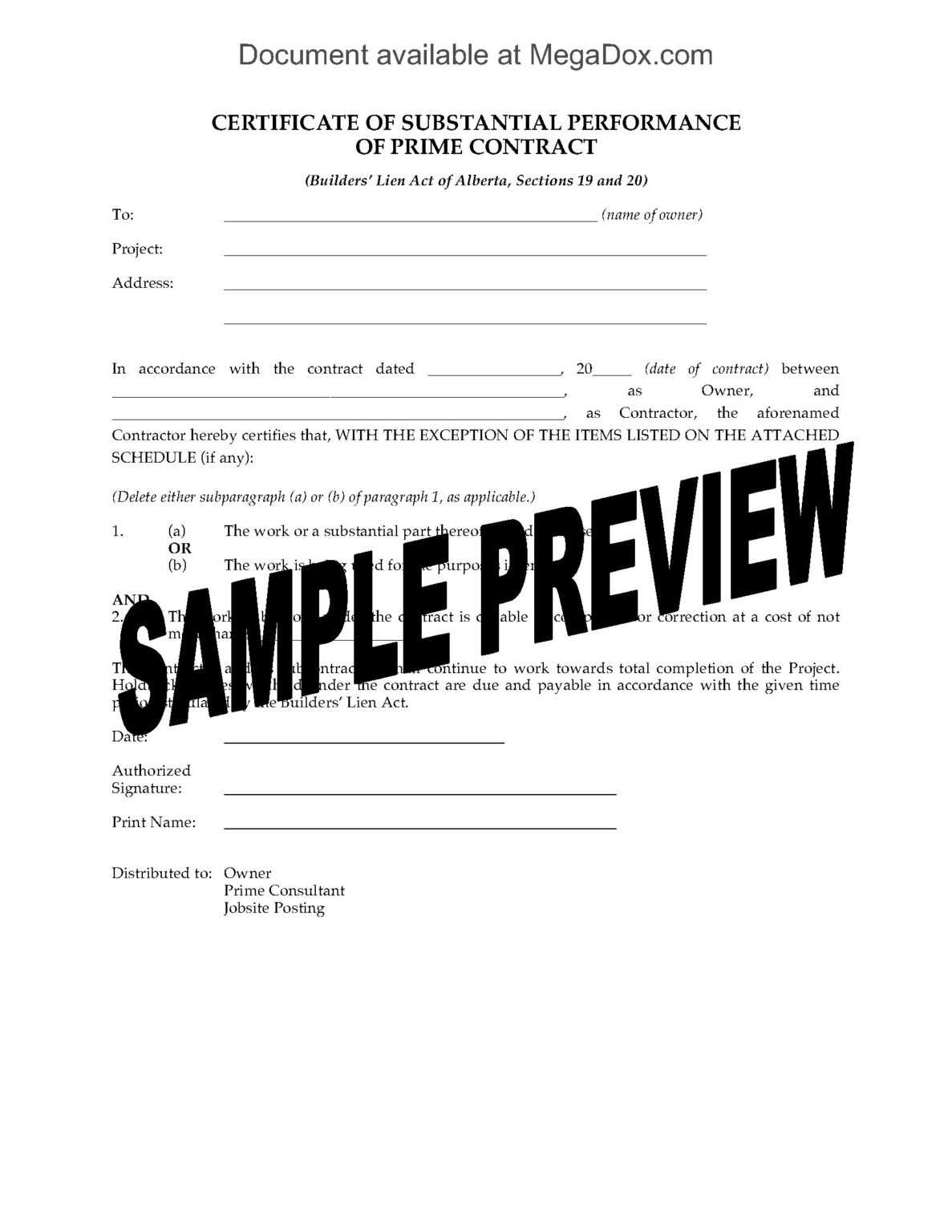
The Certificate of Substantial Completion is issued when a construction project has progressed beyond the design phase and is largely finished, except for small finishing touches. Unlike a final completion certificate, it does not guarantee a pristine finish; it merely confirms that the core structure, systems, and functional components are operational and compliant with the contract and regulatory standards.
Typical Timeline of Substantial Completion
1. Design Freeze – All plans are finalized and approved.
2. Construction Milestones – Walls, roofs, HVAC, and electrical are installed.
3. Inspection and Testing – Systems are commissioned and meet code requirements.
4. Issuance of Certificate – The project manager signs off, and the document is distributed to stakeholders.
Why It Matters in Construction Projects
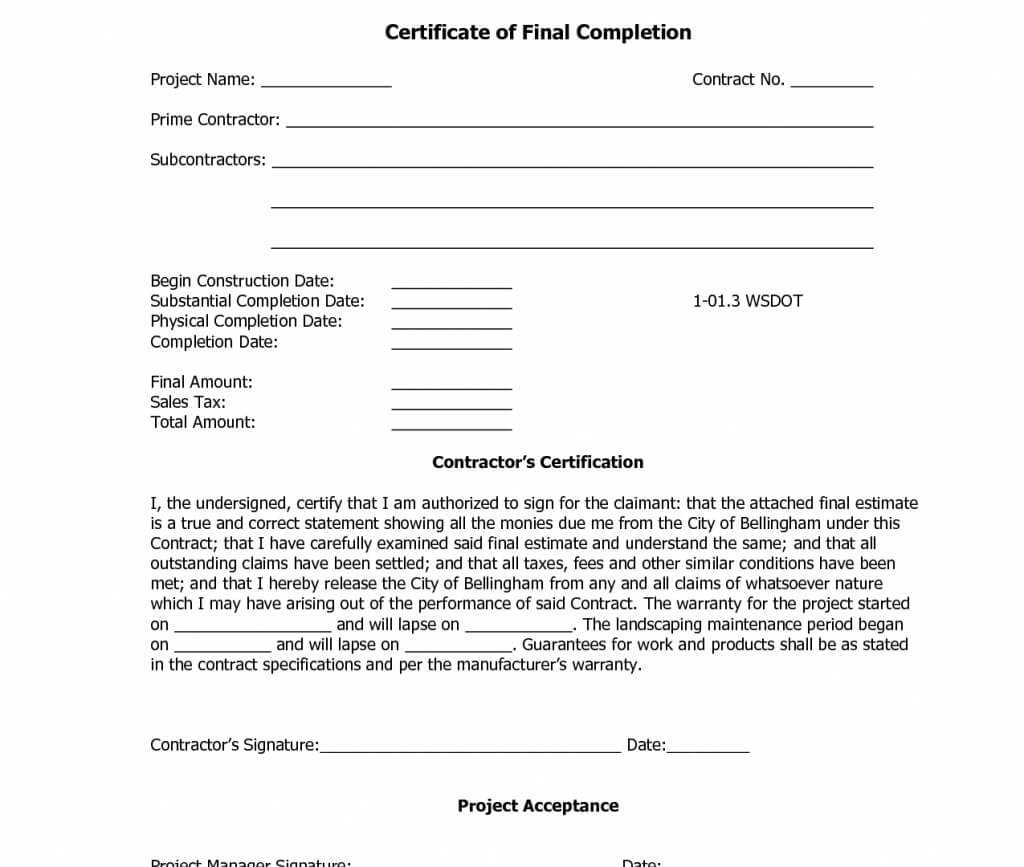
A well‑crafted Certificate Of Substantial Completion serves multiple critical functions:
- Financial Flow – Allows the owner to begin using the space and often triggers final payments to contractors.
- Legal Protection – Clarifies responsibilities for warranties, insurance, and post‑completion work.
- Regulatory Compliance – Demonstrates that building permits and inspections have been satisfied.
- Stakeholder Confidence – Gives investors, lenders, and tenants assurance that the project is on schedule.
Key Elements to Include in Your Template
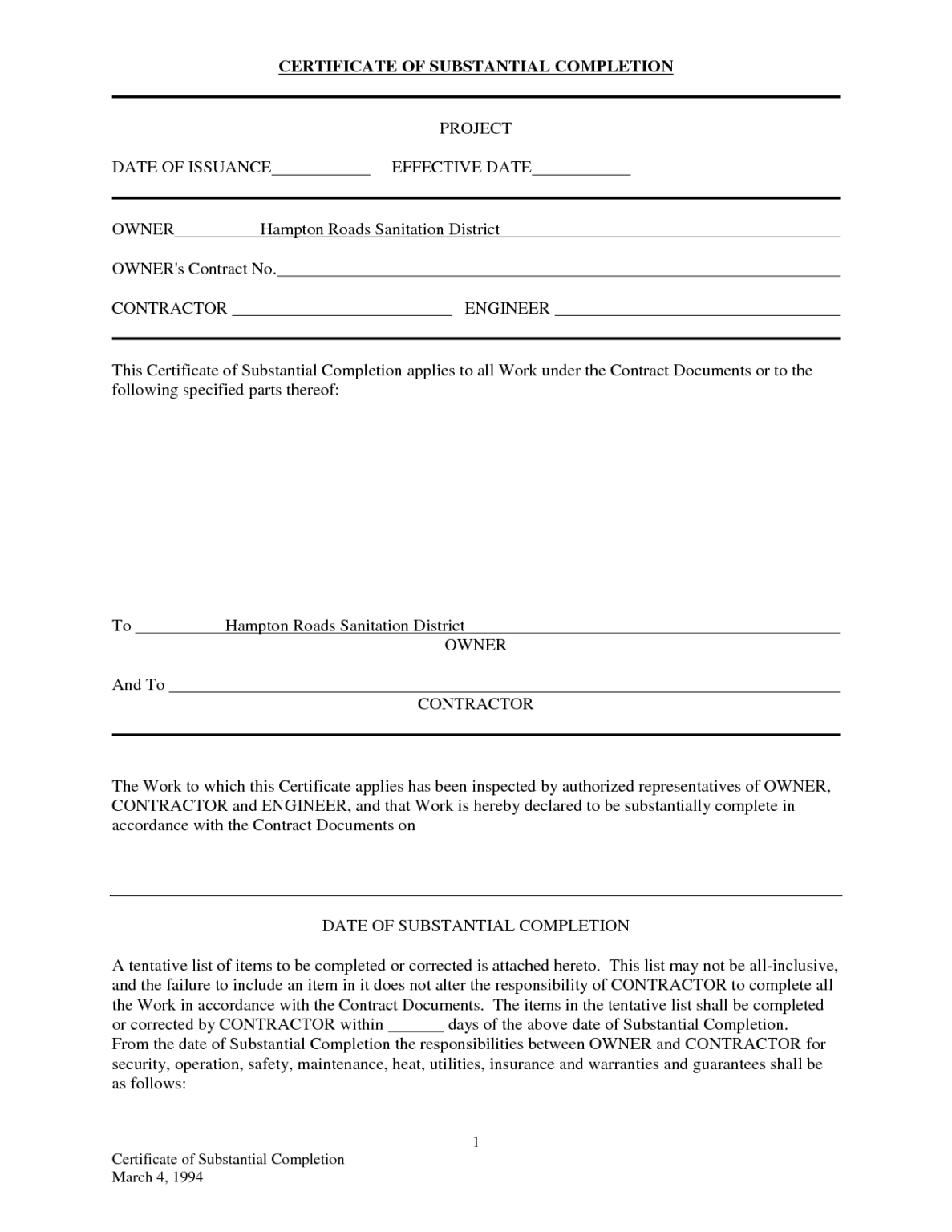
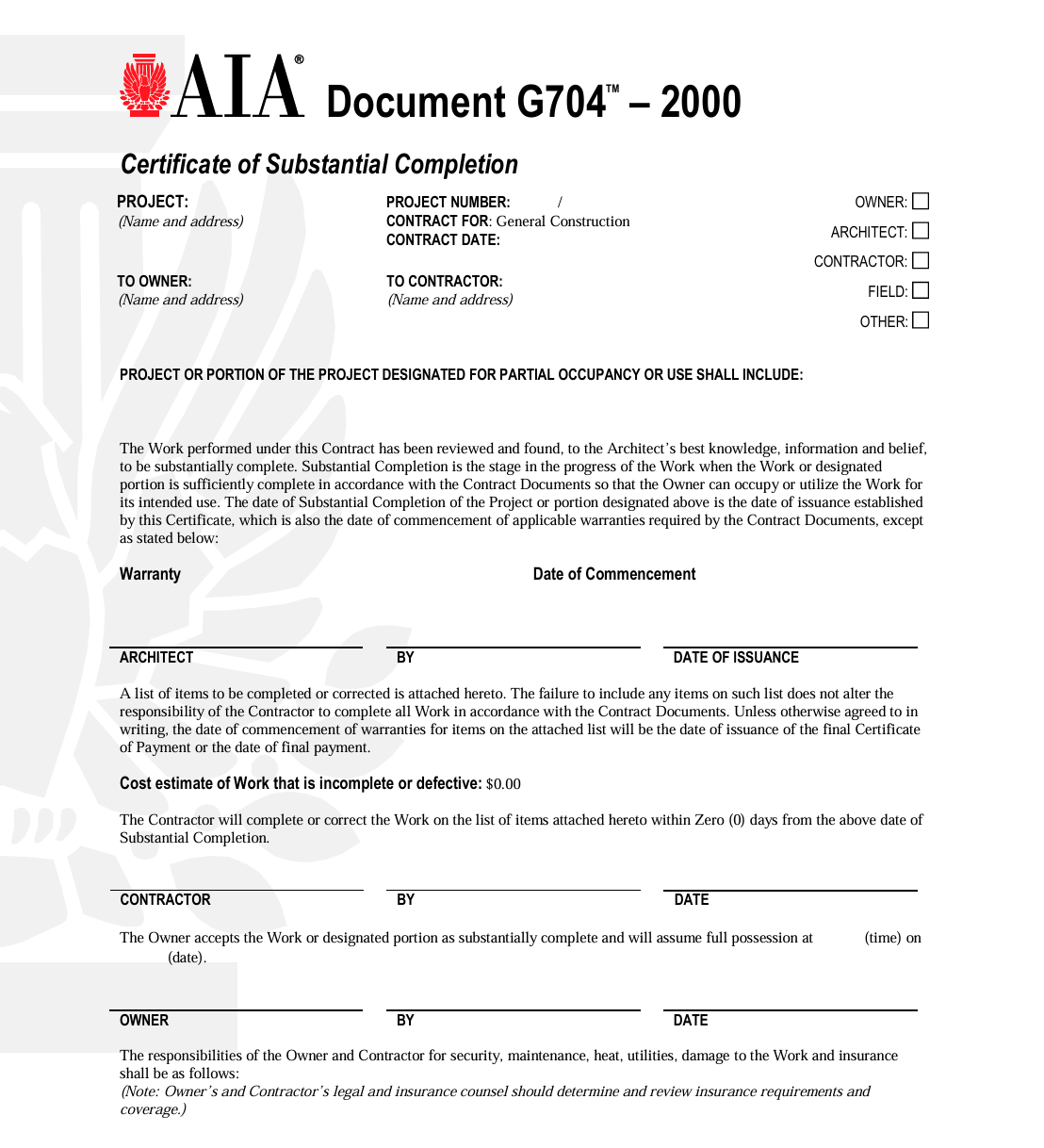
To avoid ambiguity and legal headaches, a robust template must contain the following sections:
Project Identification
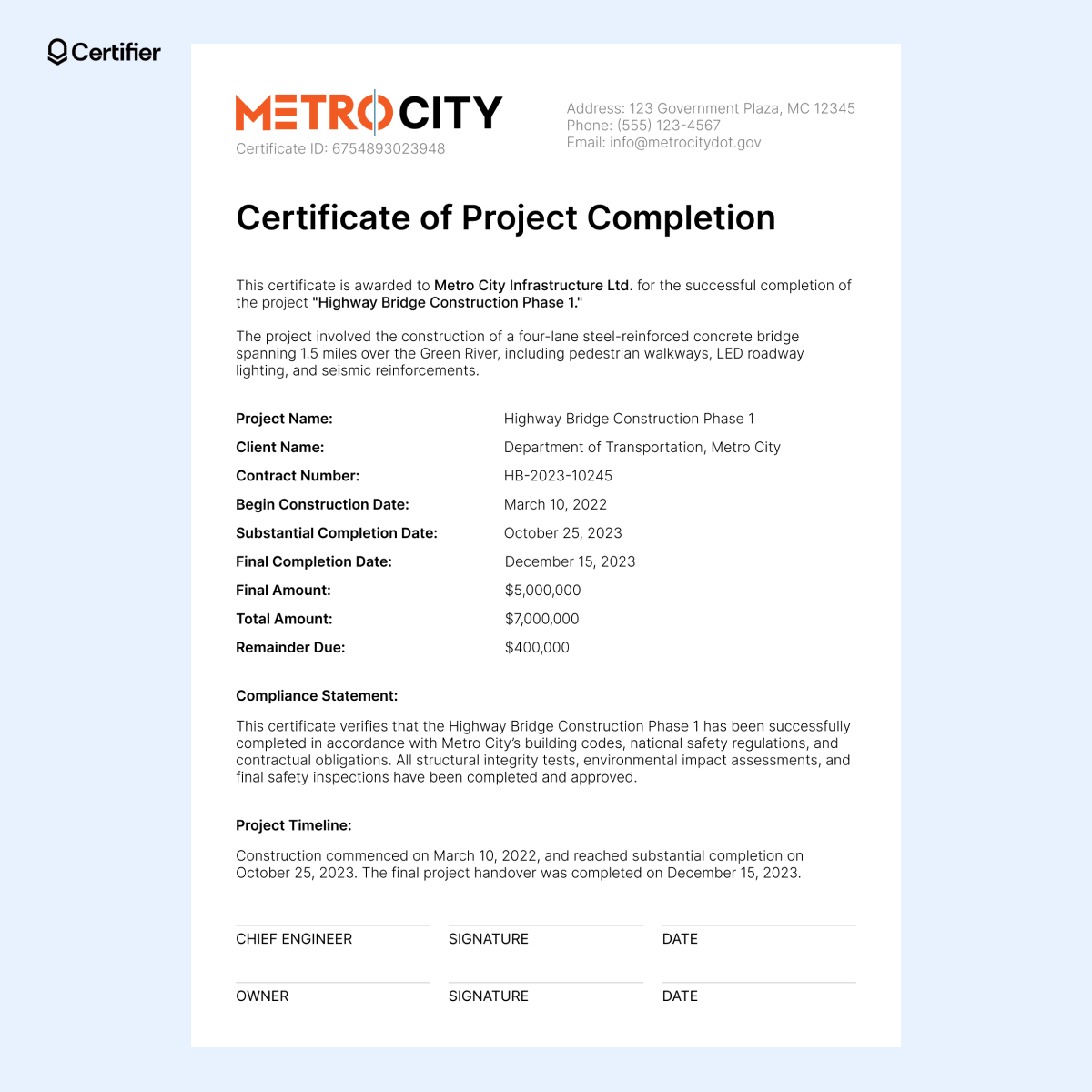
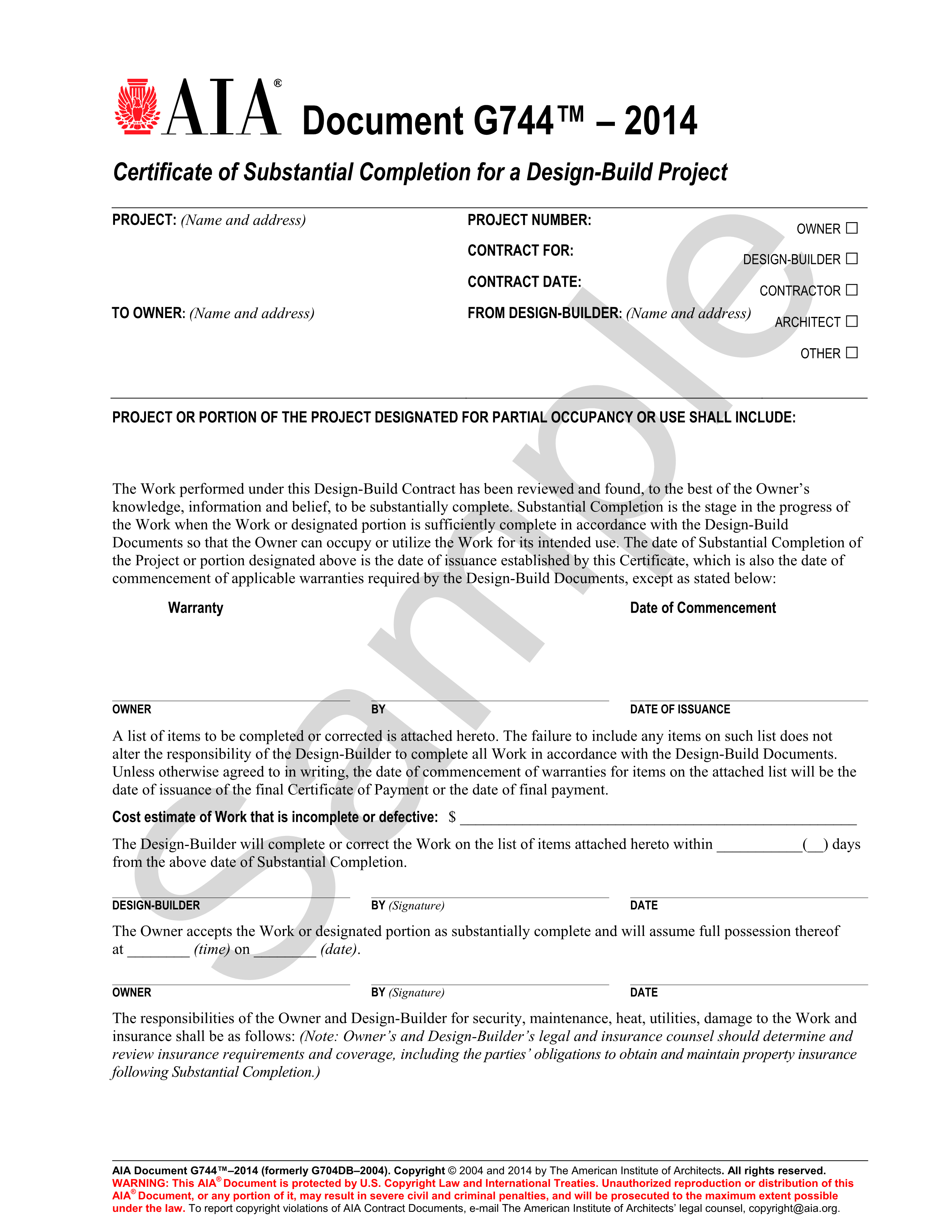
Include project name, address, contract number, and the parties involved. A clear header ensures that the certificate is tied to a specific contract.
Date of Substantial Completion
Specify the exact date when the project meets substantial completion criteria. This date often determines warranty periods and insurance coverage.
Scope of Work Completed
- Structural Work – Foundations, framing, and roofing.
- MEP Systems – Mechanical, electrical, plumbing, and fire protection.
- Exterior Finishes – Facades, windows, and roofing membranes.
- Interior Work – Drywall, flooring, painting, and fixtures.
Punch‑List Items
List any outstanding tasks, assign responsible parties, and include estimated completion dates. This keeps the project on track and prevents disputes over minor defects.
Warranty Information
Detail the duration and scope of warranties for both the contractor and the supplier. This protects the owner against future defects.
Signatures and Witnesses
Require signatures from the project manager, architect, and owner. If applicable, include a witness or notary to authenticate the document.
Compliance Statements
Affirm that all local building codes, environmental regulations, and safety standards have been met.
How to Customize the Template for Your Project
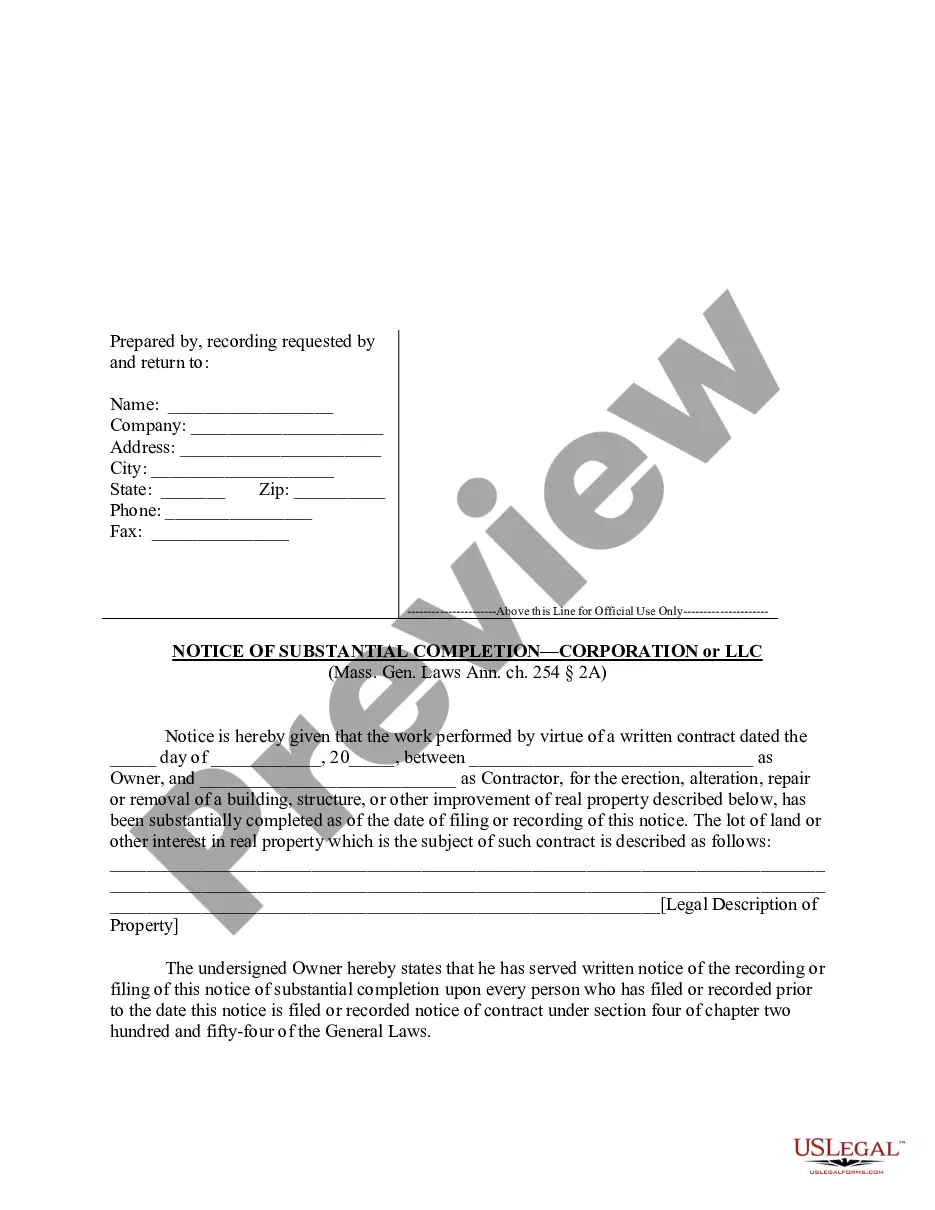
Every construction project is unique, so tailoring the template ensures relevance and clarity.
Adjusting for Project Size
Large commercial developments may require detailed sub‑sections for each building system. Small residential projects can condense these sections into a single overview.
Incorporating Industry‑Specific Standards
For healthcare facilities, add infection control compliance. For educational institutions, include fire alarm and evacuation system verifications.
Digital vs. Paper Formats
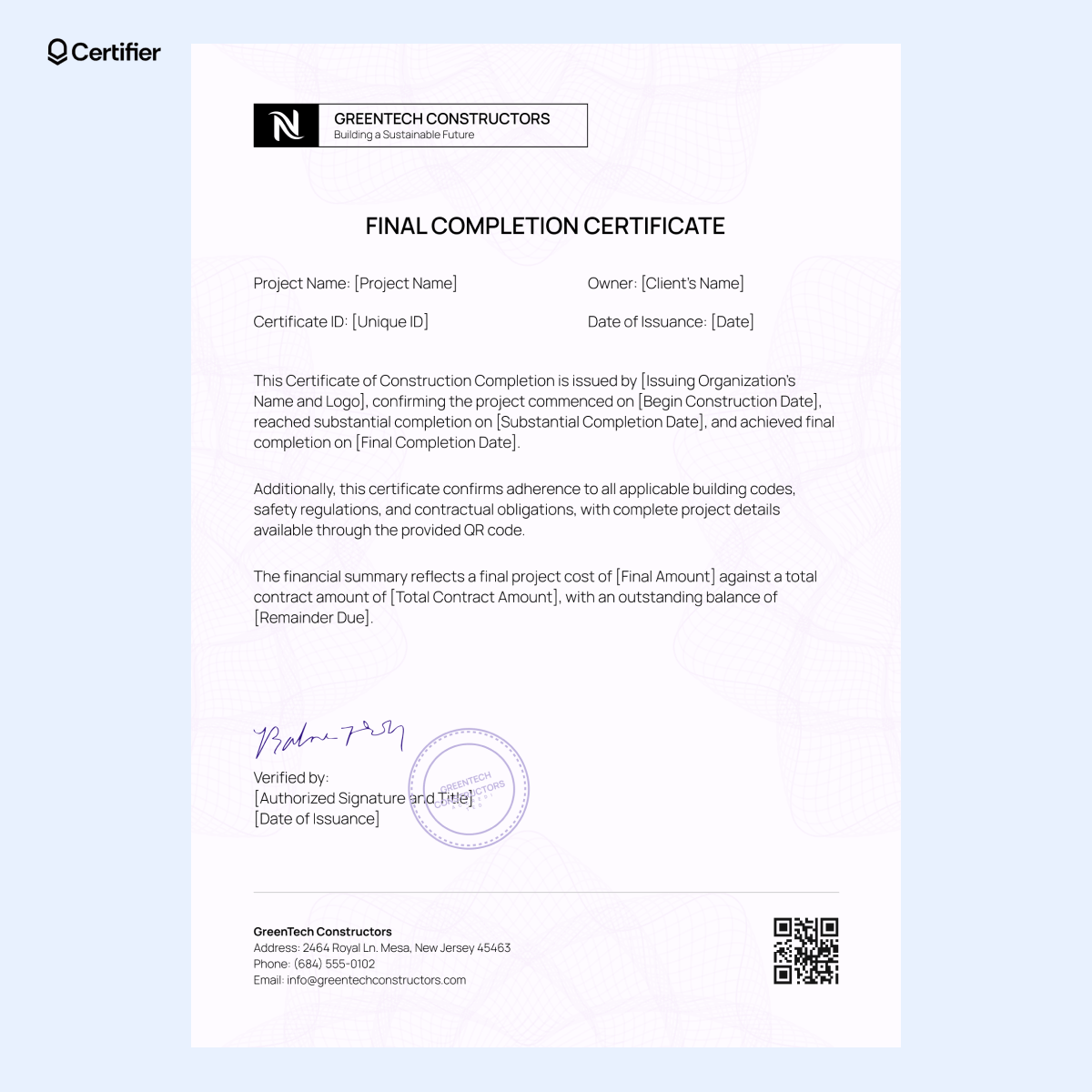
While traditional paper certificates remain common, digital signatures and cloud‑based document storage are increasingly accepted. Integrate QR codes linking to project management dashboards for instant access to punch‑list updates.
Common Mistakes to Avoid

Even seasoned professionals can slip into pitfalls that jeopardize the project’s legal standing.
Inconsistent Definitions of Substantial Completion
Some contracts equate it with 100% completion; others consider functional readiness. Clarify the definition early in the contract to prevent confusion.
Omitting Punch‑List Details
A vague punch‑list can lead to endless back‑and‑forth. List each item with responsible parties and target dates.
Neglecting to Update the Certificate
After major changes—such as scope additions or design revisions—issue an amended certificate to reflect the new status.
Failing to Secure All Signatures
A certificate without the owner’s signature may be invalid for certain insurance or financing purposes.
Integrating Digital Tools and Automation
Leveraging technology can streamline certificate creation and distribution.
Building Information Modeling (BIM)
Export data directly from BIM to populate the scope of work sections automatically.
Project Management Platforms
Integrate the template with platforms like Procore or Buildertrend. This allows automatic updates of punch‑list status and real‑time collaboration.
Electronic Signature Solutions
Tools such as DocuSign or Adobe Sign enable instant, legally binding signatures from remote stakeholders.
Version Control
Maintain a single source of truth for the certificate. Use cloud storage with version history to avoid duplicate or outdated documents.
Real‑World Examples and Case Studies
Understanding how others have implemented the template offers valuable insights.
Case Study 1: Skyscraper Residential Tower
By embedding a punch‑list module into the project’s BIM, the contractor reduced final‑phase delays by 20%. The certificate listed 112 punch‑list items, with each assigned to a specific subcontractor. A weekly dashboard showed real‑time progress, leading to a 3‑day early substantial completion.
Case Study 2: Municipal Library Renovation
For a historic renovation, the project manager included a compliance statement that the restoration met the Secretary of the Interior’s standards. The certificate highlighted that the HVAC system met modern energy codes while preserving the building’s façade. The owner secured a tax incentive by proving compliance through the certificate.
Case Study 3: University Science Building
The university required a separate safety audit certificate to accompany the Substantial Completion document. By linking both documents to a single digital portal, the facilities team could monitor compliance and issue joint updates to all stakeholders.
Frequently Asked Questions

What is the difference between Substantial Completion and Final Completion?
Substantial Completion marks functional readiness; Final Completion is after all punch‑list items are finished, and the building is fully usable.
Can a contractor issue the certificate before the owner approves?
No. The certificate must be signed by the owner or their authorized representative to be valid.
Do I need a legal review of the certificate?
While not mandatory, a brief review by counsel ensures that warranties, indemnifications, and liability clauses align with local laws.
What happens if a major defect is found after the certificate is issued?
The contractor remains responsible for defects that appear within the warranty period. The owner should refer to the warranty section of the certificate for remediation steps.
Can I use a generic template for all projects?
Use a generic skeleton, but always customize the scope and compliance sections to reflect the specific project’s requirements.
Conclusion
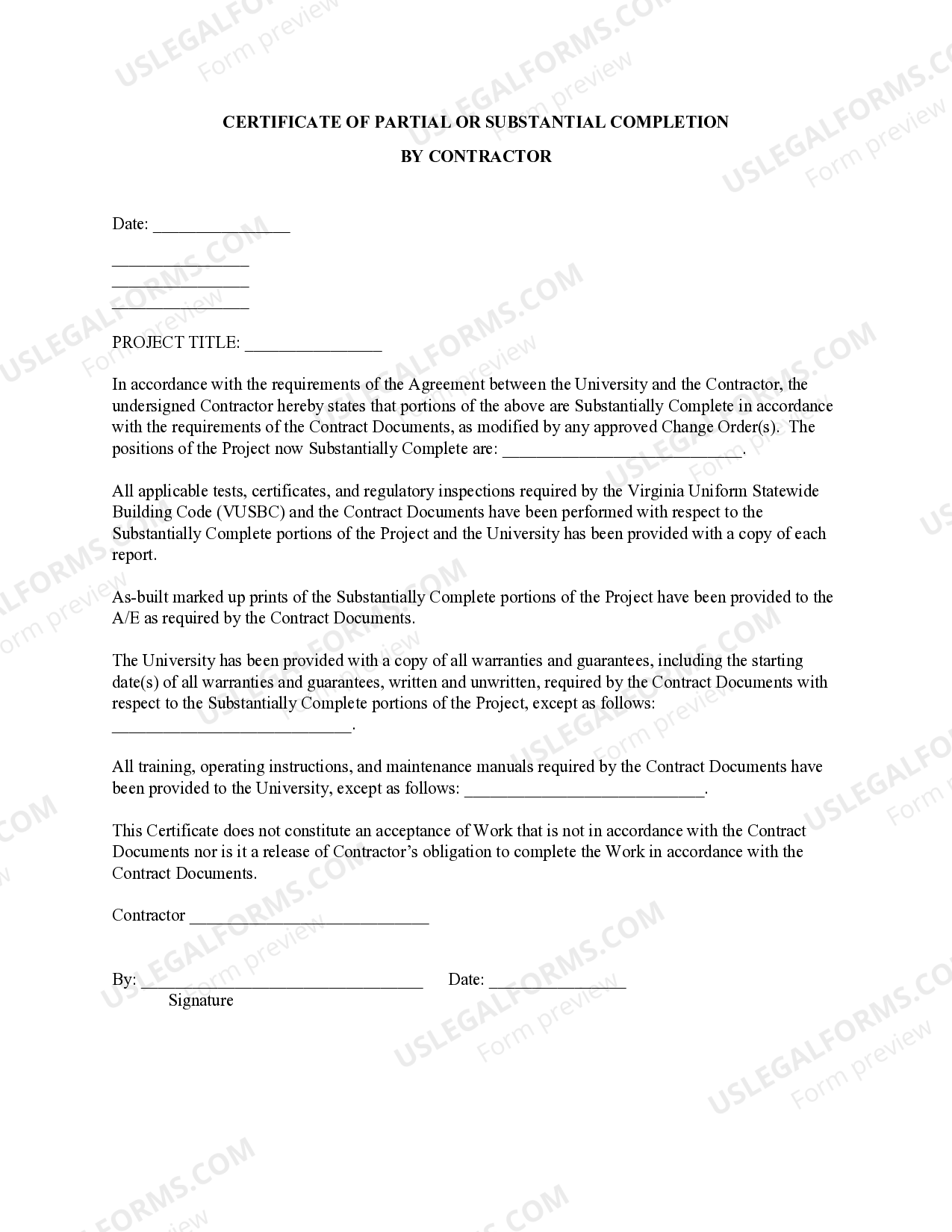
The Certificate Of Substantial Completion Template is more than a formality; it is a cornerstone of project governance, risk management, and financial control. By embedding precise scope details, punch‑list accountability, and warranty assurances into the template—and by leveraging digital tools for collaboration and compliance—you can ensure a smooth transition from construction to occupancy. Remember to keep the document updated, secure all necessary signatures, and tailor it to the unique needs of each project. Doing so not only protects all parties involved but also sets the stage for a successful, long‑lasting building performance.