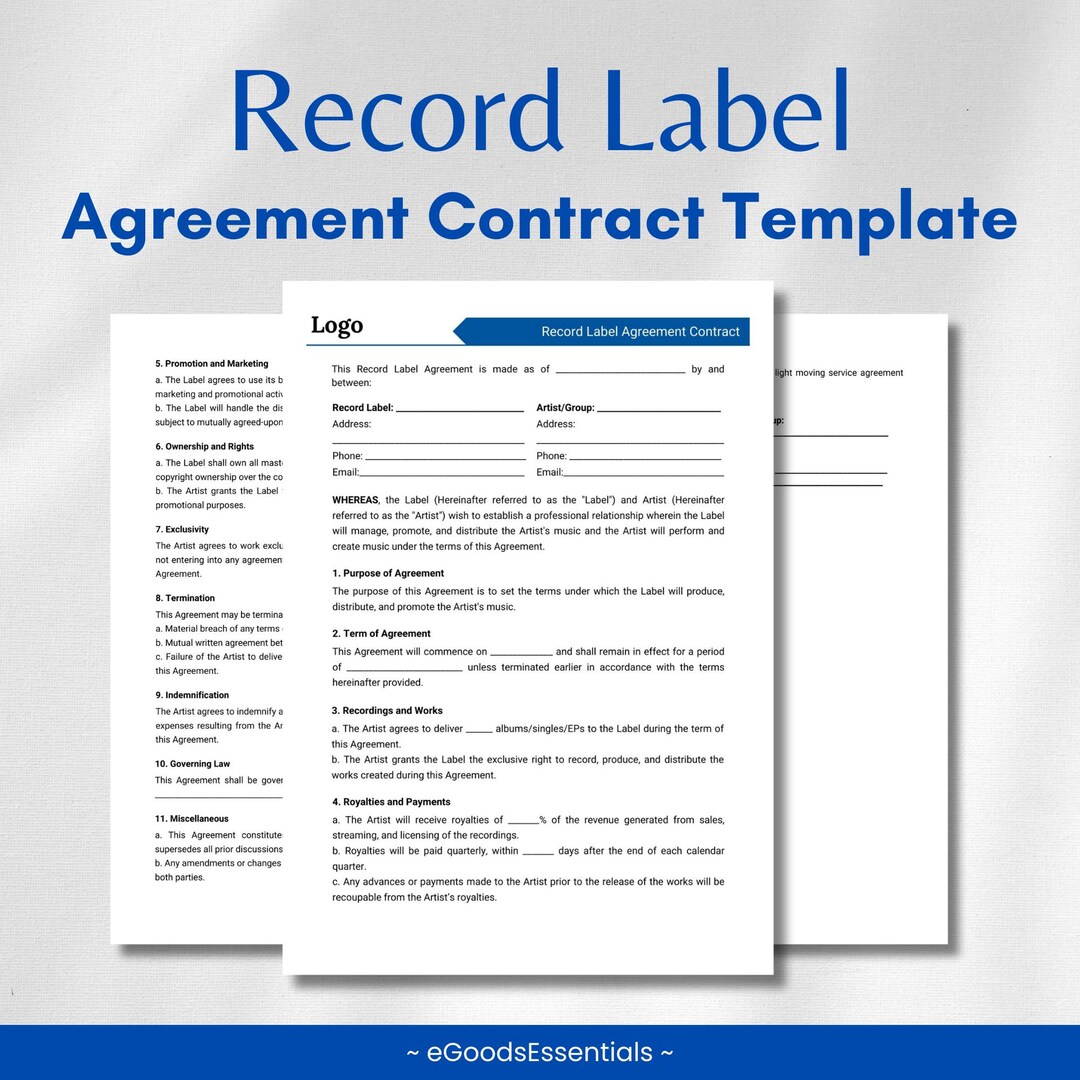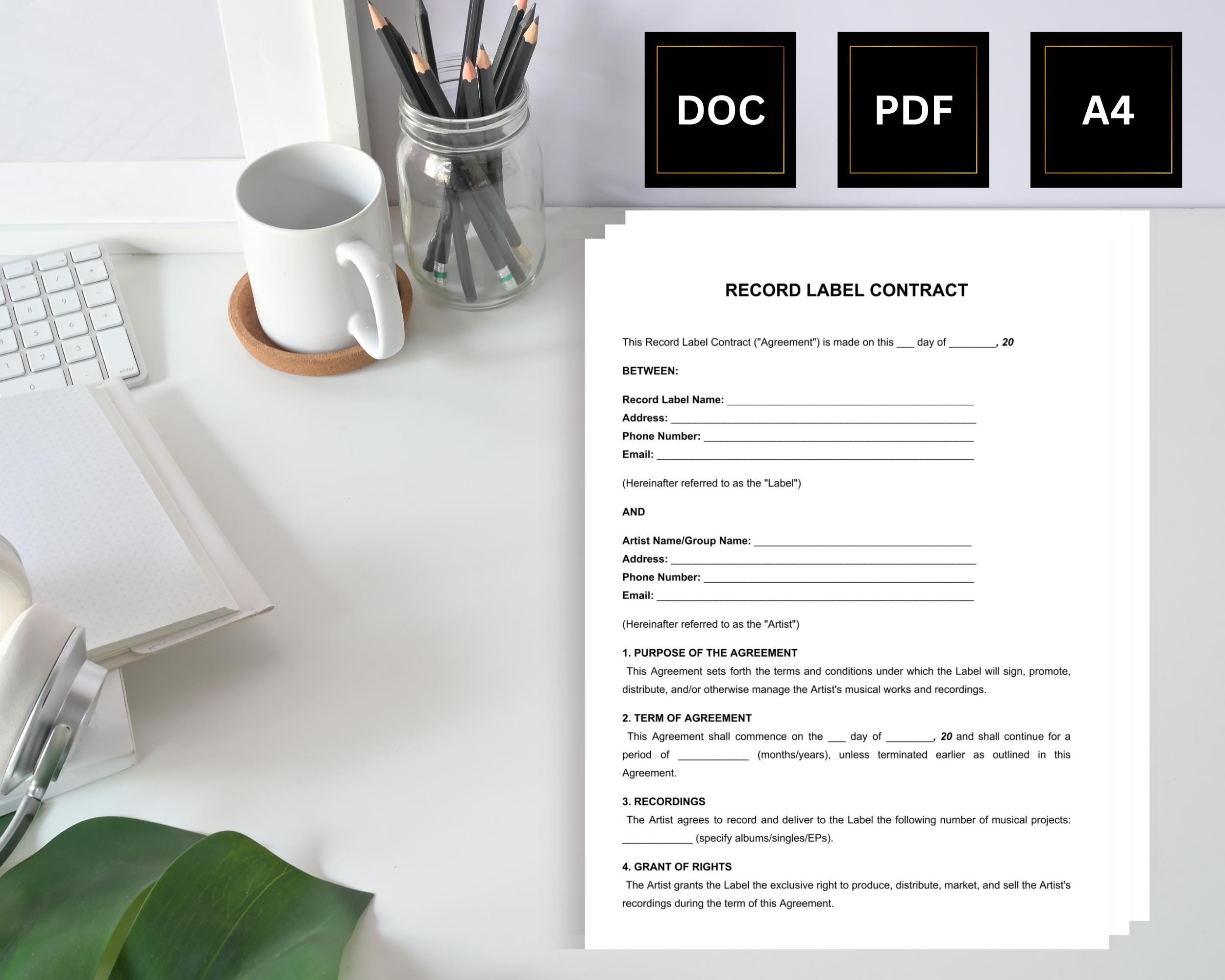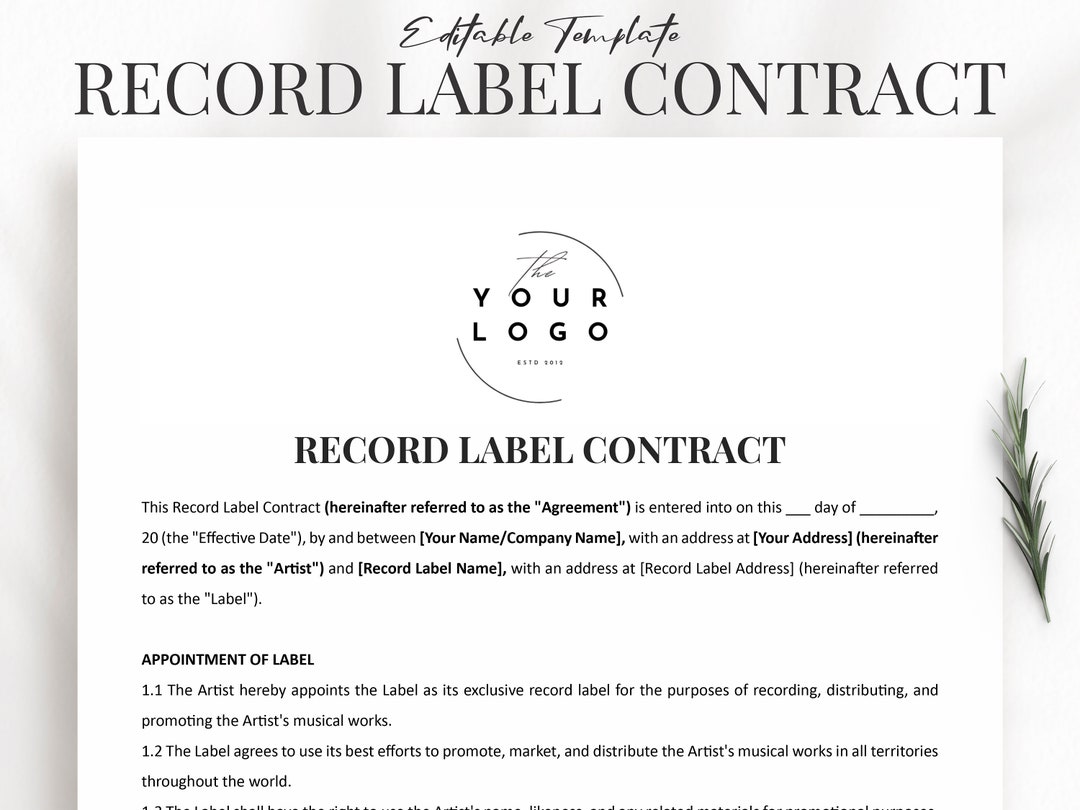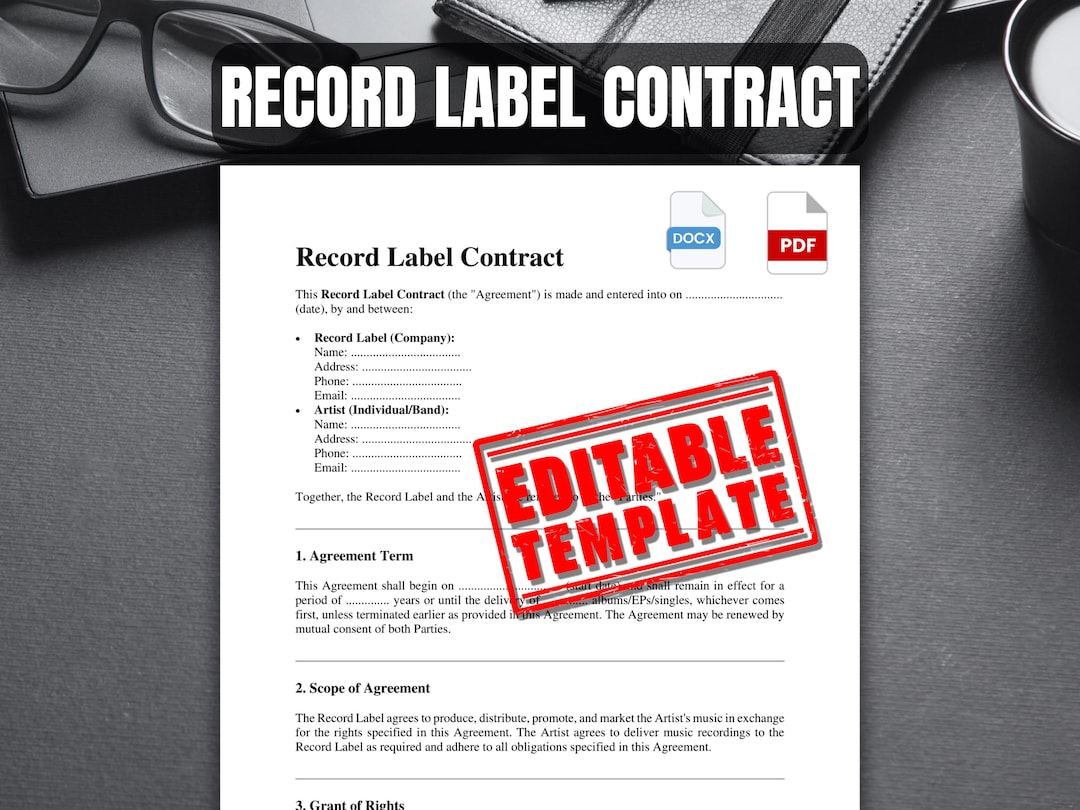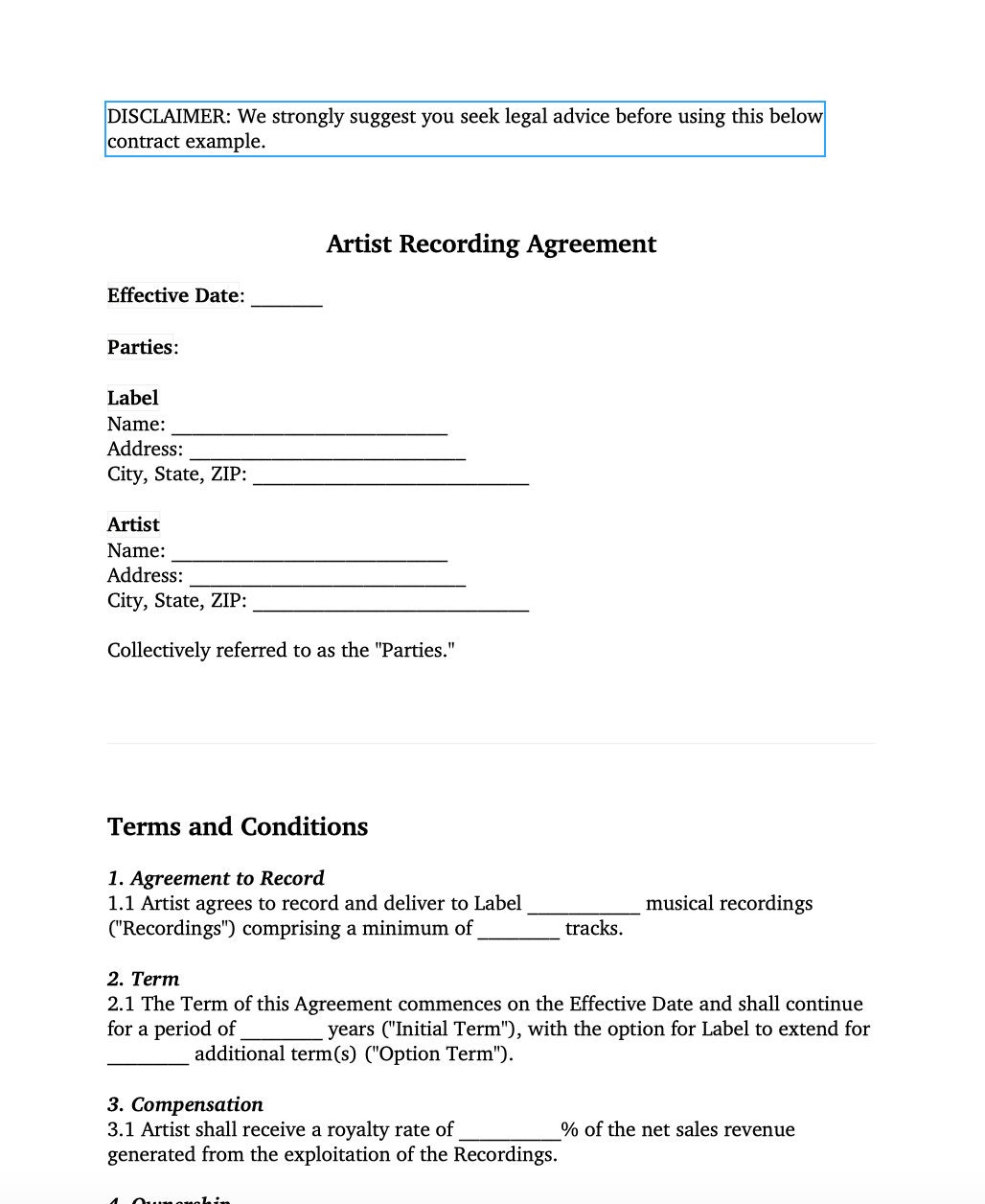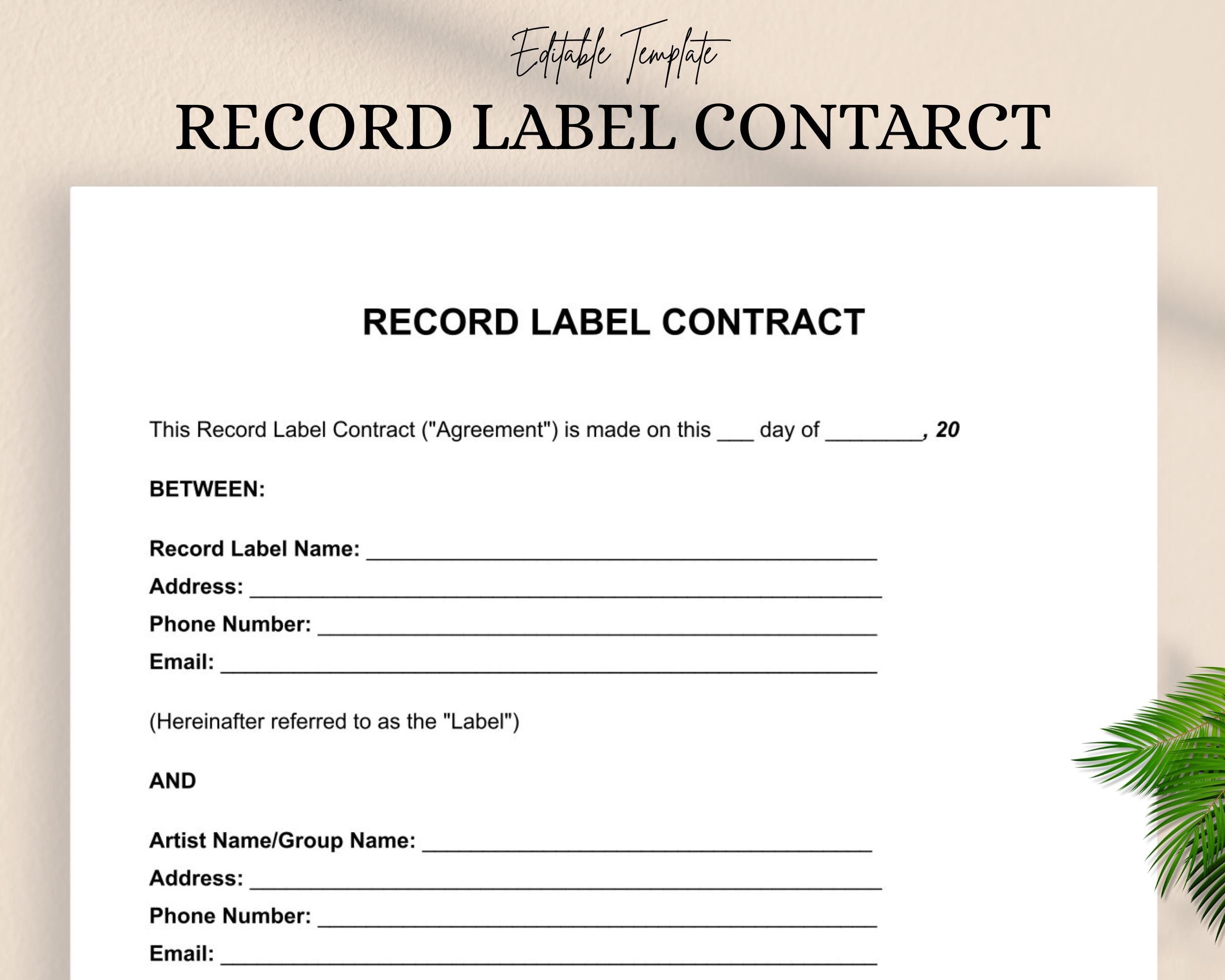
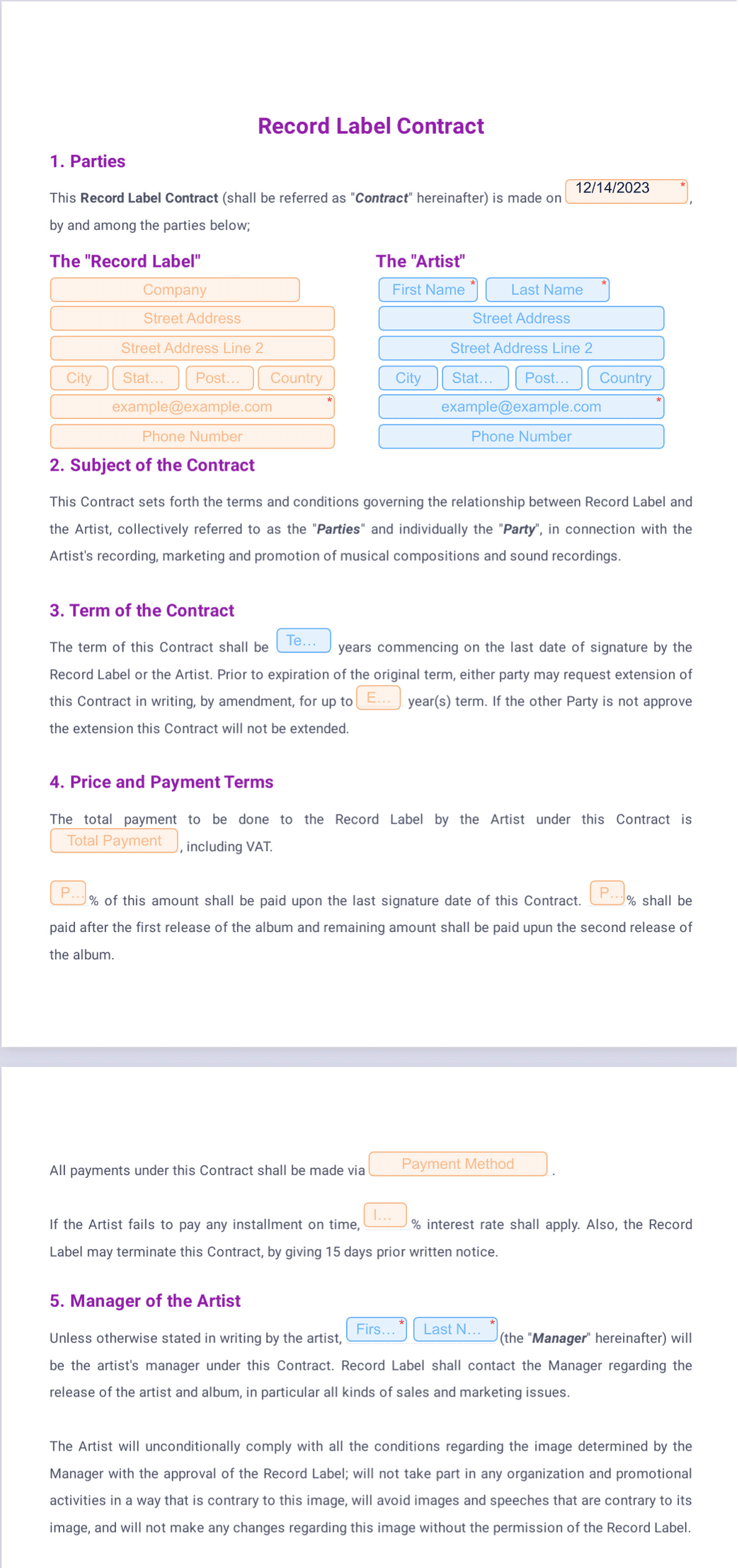
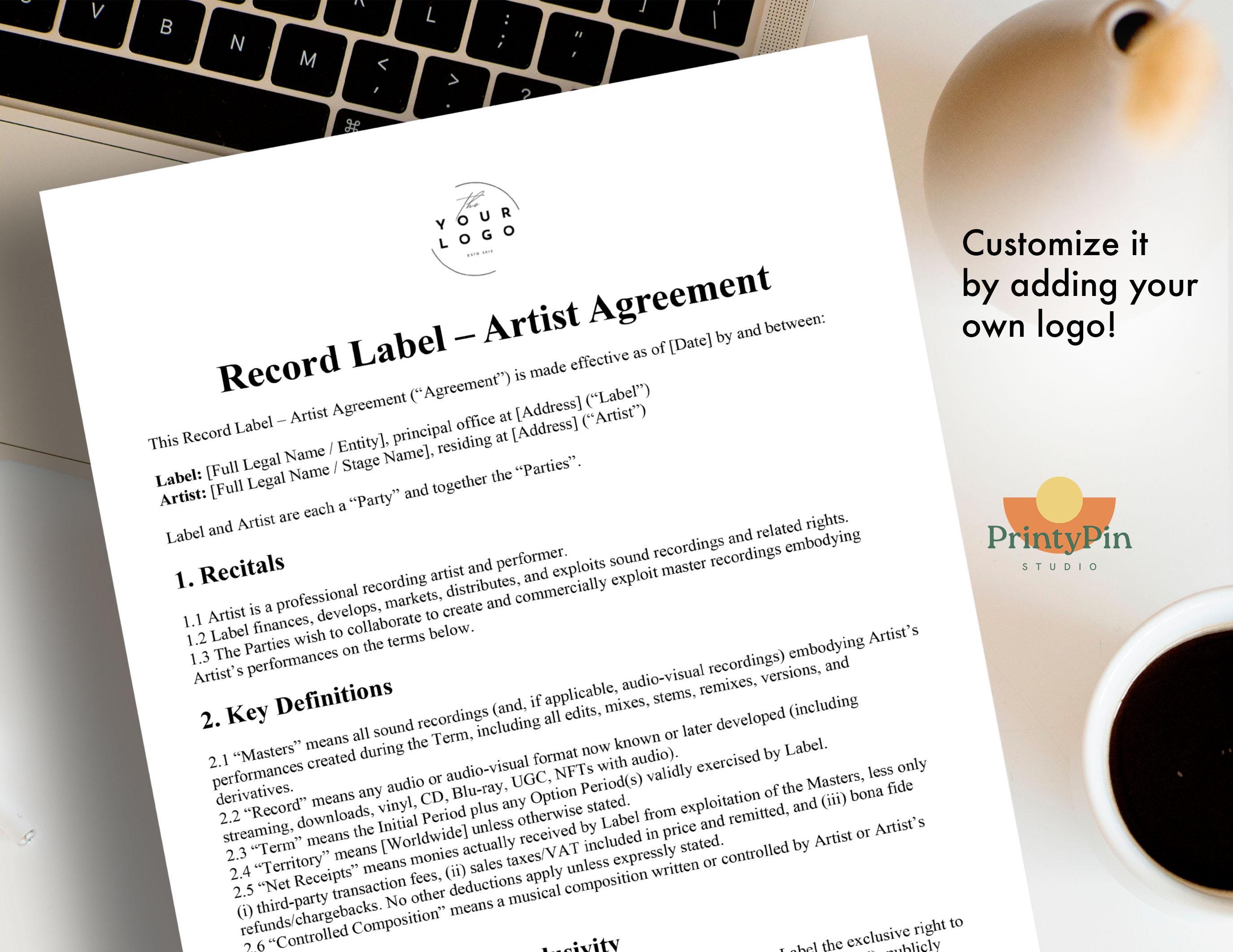
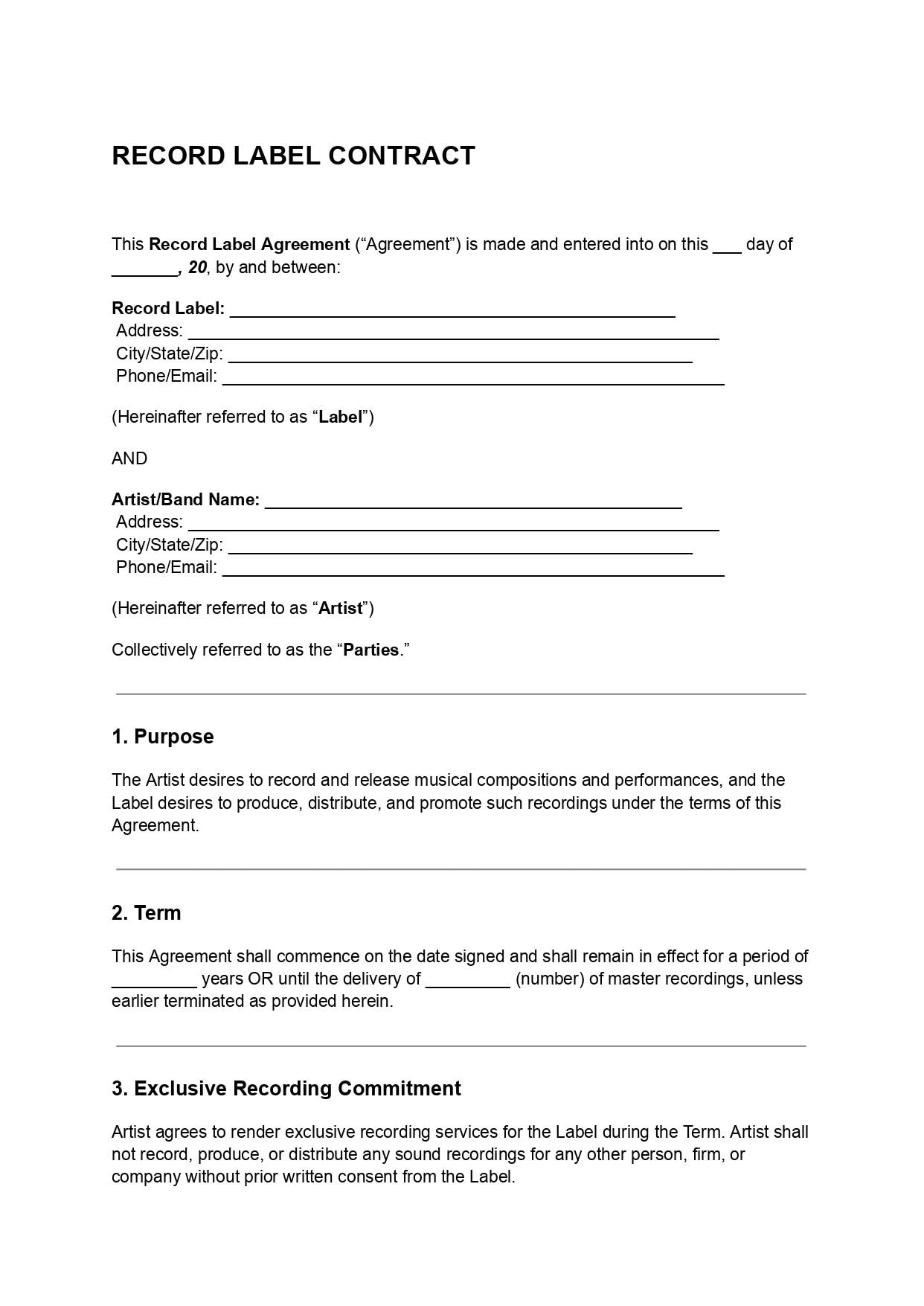
Record Label Contract Template serves as the essential blueprint for any musician or label looking to harmonize creativity with business, especially when navigating the vibrant and nuanced Asian music landscape. Whether you are a budding pop star in Seoul, an indie folk singer in Bali, or a seasoned producer in Tokyo, the right contract template can safeguard your artistic vision, clarify financial expectations, and ensure that cross‑cultural collaborations flow smoothly. This guide delves deep into what makes a record label contract template tick, how to customize it for Asian markets, and the step‑by‑step process to turn a generic PDF or Word file into a powerful, legally‑sound agreement that respects both global standards and local customs.
What Is a Record Label Contract Template?

Definition and Core Purpose
A record label contract template is a pre‑draft agreement that outlines the rights, duties, and compensation structures between a music artist (or their representatives) and a recording label. Think of it as a culinary recipe: the template provides the base ingredients—grant of rights, royalties, advance payments, and term length—while allowing you to add your own spices such as specific marketing commitments or regional distribution clauses. The core purpose is to eliminate ambiguity, reduce negotiation time, and provide a legally vetted starting point that can be tailored to the unique needs of each partnership.
Key Benefits of Using a Template
- Speed and Efficiency: A well‑crafted template removes the need to start from scratch, letting both parties focus on the creative details rather than legal housekeeping.
- Consistency: Templates enforce industry‑standard language, which helps prevent loopholes and ensures that all essential clauses are addressed.
- Cost‑Effectiveness: By leveraging a proven template, artists can limit attorney fees to a final review rather than a full drafting process.
- Scalability: Record labels with multiple signings across different countries can adapt a single master template to fit each jurisdiction’s legal requirements.
Essential Clauses Every Template Should Include

Parties and Recitals
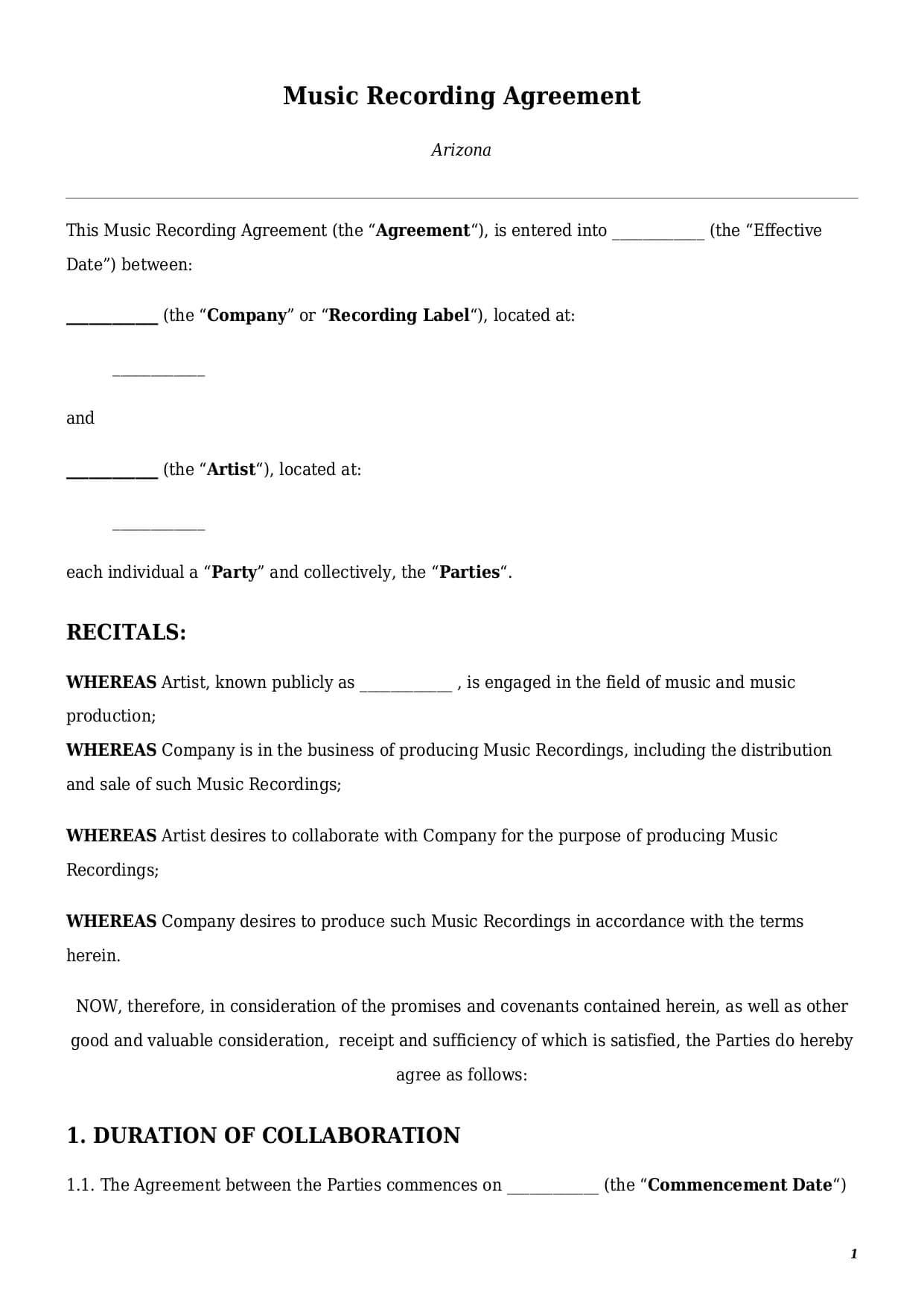
Clearly identify the label (including its legal entity name) and the artist (or band, solo act, or collective). Include a brief recital that sets the context—e.g., “Whereas the Artist wishes to record and commercially exploit musical works, and the Label wishes to provide the necessary resources and distribution services.” This opening not only establishes who is bound by the contract but also frames the mutual intent.
Grant of Rights
The heart of the agreement lies in the rights the artist grants to the label. Commonly, this includes the exclusive right to reproduce, distribute, publicly perform, and market the master recordings for a defined term and territory. In Asian markets, you may encounter “regional exclusivity” where a label only receives rights for a specific country or group of countries—this can be a strategic way to partner with multiple local distributors.
Advances and Royalties
An advance is the upfront payment that the label provides to the artist, recoupable from future earnings. The template should specify the amount, payment schedule, and recoupment mechanics. Royalty rates—percentages of sales, streaming revenue, sync licensing, or physical distribution—must be clearly laid out. For example, a typical pop contract in Japan might offer a 12‑15% royalty on physical sales, whereas a high‑growth market like Vietnam may negotiate a higher digital streaming split to reflect emerging platform dynamics.
Creative Control and Approvals
Artists often worry about losing control over their sound. The template should detail who has final say on track selection, mixing, mastering, artwork, and music videos. A common compromise in Asian contracts is a dual‑approval clause: the label proposes a final product, but the artist retains a “right of veto” if the deliverable deviates materially from the agreed artistic direction.
Marketing, Promotion, and Distribution
Outline the label’s obligations to promote the recordings—press campaigns, radio pushes, playlist pitching, live performance support, and social media strategy. Include any regional marketing commitments, such as partnering with a local influencer in Thailand or securing TV appearances in Hong Kong. The distribution clause should describe whether the label will handle digital platforms, physical distribution, or both, and whether any third‑party distributors are involved.
Term, Territory, and Renewal
Define the length of the agreement (often 2‑5 years) and the specific territories covered (e.g., “Worldwide except Mainland China”). Include renewal triggers, such as “the contract automatically renews for an additional two‑year term unless either party provides written notice 90 days before the expiry date.” This provision prevents unexpected lapses, a frequent issue in cross‑border deals where communication lags can be common.
Accounting and Auditing
Transparency in revenue reporting is critical. The template must set the frequency of statements (quarterly is typical), the accounting period, and the artist’s right to audit the label’s books within a reasonable timeframe, usually 90 days of receiving a statement. In many Asian jurisdictions, auditors must be local CPA‑registered to ensure compliance with tax reporting laws.
Warranties, Indemnities, and Dispute Resolution
Both parties should warrant that they have the legal right to enter the agreement and that the content does not infringe third‑party rights. The indemnity clause protects each side from losses caused by the other’s breach. For dispute resolution, specify whether the parties prefer mediation, arbitration, or litigation, and indicate the governing law—often the label’s home jurisdiction, but for Asian collaborations, parties may choose a neutral venue such as Singapore International Arbitration Centre (SIAC).
Customizing the Template for Asian Markets
Cultural Nuances in Negotiations
Asian business culture often emphasizes harmony (和, “wa” in Japanese) and relationship‑building (guanxi in Chinese). When customizing a template, consider softer language that reflects mutual respect—e.g., “Both parties agree to work collaboratively” rather than “The label shall dictate.” Including a clause that encourages “good‑faith negotiations on any unforeseen circumstances” can smooth the path when cultural expectations differ.
Local Law Compliance (Japan, Korea, China, etc.)
Each country has distinct statutory requirements:
- Japan: The Music Business Law mandates that royalty statements include a breakdown of “net revenue after deduction of production costs.” Templates should embed a separate schedule for these deductions.
- South Korea: The Fair Trade Commission enforces a cap on unilateral termination rights. Include a balanced termination clause that respects both parties’ exit options.
- China: Foreign labels must work through a local “cover” label or a joint venture for distribution. The template should have a “Local Partner” annex where the cover label’s responsibilities are outlined.
- Southeast Asia (Indonesia, Malaysia, Singapore): Value‑Added Tax (VAT) and Goods and Services Tax (GST) rates differ, so revenue sharing percentages need to be net of applicable taxes.
Language and Translation Tips
While the contract may be executed in English, a bilingual version (English/Chinese, English/Korean, etc.) is advisable to prevent misunderstandings. Use a professional legal translator familiar with music‑industry terminology. Include a clause stating that in case of a conflict, the English version prevails, but both parties acknowledge the bilingual text as a reference.
Step‑by‑Step Guide to Filling Out Your Template

Gather Your Information
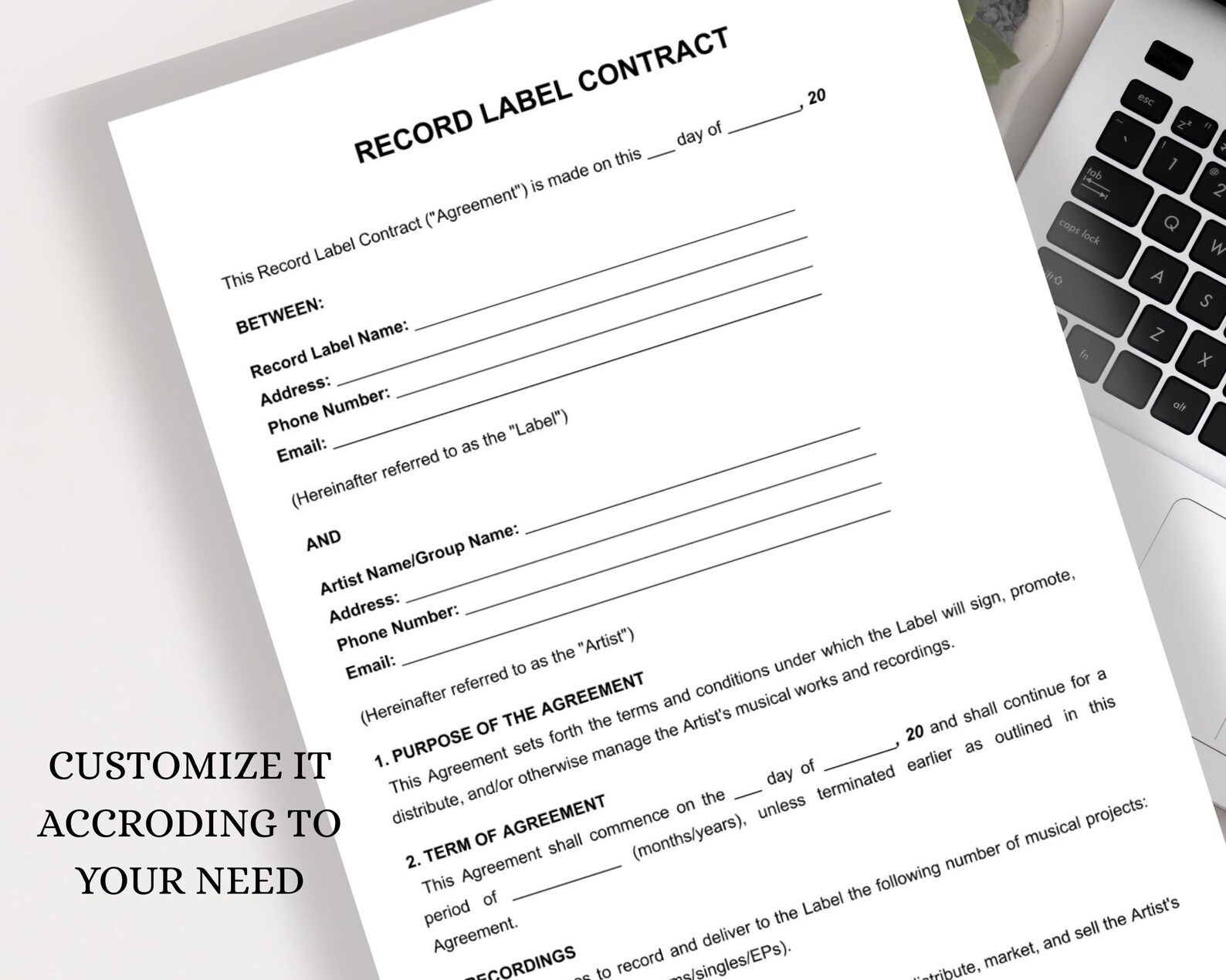
Before opening the PDF or Word file, compile essential data: legal names of both parties, tax identification numbers, bank details for royalty deposits, and a list of the recordings (track titles, ISRC codes, and expected release dates). This preparation prevents the “stop‑and‑go” frustration that often arises when details are missing mid‑negotiation.
Populate Basic Sections
Start with the header—fill in the parties, the effective date, and the term. Next, insert the “Grant of Rights” clause, carefully delineating the territory (e.g., “Southeast Asia, excluding the Philippines”) and the scope (master recordings, synchronization rights, etc.). Be precise; vague language can lead to future disputes over whether a music video was covered under the sync license.
Insert Numbers for Advances & Royalties
Enter the agreed advance amount and schedule (e.g., 50% upon signing, 25% upon delivery of masters, 25% upon release). Then detail royalty percentages for each revenue stream: physical sales, digital downloads, streaming, sync licensing, and performance royalties. If the contract includes a “graduated royalty” that escalates after reaching a sales threshold, outline the exact numbers—e.g., “12% up to 100,000 units, then 15% thereafter.”
Review and Negotiate
Read the entire document aloud or have a trusted advisor do so. Highlight any clauses that feel one‑sided or that conflict with local customs. For instance, a clause that demands the artist to cover “all legal fees” may be renegotiable in markets where the label typically bears such costs. Use the template’s “Negotiation Notes” section (if present) to track proposed changes.
Legal Review and Execution
Engage a qualified entertainment attorney—preferably with cross‑border experience—to review the final draft. Once cleared, both parties should sign the agreement in duplicate, with a notarized copy if required by the chosen jurisdiction. Store the signed PDF in a secure cloud repository and share a read‑only link with all stakeholders.
Common Pitfalls and How to Avoid Them
Over‑looking Hidden Royalties
Some contracts embed “deduction clauses” that reduce royalties by production costs, marketing fees, or even “administrative expenses.” Scrutinize every line that mentions “net” versus “gross” revenue. Ask the label for an itemized breakdown of what constitutes a deductible cost and negotiate caps on such deductions.
Ignoring Territory Restrictions
Failing to define territory clearly can lead to unauthorized releases in markets where the label has no rights, potentially violating local licensing laws. Double‑check that the territory list aligns with your marketing plan—if you intend to self‑release in Japan, the contract should carve out an exemption for that region.
Failing to Set Clear Creative Approval Process
Vague language like “label shall have final approval” can cause friction if the label rejects a final mix without giving reasons. Include a timeline for approvals (e.g., “Artist shall deliver final mix within 30 days of receiving label feedback”) and a “good‑faith” amendment clause that requires written explanations for any withheld approvals.
Inadequate Audit Rights
Without explicit audit language, an artist may be stuck with ambiguous statements. Ensure the template specifies the right to request a third‑party audit, the notice period, and the label’s duty to reimburse reasonable audit costs if discrepancies are found.
Real‑World Example: Indie Artist in Singapore
Meet Jia, an indie singer‑songwriter based in Singapore who signed a deal with a regional label covering Malaysia, Indonesia, and the Philippines. Using a standard record label contract template, Jia followed these steps:
- She added a “Territory Exclusion” clause to retain her rights for the Singapore market, where she planned a self‑release.
- Negotiated a higher digital streaming royalty (18%) to reflect the dominant use of platforms like Spotify and KKBox in Southeast Asia.
- Inserted a “Cultural Sensitivity Review” provision, allowing her to approve any localized lyric translations to maintain artistic integrity.
- Secured a quarterly accounting statement with a 60‑day audit window, which later uncovered an unapproved deduction for “marketing overhead,” resulting in a $3,500 restitution.
Jia’s experience illustrates that a well‑customized template, coupled with careful local adjustments, can empower an artist to expand regionally while protecting core revenue streams and creative control.
Frequently Asked Questions
- Do I need a lawyer to use a record label contract template? While a template reduces the need for a full draft, a final legal review is strongly recommended to ensure the language complies with local law and reflects your negotiated terms.
- Can I negotiate royalty percentages after the contract is signed? Typically, royalty rates are fixed for the contract term. However, some templates include a “review clause” that allows renegotiation if sales exceed a certain threshold.
- What is the difference between an exclusive and non‑exclusive grant of rights? An exclusive grant limits the artist from working with other labels for the defined territory and term, whereas a non‑exclusive grant allows multiple labels to exploit the same recordings concurrently, often used for sync licensing.
- How do I handle multiple languages in the contract? Include a bilingual annex and a clause that states the English version controls in case of conflict. Ensure both parties receive signed copies in each language.
- Is it risky to sign a template without reading the fine print? Yes. Hidden clauses, especially around deductions and termination, can have long‑term financial implications. Always read every line and ask questions.
Conclusion
A thoughtfully crafted Record Label Contract Template is more than a legal document—it is a strategic tool that balances the aspirations of artists with the commercial realities of labels, all while respecting the cultural intricacies of the Asian music market. By understanding the essential clauses, customizing for local law and customs, and following a disciplined step‑by‑step filling process, musicians can protect their rights, secure fair compensation, and set the stage for successful cross‑border collaborations. Remember that the template’s true power emerges only when you pair it with diligent negotiation, professional legal counsel, and an awareness of the subtle yet vital cultural nuances that define business in Asia. With these practices in place, your music can soar from studio to stage with confidence, clarity, and the full backing of a legally sound agreement.