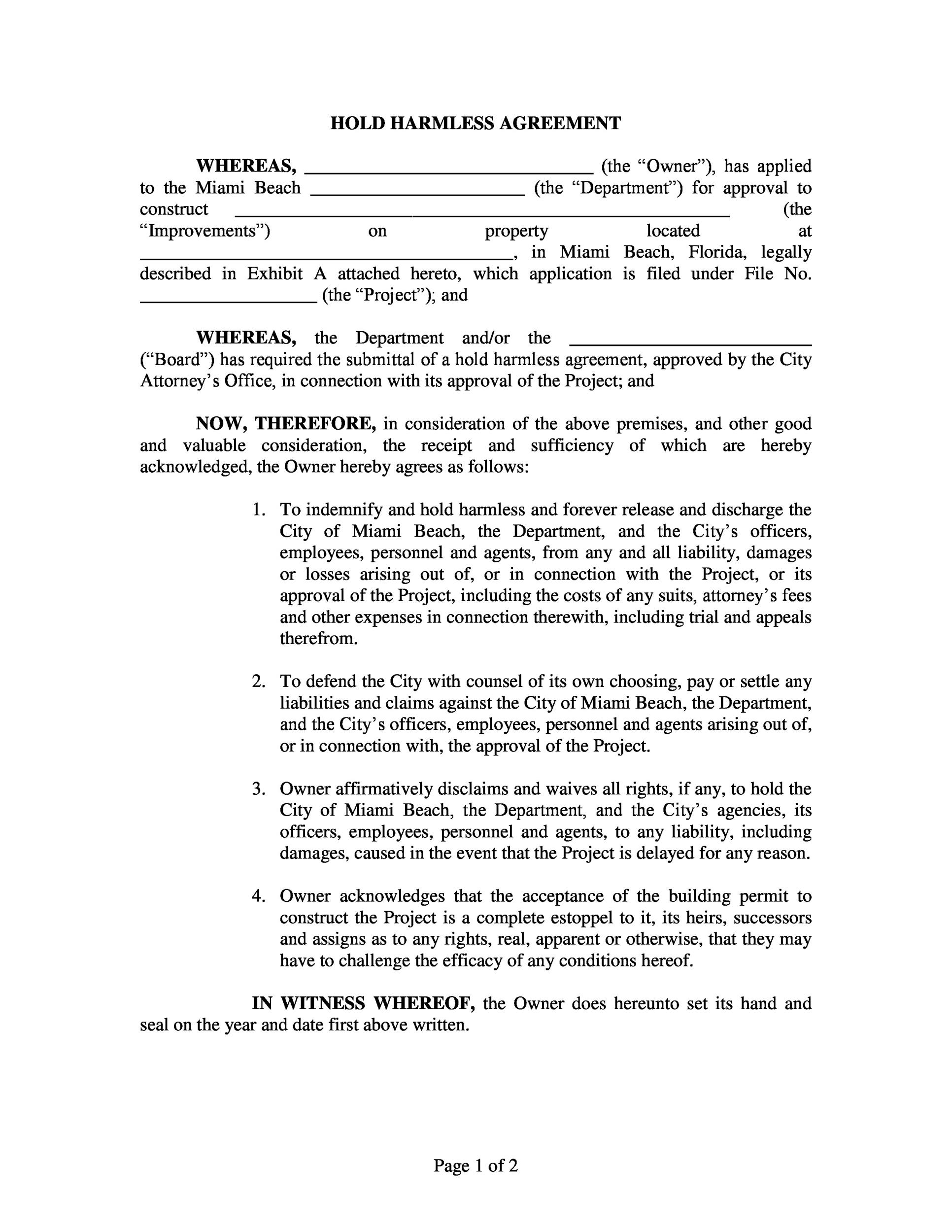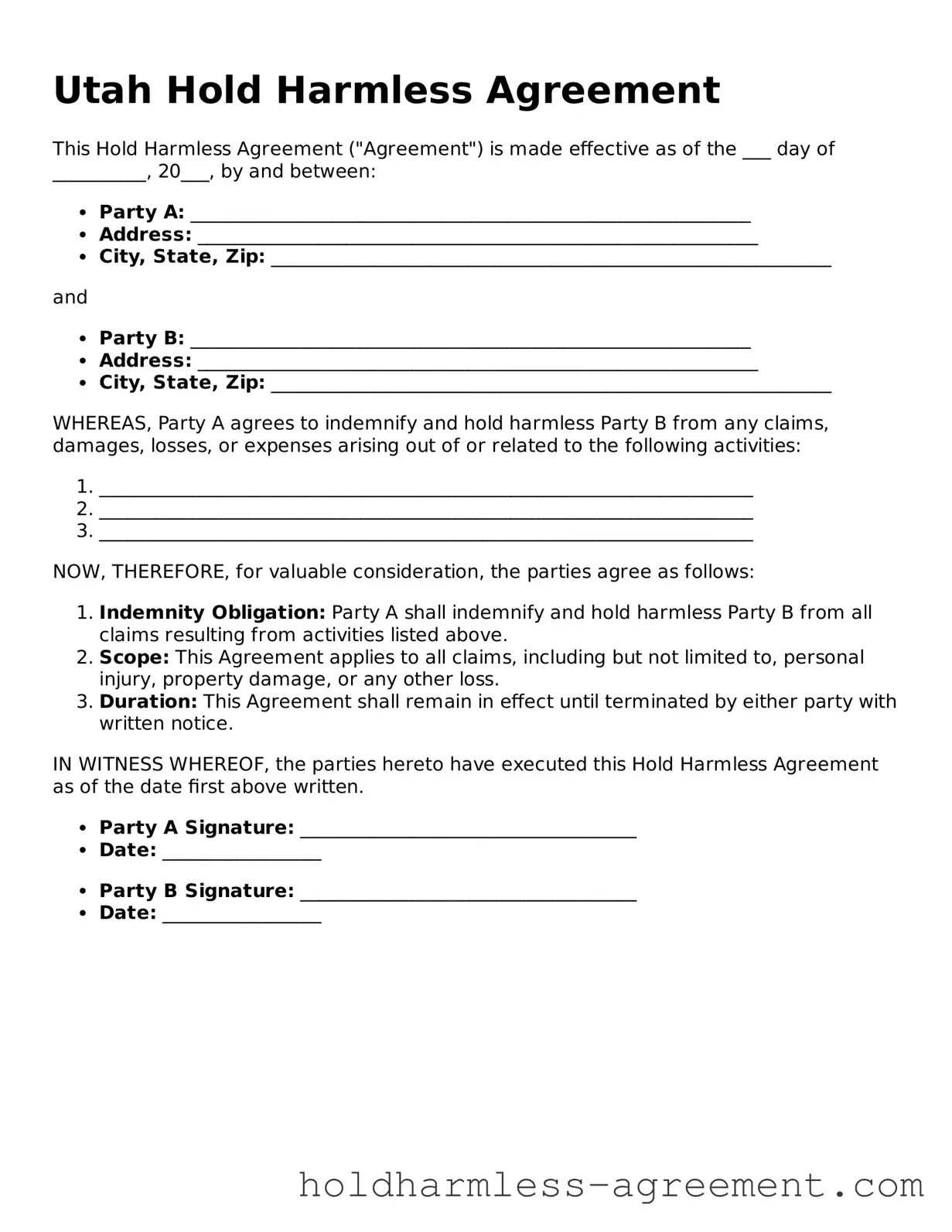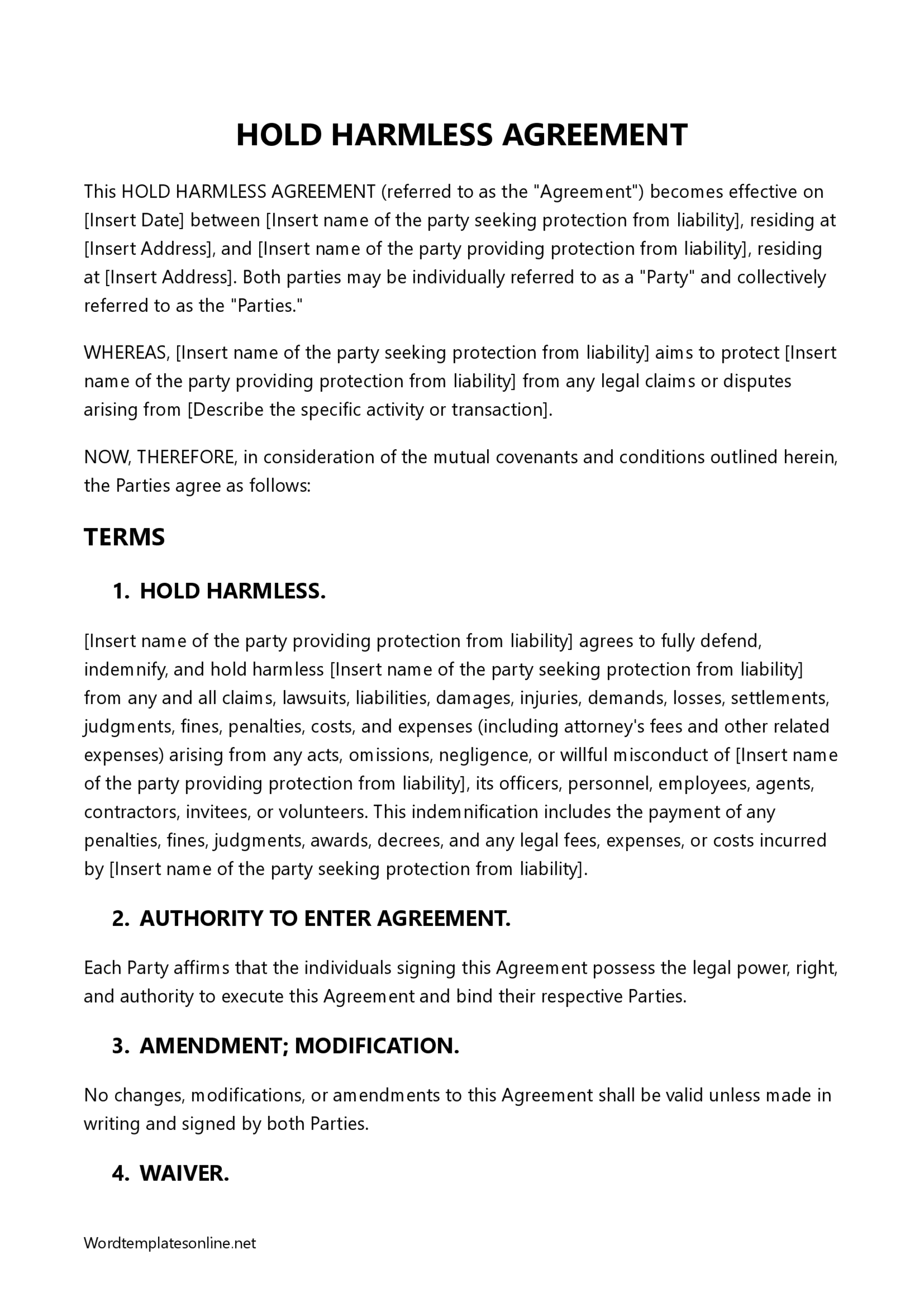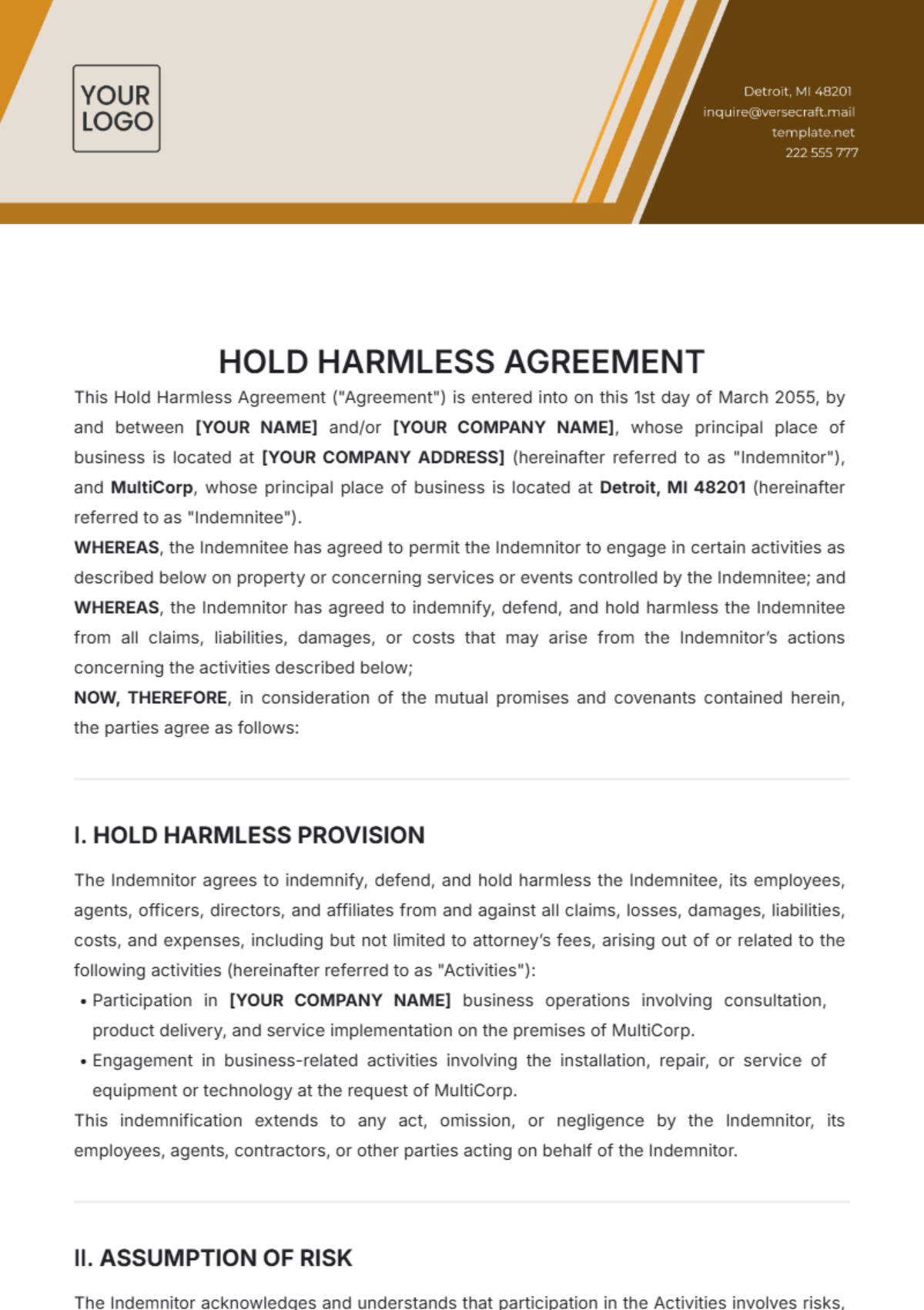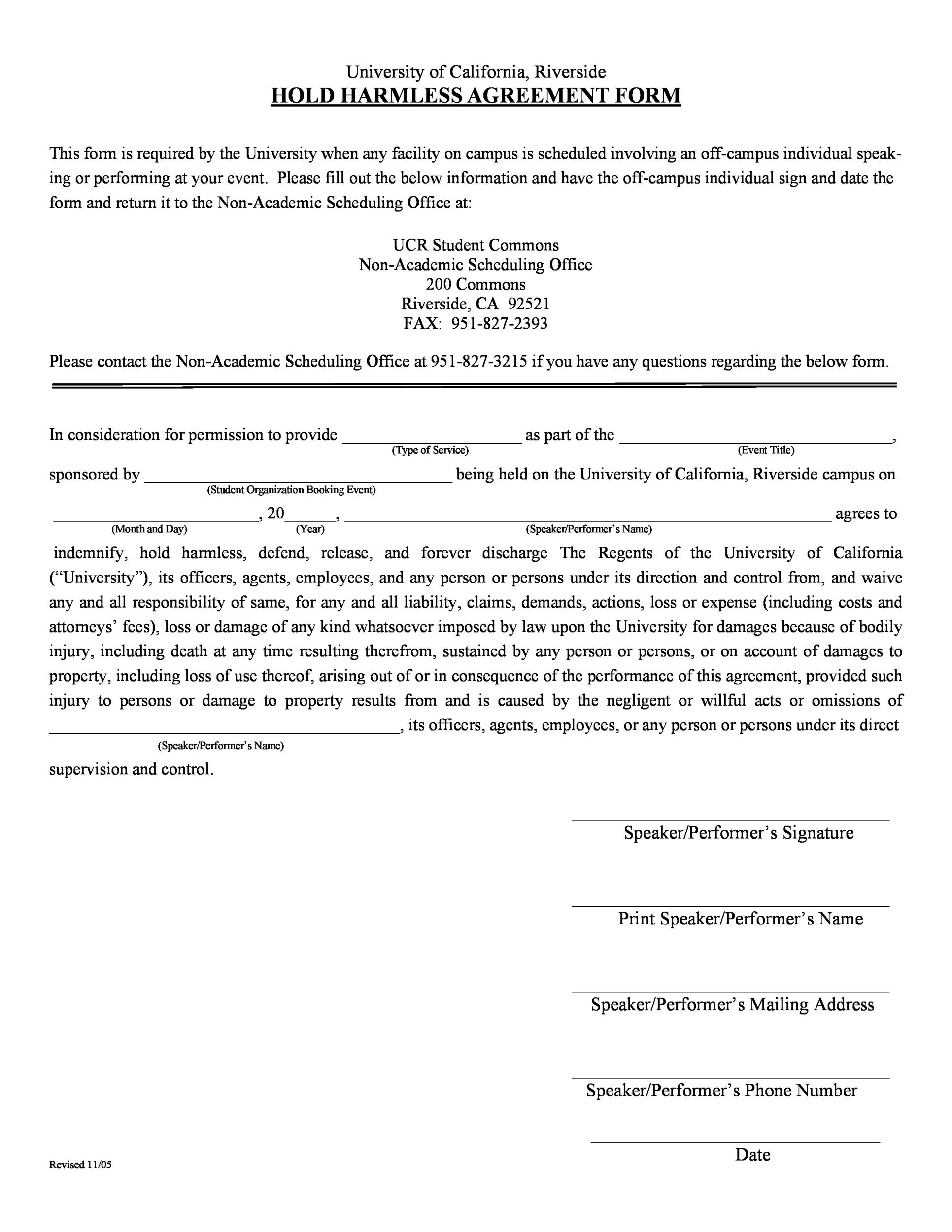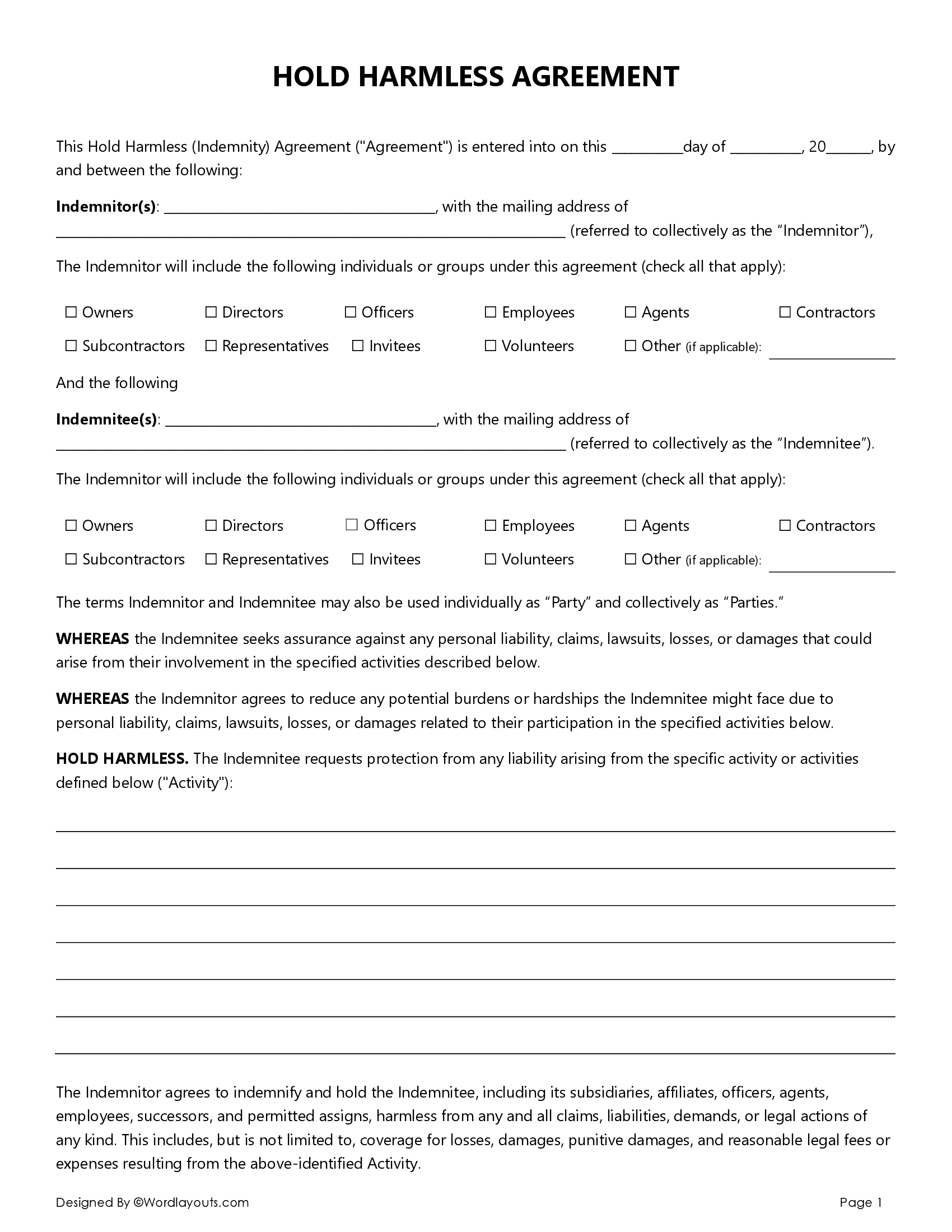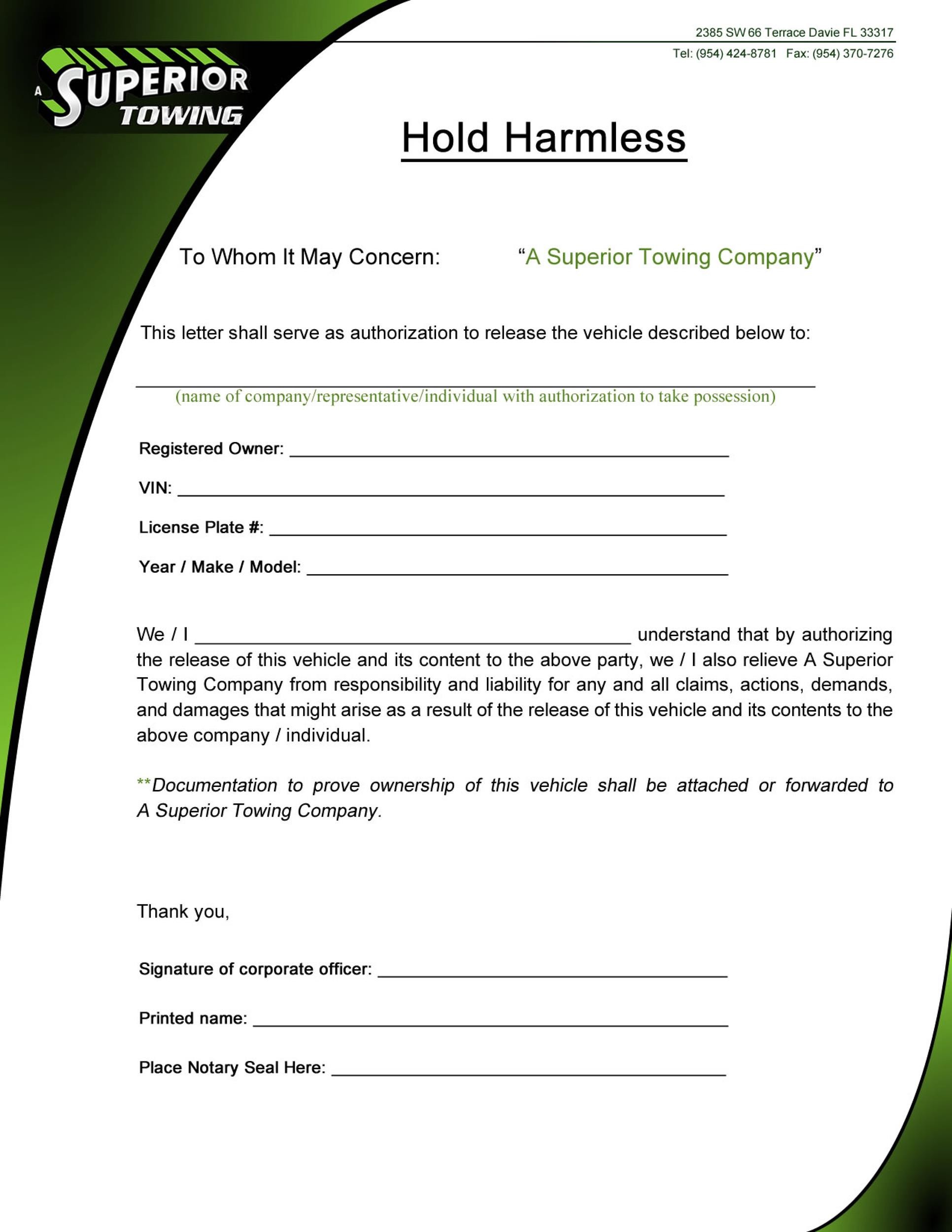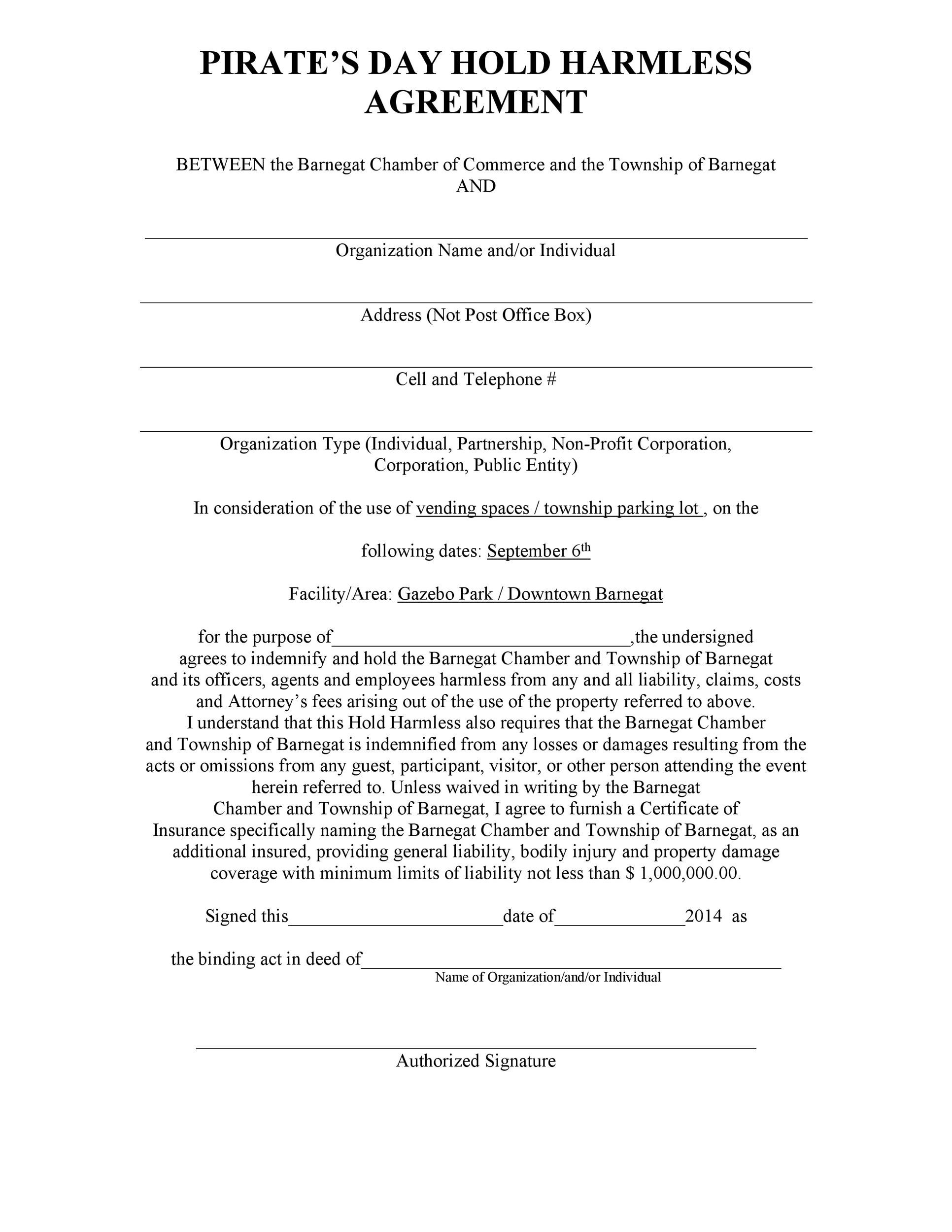
Simple Hold Harmless Agreement Template serves as the cornerstone for safeguarding businesses from unforeseen liabilities, especially in fast-paced Asian markets where partnerships and service engagements expand rapidly. By laying out clear responsibilities, parties can move forward with confidence, knowing that risks have been identified and shared fairly.
What is a Hold Harmless Agreement?
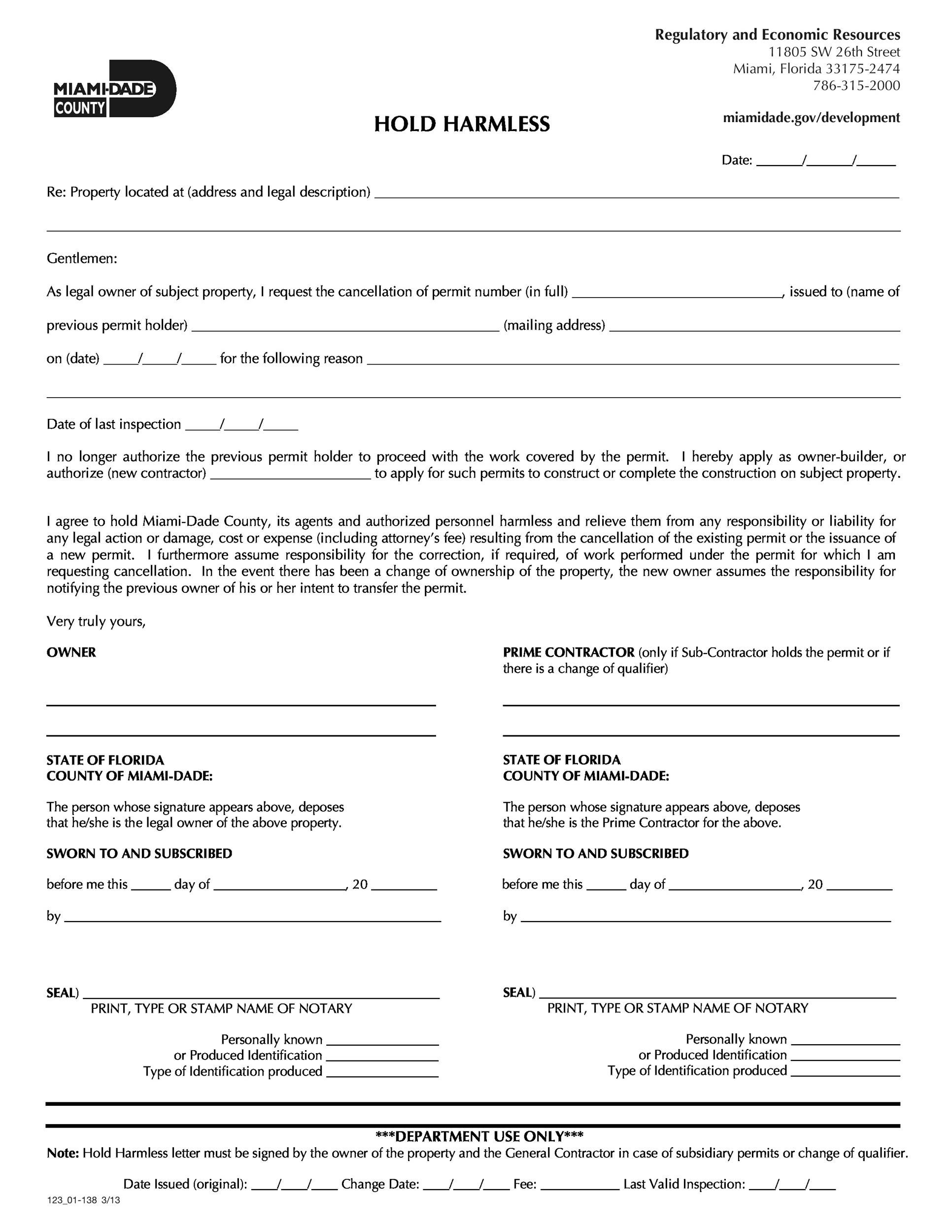
A Hold Harmless Agreement, also known as a release or indemnity agreement, is a legal document in which one party agrees to protect another from any claims, damages, or legal actions that may arise during the course of a specific activity or project. In practice, it ensures that if something goes wrong—say, a construction contractor damages a property—the contractor assumes responsibility for the resulting costs.
Core Components
- Parties Identified: Clearly names the indemnifying party and the protected party.
- Scope of Work: Describes the activity, project, or event covered by the agreement.
- Indemnity Clause: States the indemnifying party’s commitment to cover losses, claims, or expenses.
- Limitations: Outlines any exceptions or caps on liability.
- Duration: Specifies the period during which the agreement applies.
- Governing Law: Indicates the jurisdiction that will govern disputes.
Why Simple Templates Matter in Asian Business Context
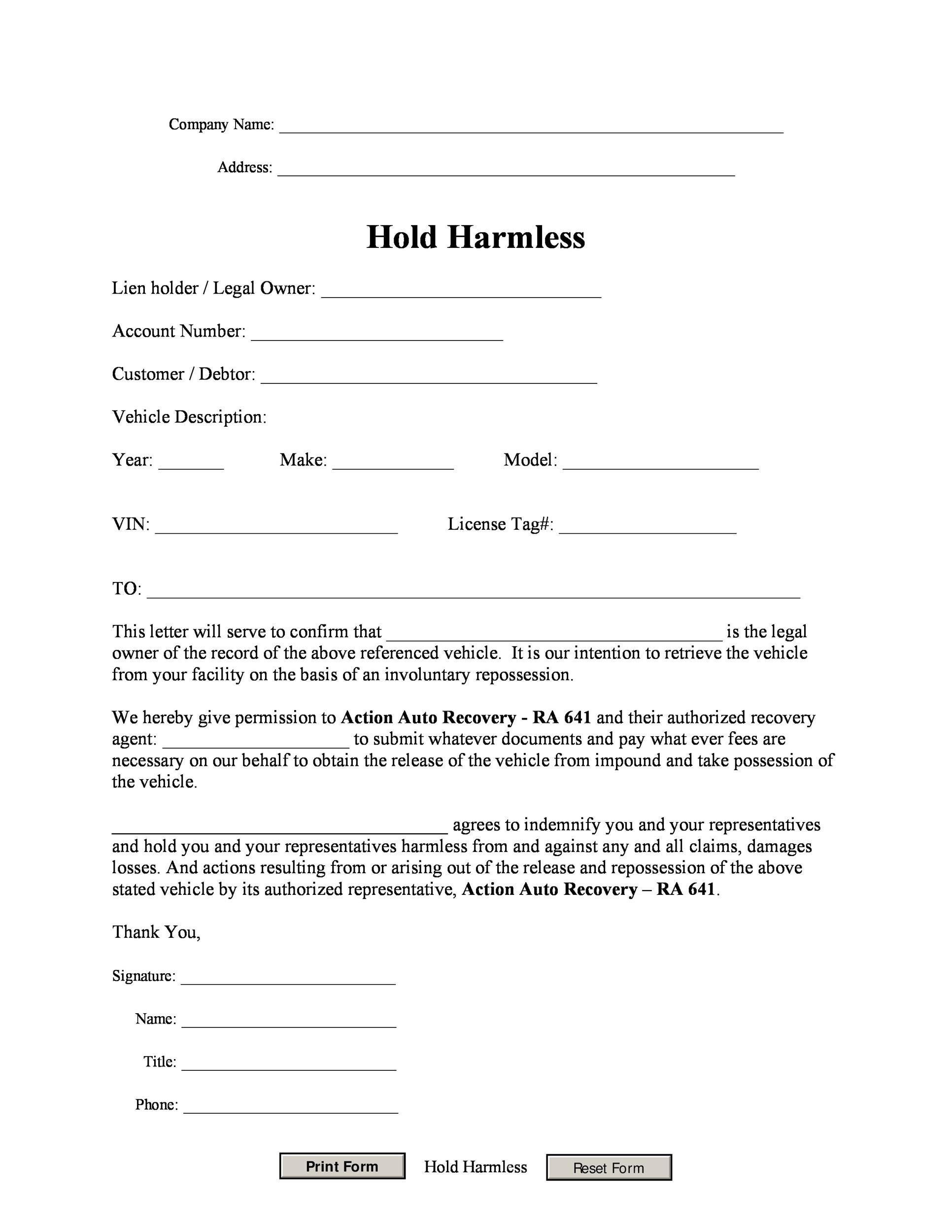
Asian enterprises often operate across borders, collaborating with local firms, foreign contractors, and multinational corporations. A Simple Hold Harmless Agreement Template brings several advantages:
1. Speed of Execution
Negotiations in Asian markets can be swift, and having a ready-to-use template reduces paperwork and speeds up finalization.
2. Cost Efficiency
Drafting a new agreement from scratch can be expensive, especially for small businesses. A template allows firms to allocate legal resources to higher-value tasks.
3. Cultural Compatibility
Templates can be adapted to reflect local business norms, such as respect for hierarchy and emphasis on relationship-building, ensuring that clauses do not clash with regional expectations.
Key Clauses to Include in Your Simple Hold Harmless Agreement Template
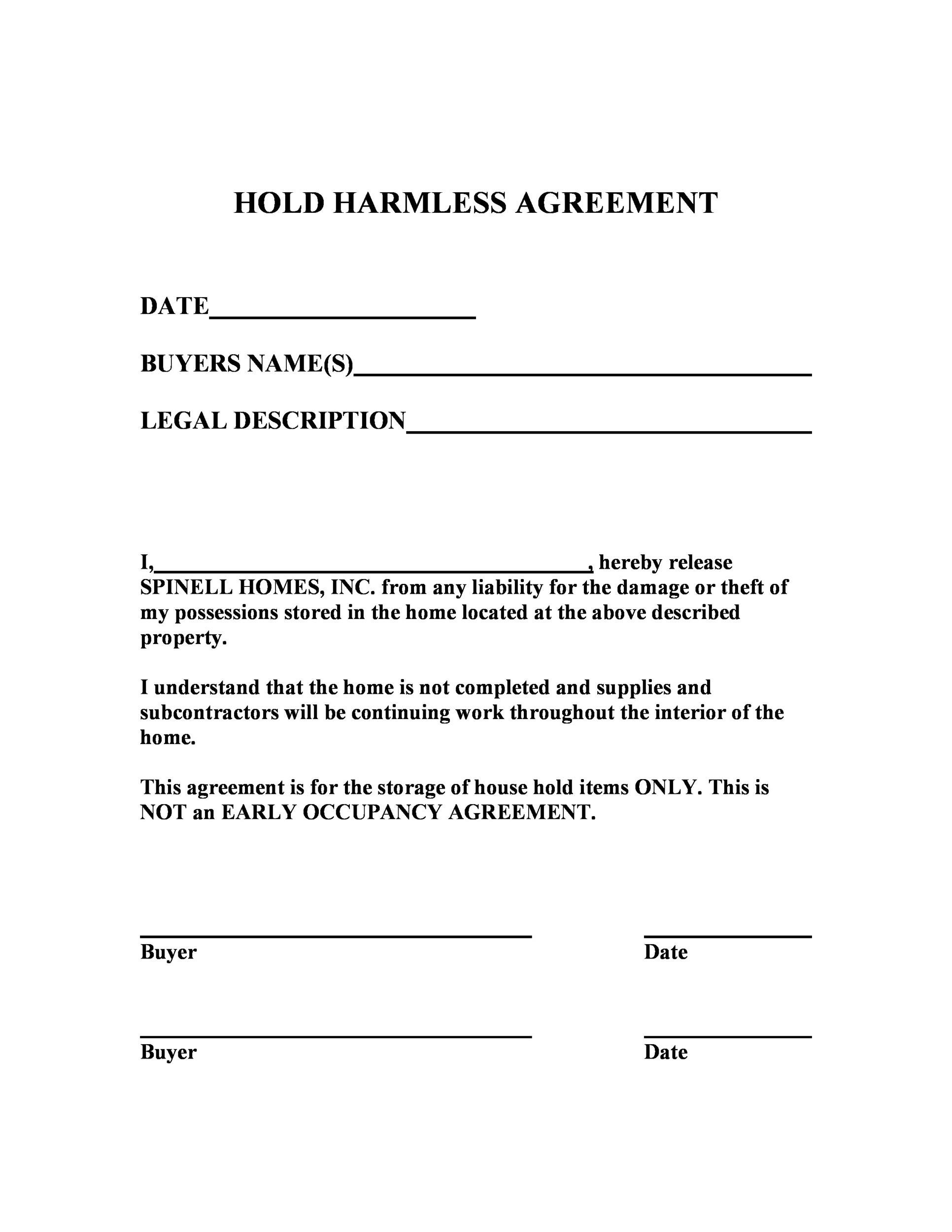
Below is a breakdown of essential clauses that should appear in any robust template, with practical tips for tailoring each section.
1. Parties and Recitals
Define who is indemnifying and who is protected. Use clear identifiers, e.g., “ABC Construction Ltd. (the Indemnitor) and XYZ Property Management Co., Ltd. (the Indemnitee).”
2. Purpose and Scope
Detail the activity or event, such as “the refurbishment of the Main Office Building on 12th Avenue.” Mention dates, locations, and any specific tasks.
3. Indemnification Provision
State that the Indemnitor will hold the Indemnitee harmless from claims arising out of the Indemnitor’s negligence, breach, or failure to comply with regulations. Example wording: “The Indemnitor shall indemnify, defend, and hold the Indemnitee harmless from all liabilities, damages, and costs incurred as a result of the Indemnitor’s actions during the project.”
4. Limitation of Liability
Specify any caps or exclusions. For instance, “The indemnification obligation shall not exceed the total project fee of $200,000.”
5. Insurance Requirements
Mandate that the Indemnitor maintain appropriate insurance coverage (e.g., general liability, workers’ compensation) and provide proof to the Indemnitee.
6. Notice of Claims
Include a clause that requires the Indemnitee to notify the Indemnitor promptly if a claim arises, giving the Indemnitor time to respond or defend.
7. Duration and Termination
Define when the agreement starts, lasts, and how it can be terminated. A simple provision could read: “This Agreement shall commence on the Effective Date and continue until completion of the project or thirty (30) days after final payment.”
8. Dispute Resolution
Specify a preferred method, such as arbitration in Singapore or Hong Kong, to avoid lengthy court battles.
9. Governing Law
State the jurisdiction. For example: “This Agreement shall be governed by and construed in accordance with the laws of the Republic of Korea.”
10. Miscellaneous Clauses
- Entire Agreement
- Severability
- Assignment
- Force Majeure
- Language of the Agreement
Step-by-Step Guide to Drafting the Template
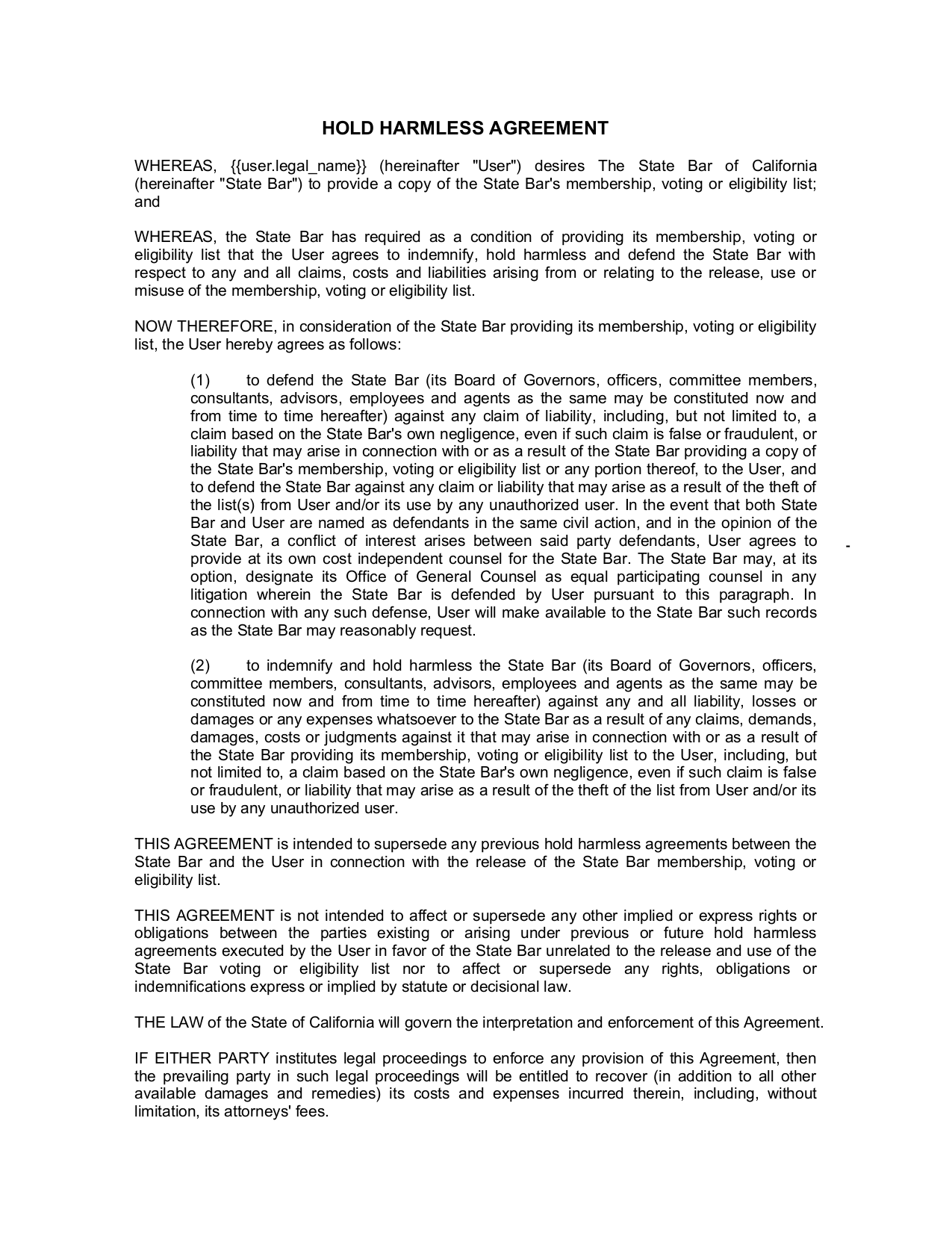
Follow these steps to create a reliable, easy-to-use template that suits your business needs.
1. Identify Core Business Activities
List all services or projects that frequently involve third parties. Understanding these will help you pinpoint which clauses are most relevant.
2. Compile Legal Requirements
Review local regulations on liability and indemnity. For instance, Japanese law may require explicit mention of “no limitation of liability” unless a waiver is signed.
3. Draft a Skeleton
Using the key clauses above, outline the document. Keep sentences short and clear to avoid ambiguity.
4. Review and Refine
Ask a colleague or legal advisor to read the draft. Look for loopholes such as missing insurance requirements or vague scope definitions.
5. Localize Language and Formatting
Translate the template into the primary language of your market, if necessary, and format it with standard headers and numbering for easy reference.
6. Test with a Pilot Project
Before rolling out widely, use the template on a small project to gauge its practicality and catch any unforeseen issues.
7. Store and Update Regularly
Maintain a version-controlled repository. Update the template annually or after any legal change.
Customizing the Template for Different Scenarios

While the core structure remains consistent, adjustments may be needed based on the industry or project type.
1. Construction Projects
Include detailed safety clauses, compliance with local building codes, and a higher insurance premium threshold.
2. Event Management
Add clauses covering attendee liability, vendor performance, and specific force majeure conditions such as extreme weather.
3. Technology Partnerships
Incorporate intellectual property indemnity, data privacy responsibilities, and cybersecurity breach protocols.
4. Service Agreements in Hospitality
Ensure that health and safety standards are explicitly referenced, and limit liability for guest injuries in common areas.
Common Mistakes to Avoid
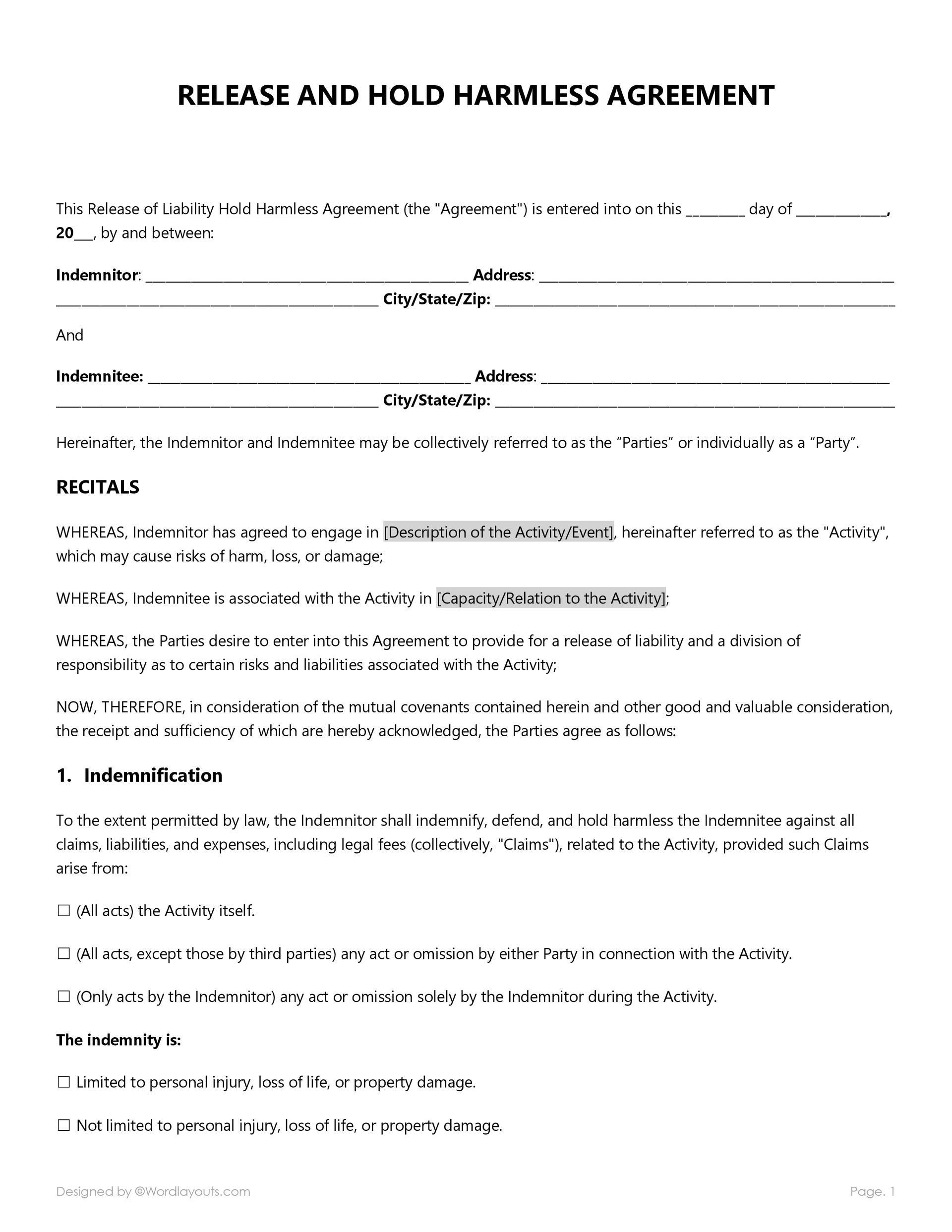
A well-drafted agreement can prevent costly disputes. Watch out for these pitfalls.
1. Vague Language
Ambiguity invites interpretation. Use precise terms, e.g., “reasonable time” instead of “soon.”
2. Overlooking Insurance
Failing to mandate insurance can leave both parties exposed. Always require proof of coverage.
3. Ignoring Local Laws
Each jurisdiction may impose mandatory clauses. Neglecting them can render the agreement unenforceable.
4. Excluding Indemnification for Gross Negligence
Some contracts limit indemnity to negligence only. Consider including a clause that covers gross negligence and intentional misconduct.
5. Neglecting to Define “Claims” Clearly
Specify whether the indemnity covers legal fees, damages, or both. Clarify “claims” to encompass lawsuits, regulatory fines, and arbitration costs.
When to Seek Legal Review
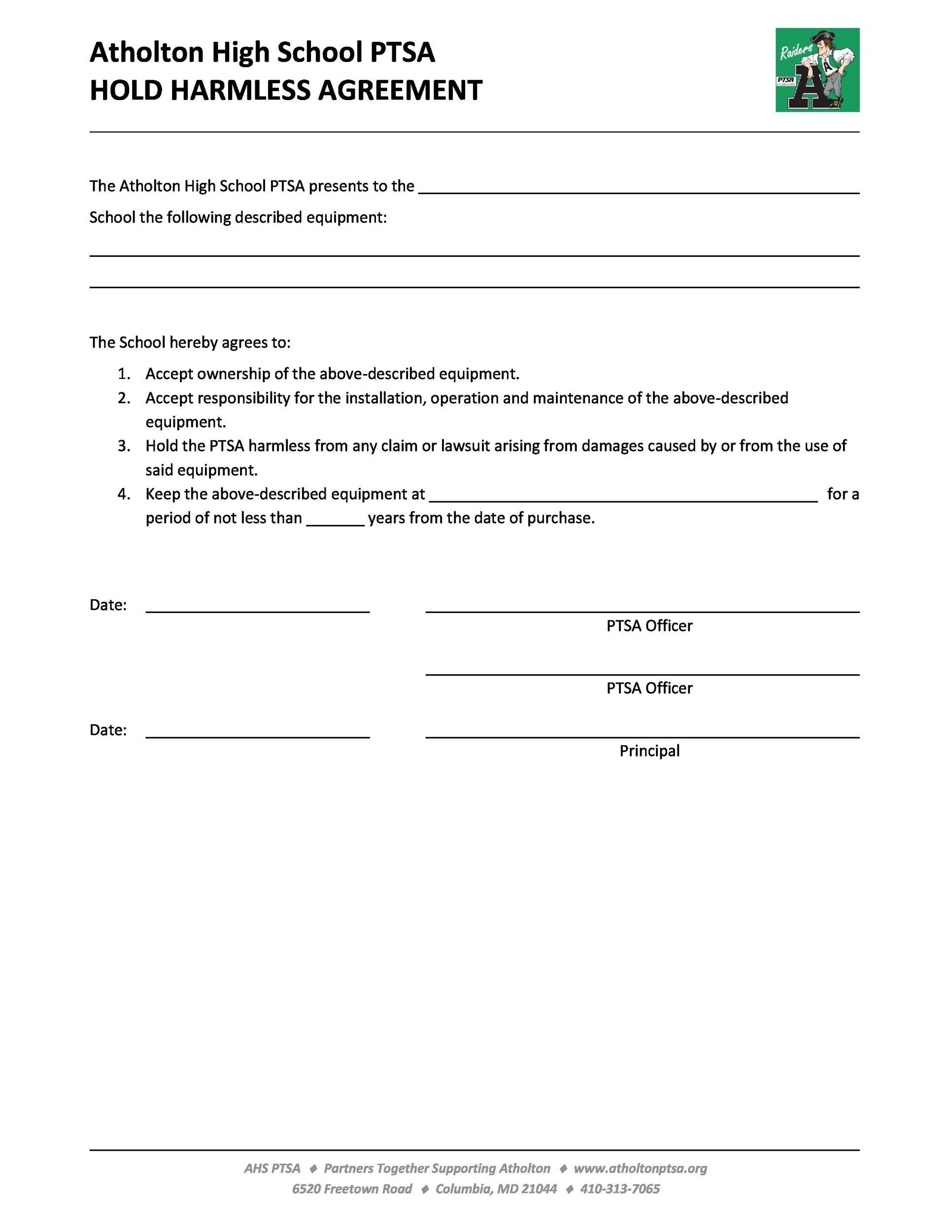
Even a solid template may need professional oversight under certain conditions.
1. Complex Transactions
Projects involving multiple stakeholders, cross-border elements, or high-value assets warrant legal scrutiny.
2. Regulatory Changes
New laws or industry standards may require template amendments. A lawyer can help interpret changes.
3. Dispute Precedents
If your company has faced past disputes, a legal review can identify weaknesses and suggest improvements.
4. High Risk Industries
Construction, oil & gas, or medical services often involve heightened liability. Tailored legal advice is essential.
Conclusion
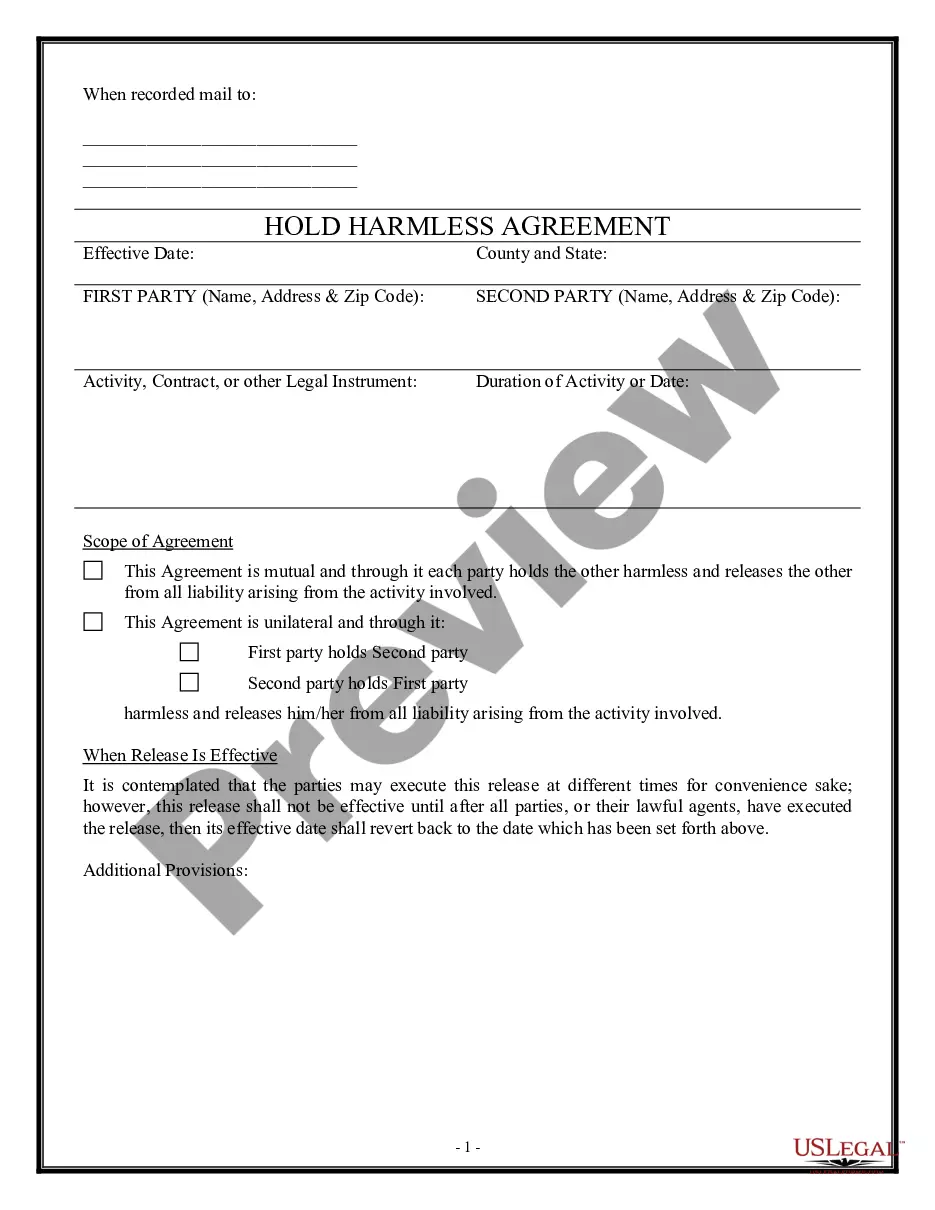
A Simple Hold Harmless Agreement Template is more than a legal formality; it is a proactive shield that protects relationships, finances, and reputations in the dynamic Asian business landscape. By incorporating clear clauses, tailoring provisions to specific scenarios, and maintaining an iterative review process, companies can confidently engage partners, contractors, and vendors without fear of unexpected liabilities. Start with the foundation outlined above, adapt it to your unique needs, and consult legal professionals when necessary to ensure your agreements stand firm against the challenges of tomorrow’s markets.