Job Safety Environmental Analysis Template is the backbone of any organization that takes safety, health, and environmental compliance seriously. By embedding this framework into everyday operations, businesses can identify hazards before they become incidents, protect their workforce, and meet regulatory demands. This guide delves into every element of the template, offers actionable steps for implementation, and shows you how to adapt it to your industry’s unique challenges.
Understanding the Core of JSEA

The Job Safety Environmental Analysis is more than a checklist; it’s a dynamic tool that examines each activity—from routine maintenance to large‑scale construction—through a safety lens. At its heart, the JSEA template asks three pivotal questions: What is the job? Where is it performed? Who is affected? Answering these ensures that risks are mapped to controls before work begins.
What Is Included in a Standard Template?
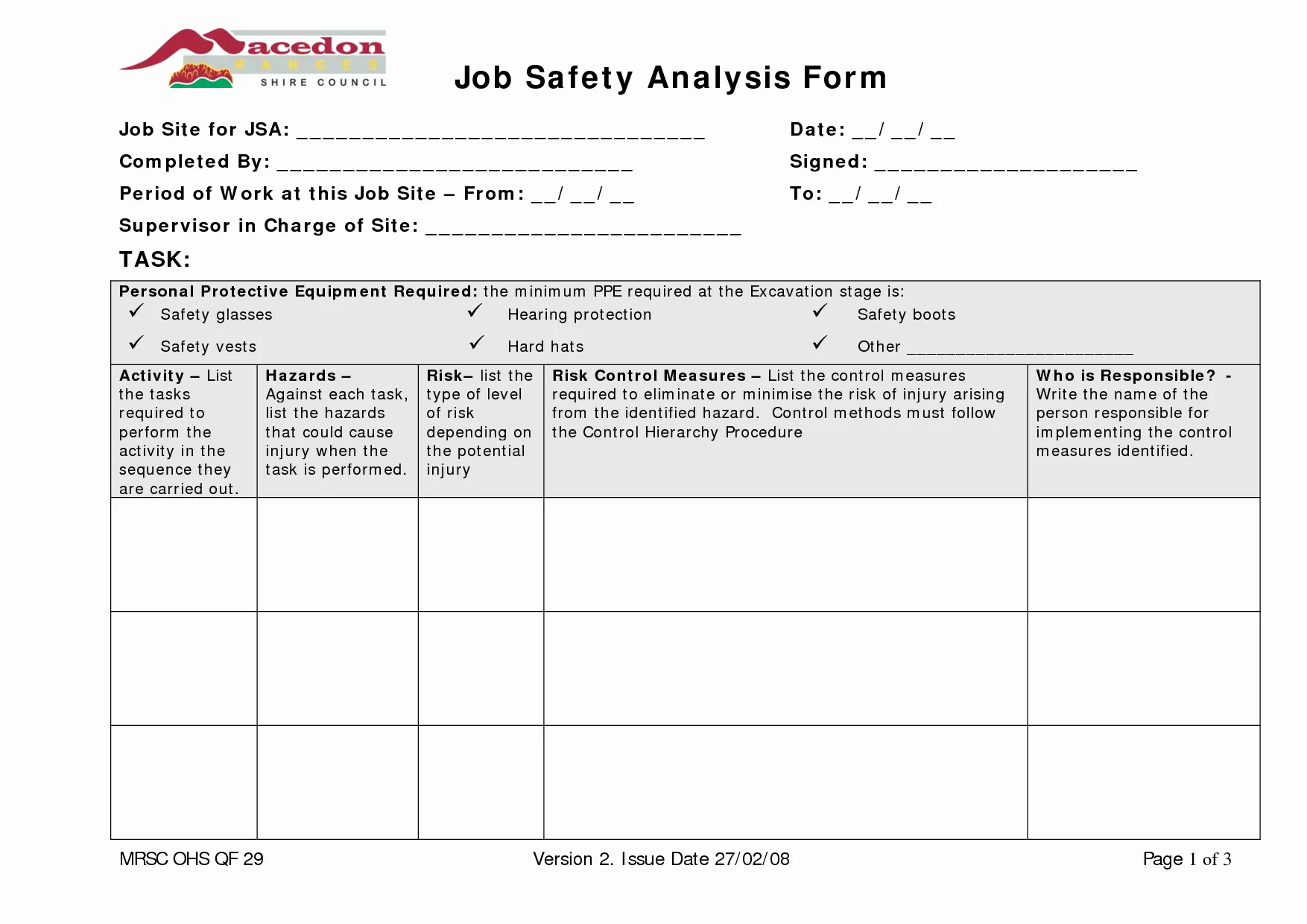
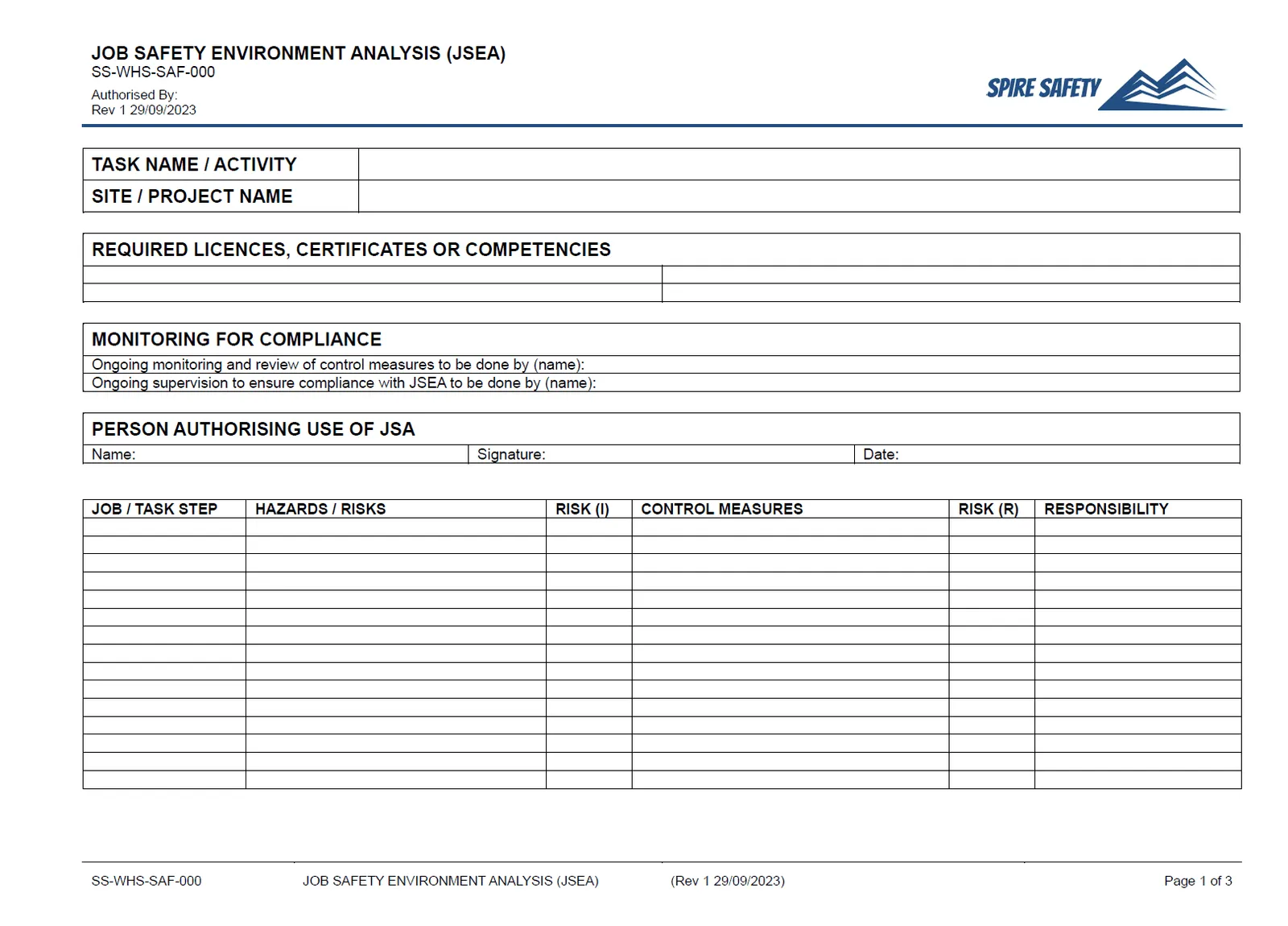
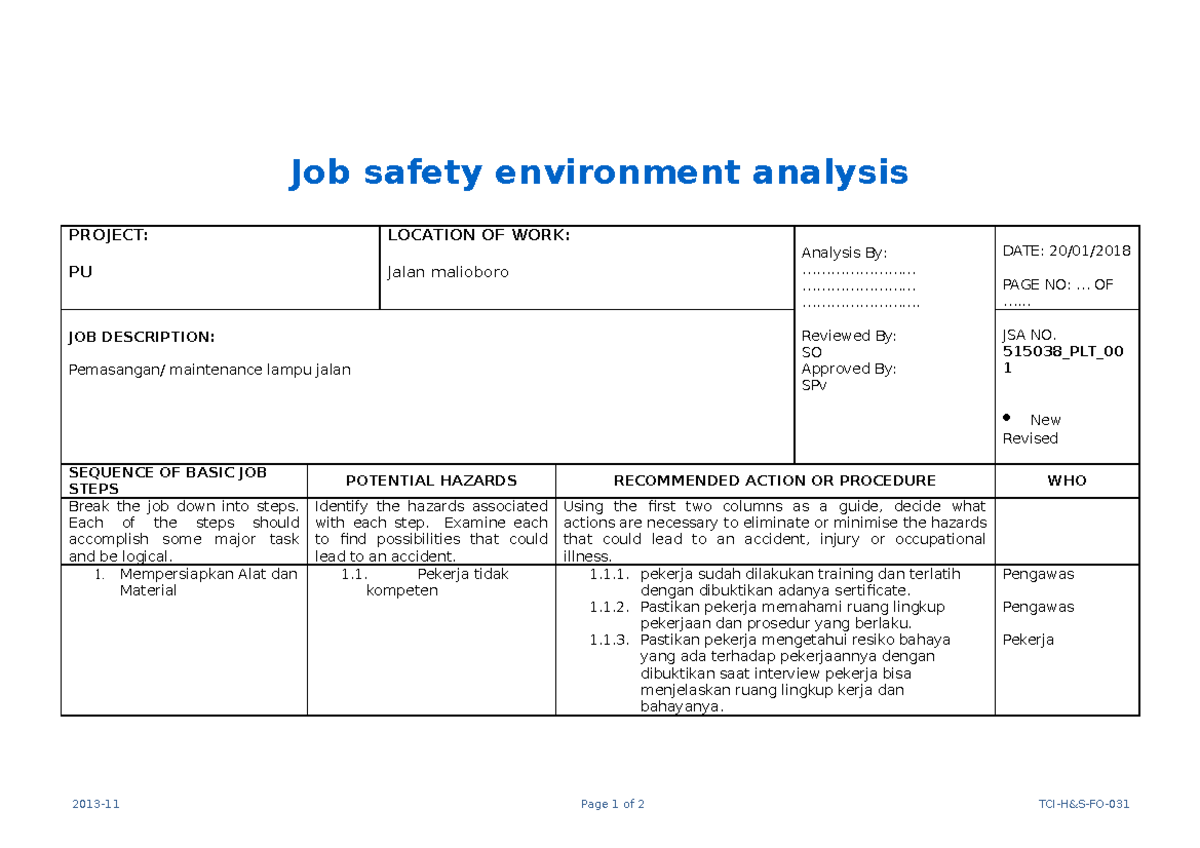
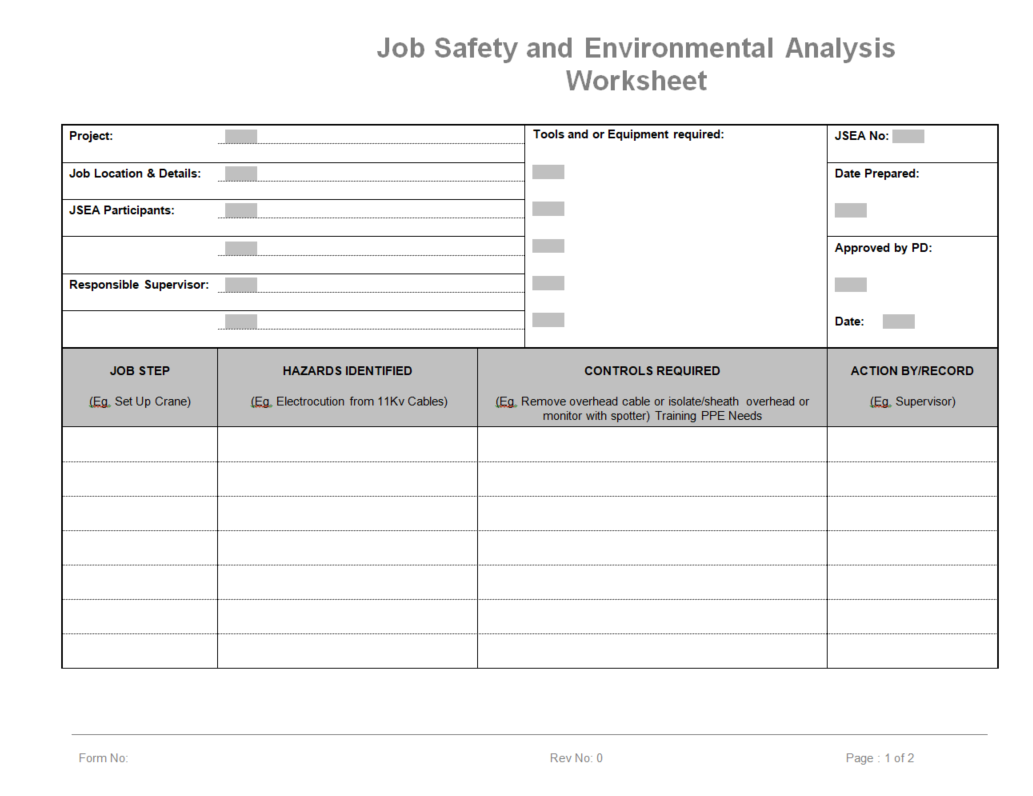
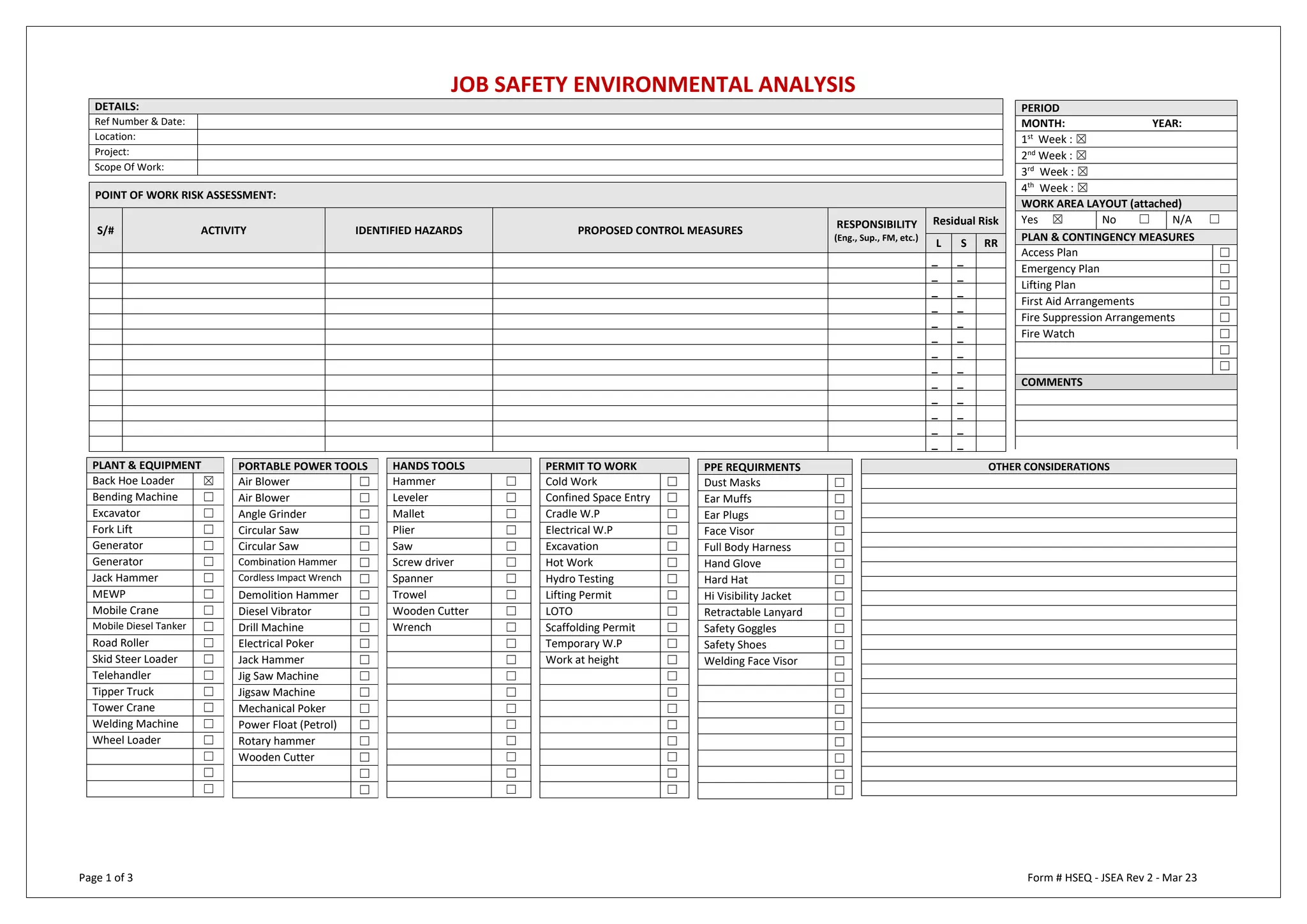
- Job Description: Clear, concise narrative of tasks, duration, and equipment involved.
- Hazard Identification: Physical, chemical, biological, and ergonomic hazards associated with each step.
- Risk Assessment: Likelihood and consequence ratings to prioritize controls.
- Control Measures: Engineering, administrative, and PPE recommendations tailored to identified risks.
- Responsibilities: Who is accountable for implementing each control.
- Monitoring & Review: Timeline and method for evaluating effectiveness post‑implementation.
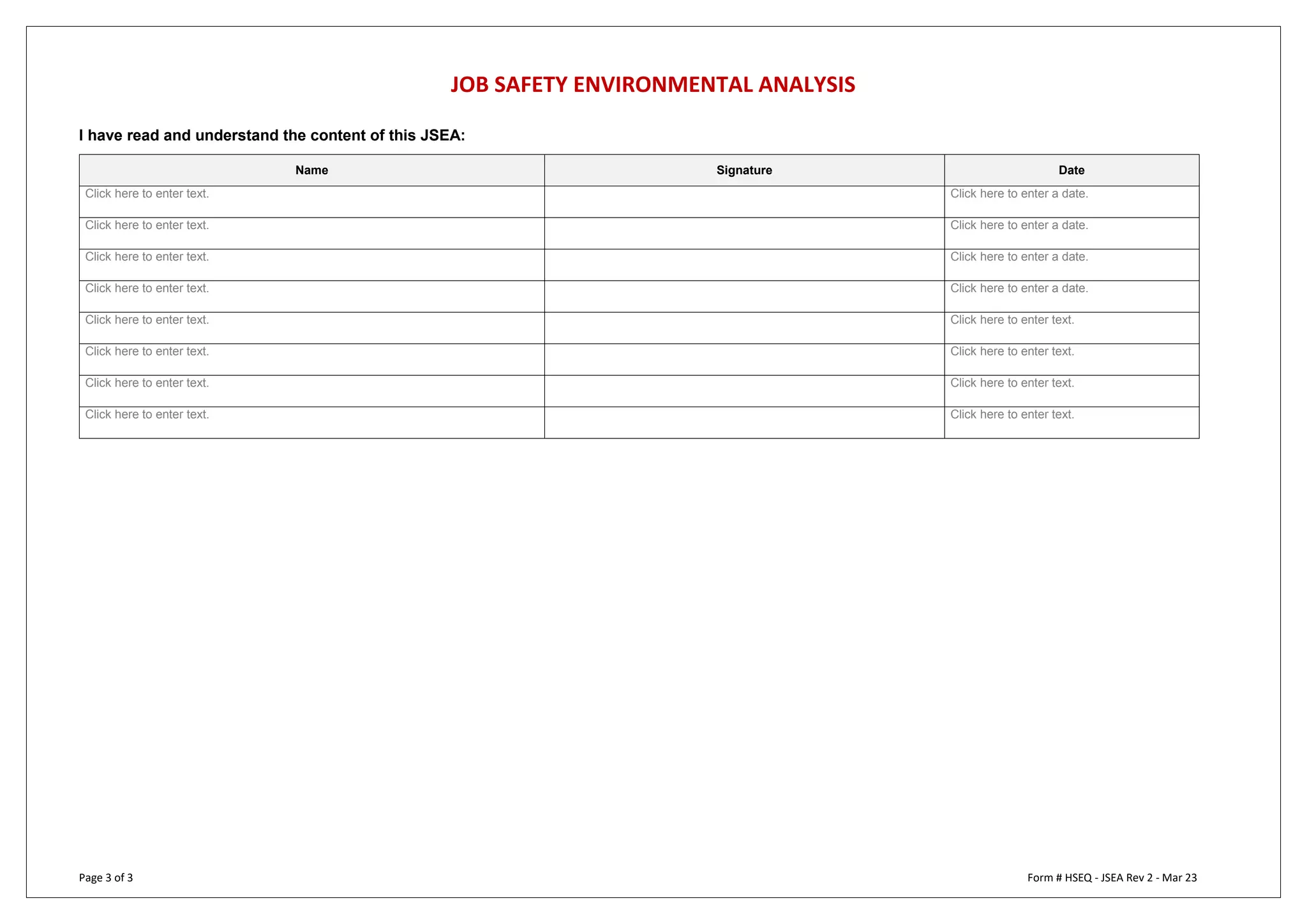
- Sign‑Off Section: Verification by supervisor, safety officer, and worker.
Why Every Workplace Needs a JSEA Template
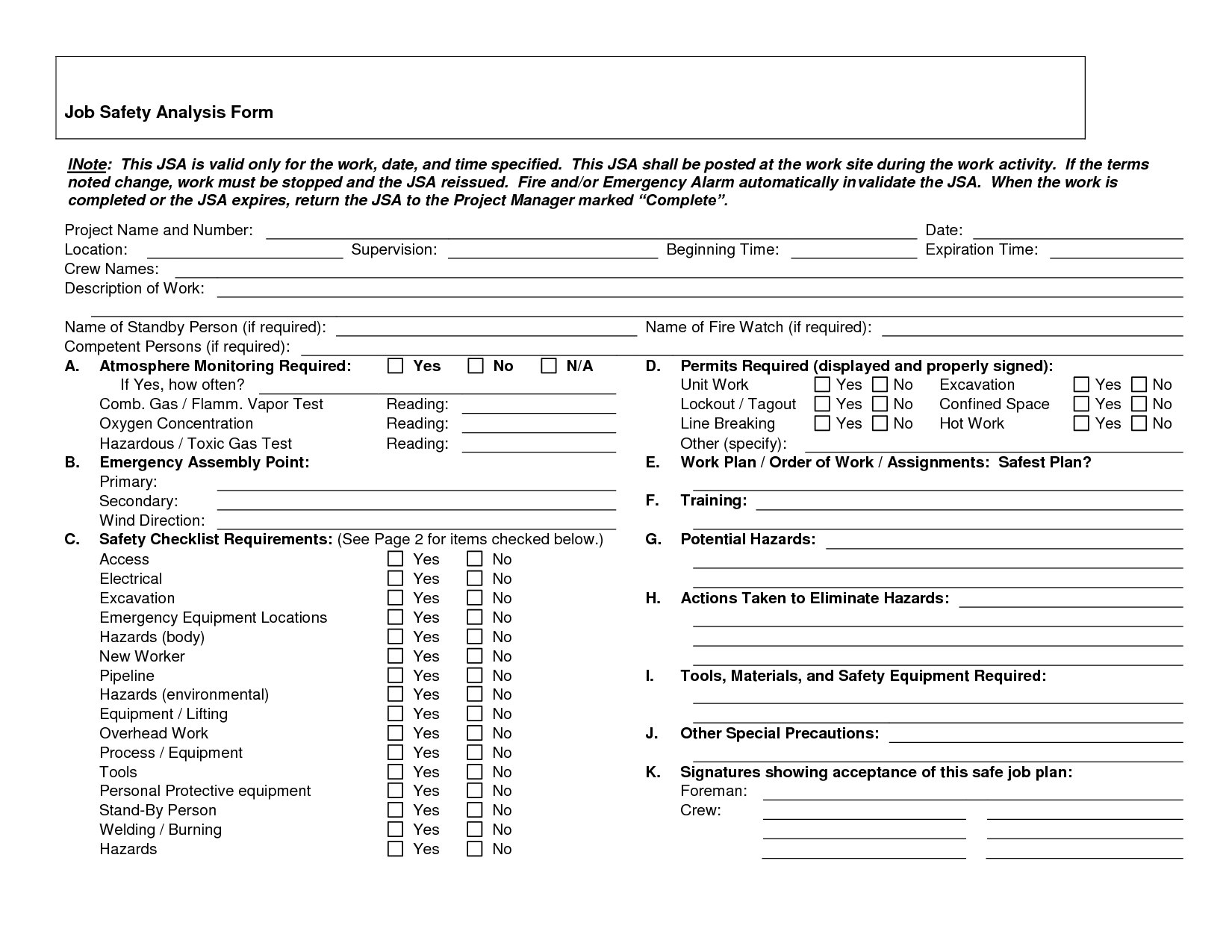
Regulatory frameworks—such as OSHA, ISO 45001, and national environmental laws—mandate systematic hazard analysis. A robust template ensures compliance and demonstrates due diligence during audits. Beyond legal protection, it creates a culture of safety where workers understand the rationale behind each precaution.
Compliance Benefits
Companies that adopt JSEA templates see a measurable decline in incident reports. Documentation provides audit trails and proves that risks were assessed and mitigated. Additionally, insurance premiums often drop as insurers recognize the proactive risk management embedded in the JSEA process.
Operational Efficiency
By clarifying hazards and controls before a job starts, supervisors reduce downtime caused by last‑minute safety adjustments. Workers spend less time troubleshooting unsafe conditions and more time focusing on productive tasks.
Constructing a Powerful JSEA Template
Designing a template is not a one‑size‑fits‑all endeavor. You must tailor it to the specific demands of your operations. The following blueprint offers a step‑by‑step methodology.
1. Identify the Scope
Decide whether the template will cover all jobs or be industry‑specific. For example, a chemical plant will require detailed toxicology sections, whereas a construction site will prioritize fall protection and heavy equipment controls.
2. Build a Modular Layout
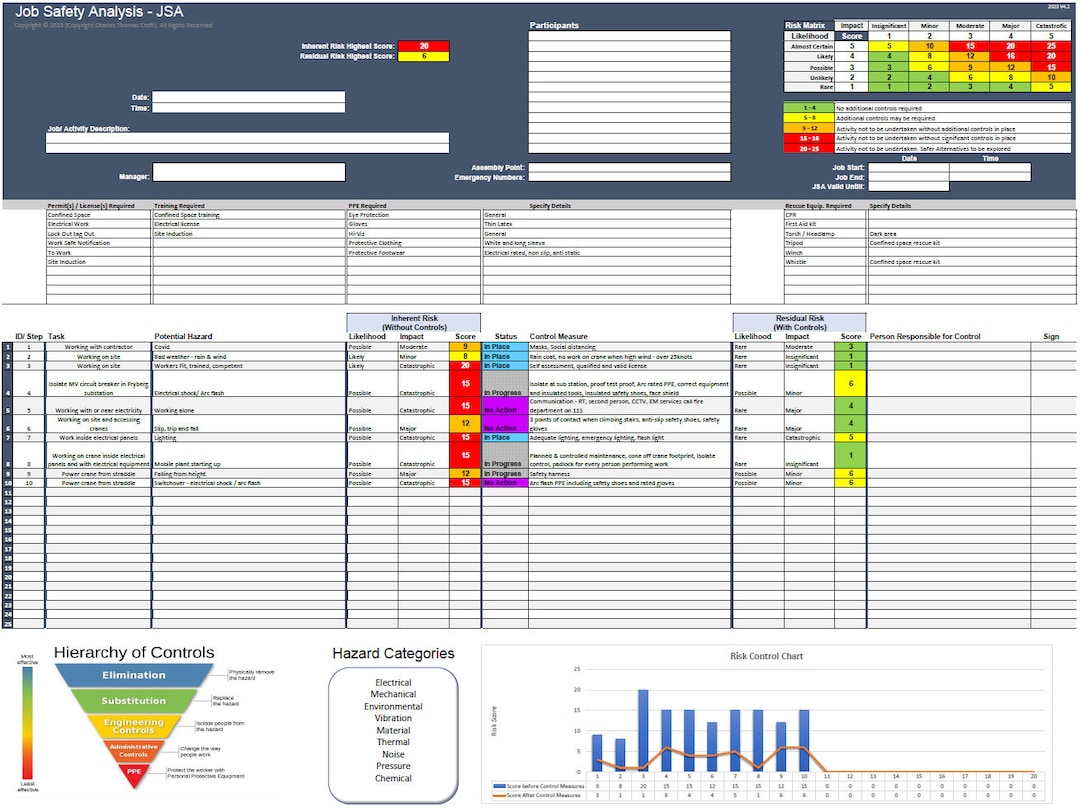
Use a consistent table or form structure that allows for easy updates. Columns might include: Task, Hazard, Risk Rating, Control Measure, Responsible Party, and Review Date.
3. Define Risk Rating Scale
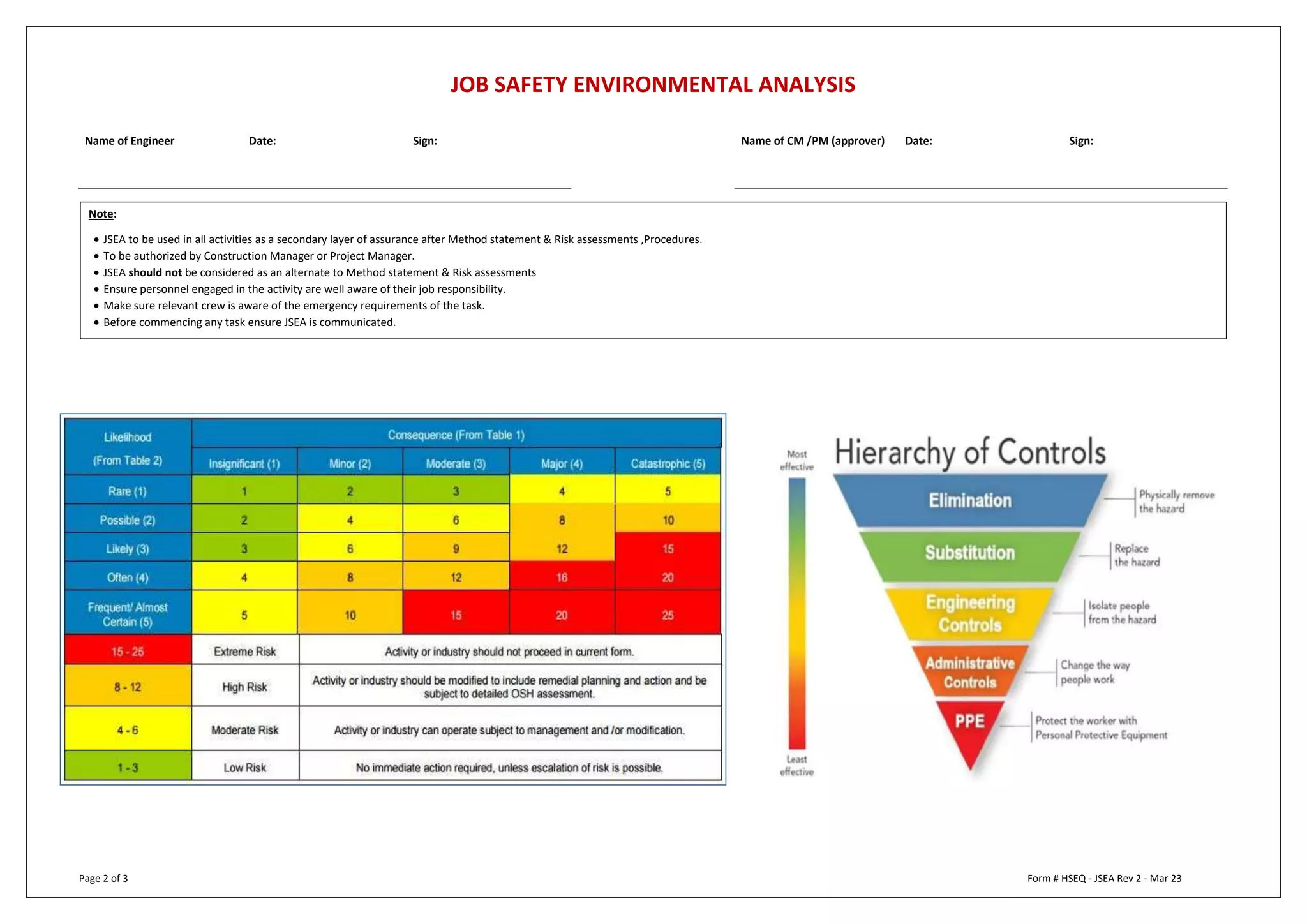
A common scale is 1‑5, where 1 is negligible and 5 is catastrophic. Provide definitions for each level to maintain consistency across teams.
4. Integrate Control Hierarchy
Adopt the hierarchy of controls—elimination, substitution, engineering controls, administrative controls, and PPE. Place the hierarchy as a guideline within the template to encourage best practices.
5. Embed Legal Reference Links
While the final output cannot contain URLs, the template should reference applicable regulations (e.g., “Refer to OSHA 29 CFR 1910.132 for PPE requirements”). This ensures that all safety plans remain law‑compliant.
Applying the Template: A Step‑by‑Step Workflow
Once the template is ready, the process of applying it to actual jobs follows a predictable path. Below is a real‑world scenario: installing a new HVAC unit in a corporate office.
Step 1 – Gather the Team
Include the project manager, safety officer, lead technician, and a representative worker. A diverse team ensures all perspectives—technical, operational, and human—are considered.
Step 2 – Populate Job Description
Describe the exact sequence: removal of the old unit, transportation of the new unit, installation, commissioning, and testing. Note equipment like hoists, ladders, and electrical supplies.
Step 3 – Identify Hazards
For each step, list hazards such as:
- Electric shock while connecting power lines.
- Falling from ladders.
- Strain injuries from lifting heavy components.
- Exposure to refrigerant leaks.
Step 4 – Conduct Risk Assessment
Assign likelihood and consequence ratings. For instance, an electric shock may be rated 4 in likelihood during connection but 5 in consequence, resulting in a high overall risk.
Step 5 – Develop Control Measures
Apply the hierarchy. Eliminate risks by using insulated tools. Substitution may involve using a lower voltage system. Engineering controls could be lockout/tagout procedures. Administrative controls include training and shift scheduling to avoid fatigue. PPE might be insulated gloves and safety glasses.
Step 6 – Assign Responsibilities
Document who will perform each control: the electrician, the safety supervisor, or the site manager.
Step 7 – Schedule Monitoring
Set a review date for after the installation, and plan a follow‑up inspection during the first week of operation.
Step 8 – Sign‑Off
Collect signatures from the project manager, safety officer, and lead technician to formalize the plan.
Customization Tips for Different Industries
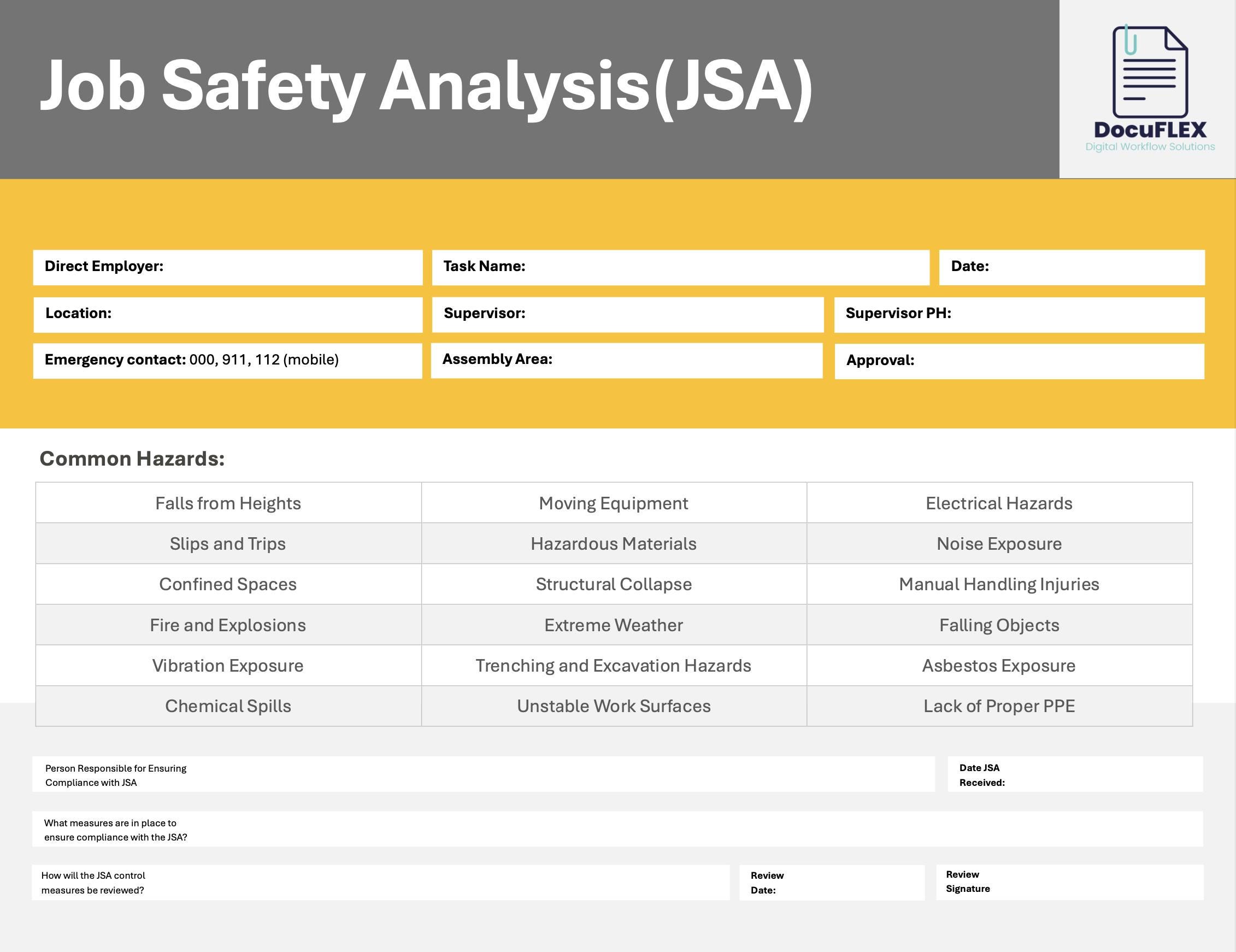
While the core JSEA structure is universal, certain fields require specialized sections.
Construction
Include fall protection plans, excavation safety, and site traffic management. Add a section for temporary scaffolding design reviews.
Healthcare
Introduce biohazard risk categories, sterilization protocols, and patient safety measures. PPE requirements must cover gloves, gowns, masks, and eye protection.
Manufacturing
Highlight machine guarding, lockout/tagout, and repetitive strain injury prevention. Use statistical process control data to adjust risk ratings over time.
Oil and Gas
Add sections for flammable material handling, confined space entry, and emergency evacuation routes. Include detailed spill response plans.
Common Pitfalls and How to Avoid Them

Even the most meticulous template can falter if users neglect certain practices.
Inadequate Training
Workers may misuse controls if they are not properly trained. Schedule regular training sessions and refreshers aligned with the template’s requirements.
Incomplete Hazard Identification
Skipping minor hazards can lead to significant incidents. Conduct a “walk‑through” of the site to surface hidden risks.
Failure to Review
Risk assessments become stale if not updated after changes in equipment or processes. Assign a review cycle—typically quarterly or after any incident.
Overreliance on PPE
PPE is the last line of defense. Use engineering and administrative controls first, then supplement with PPE.
Integrating JSEA Into Your Safety Culture
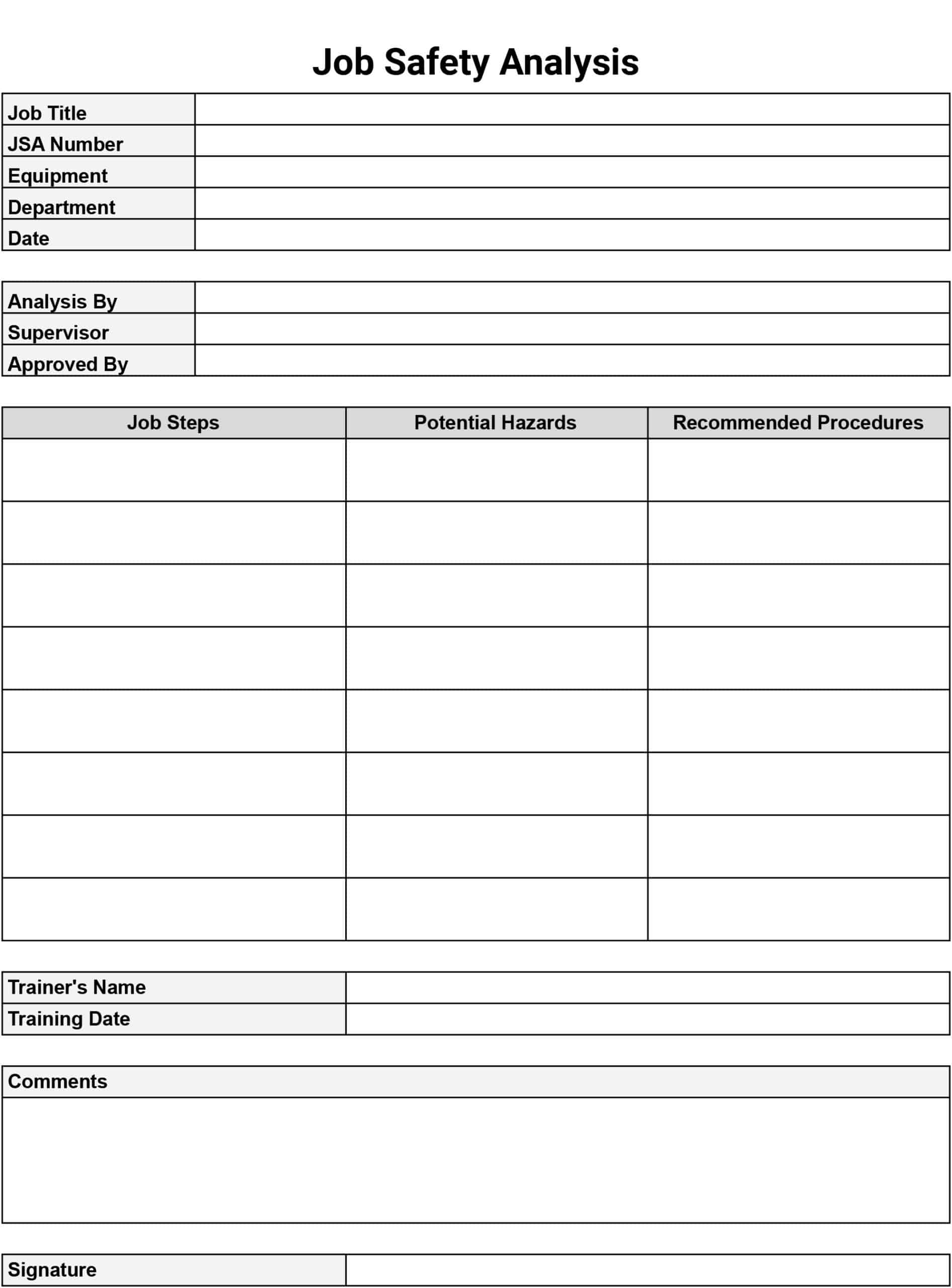
Embedding a template is just the first step. To make it truly effective, it must become part of daily habits.
Leadership Endorsement
Executives should endorse the template through policy statements and resource allocation. This signals its importance to all employees.
Digital Adoption
Deploy a cloud‑based system that allows real‑time editing and audit trails. Mobile access ensures that field workers can view and update JSEAs on the spot.
Feedback Loops
Encourage workers to report when controls are ineffective or when new hazards emerge. Use this data to refine the template continually.
Recognition and Incentives
Reward teams that consistently complete JSEAs ahead of schedule or that identify innovative controls. Recognition boosts participation and ownership.
Conclusion
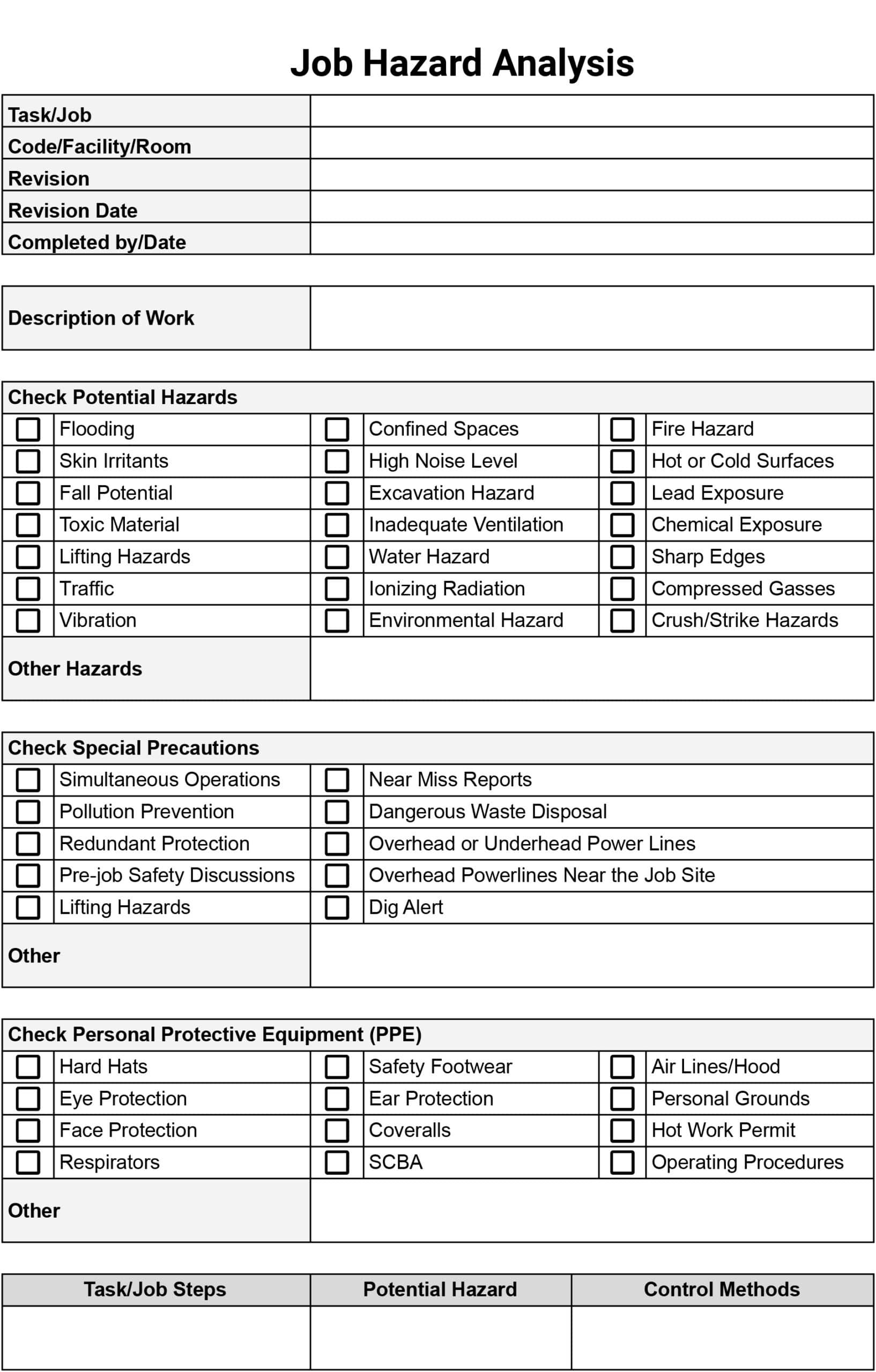
A well‑crafted Job Safety Environmental Analysis Template is a catalyst for safer workplaces. By systematically identifying hazards, assessing risks, and assigning controls, organizations can preempt accidents, comply with regulations, and enhance productivity. Tailor the template to your industry, train your teams, and review it regularly. In doing so, you transform safety from a compliance checkbox into a competitive advantage that protects people, preserves assets, and elevates reputation.