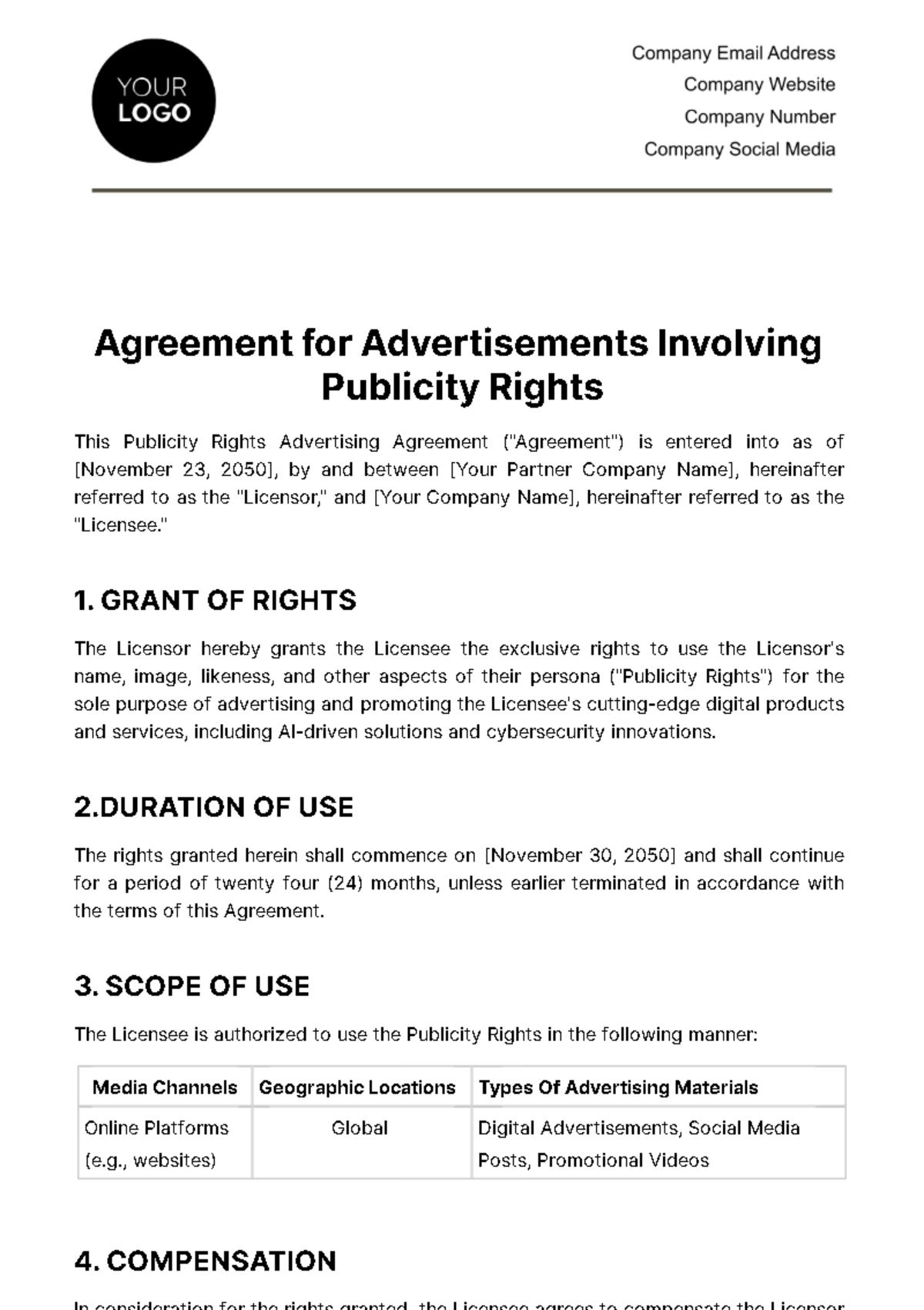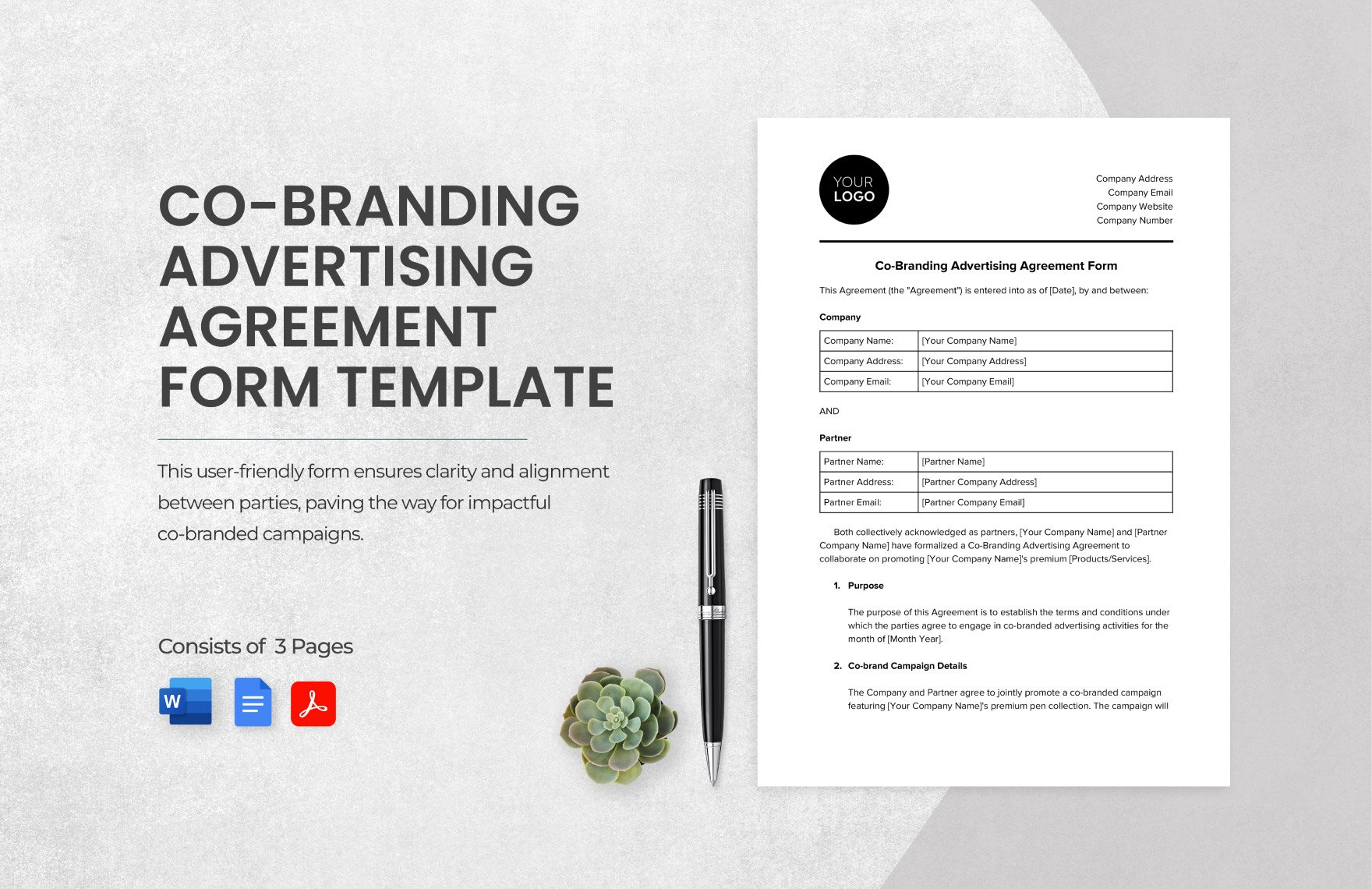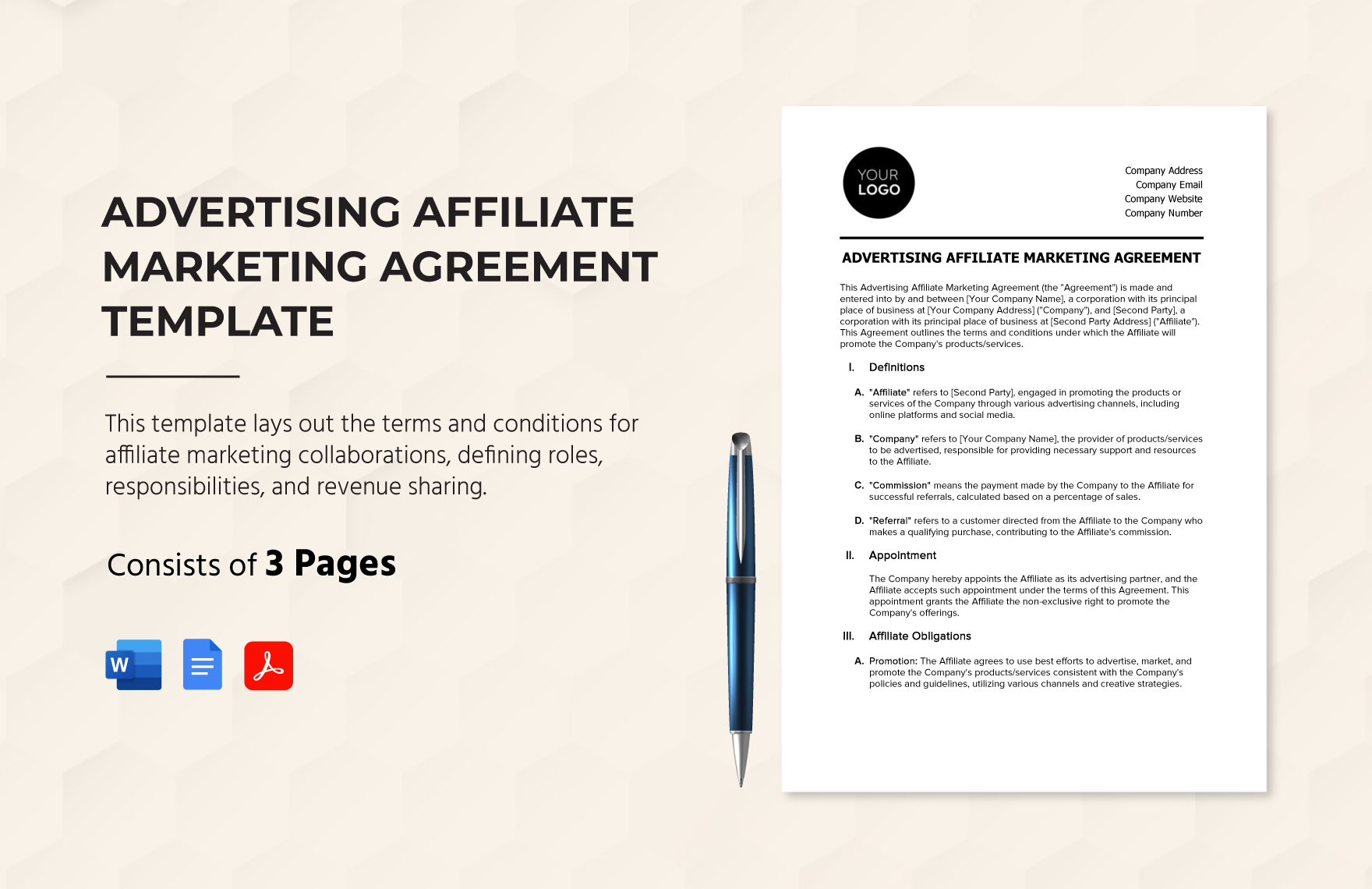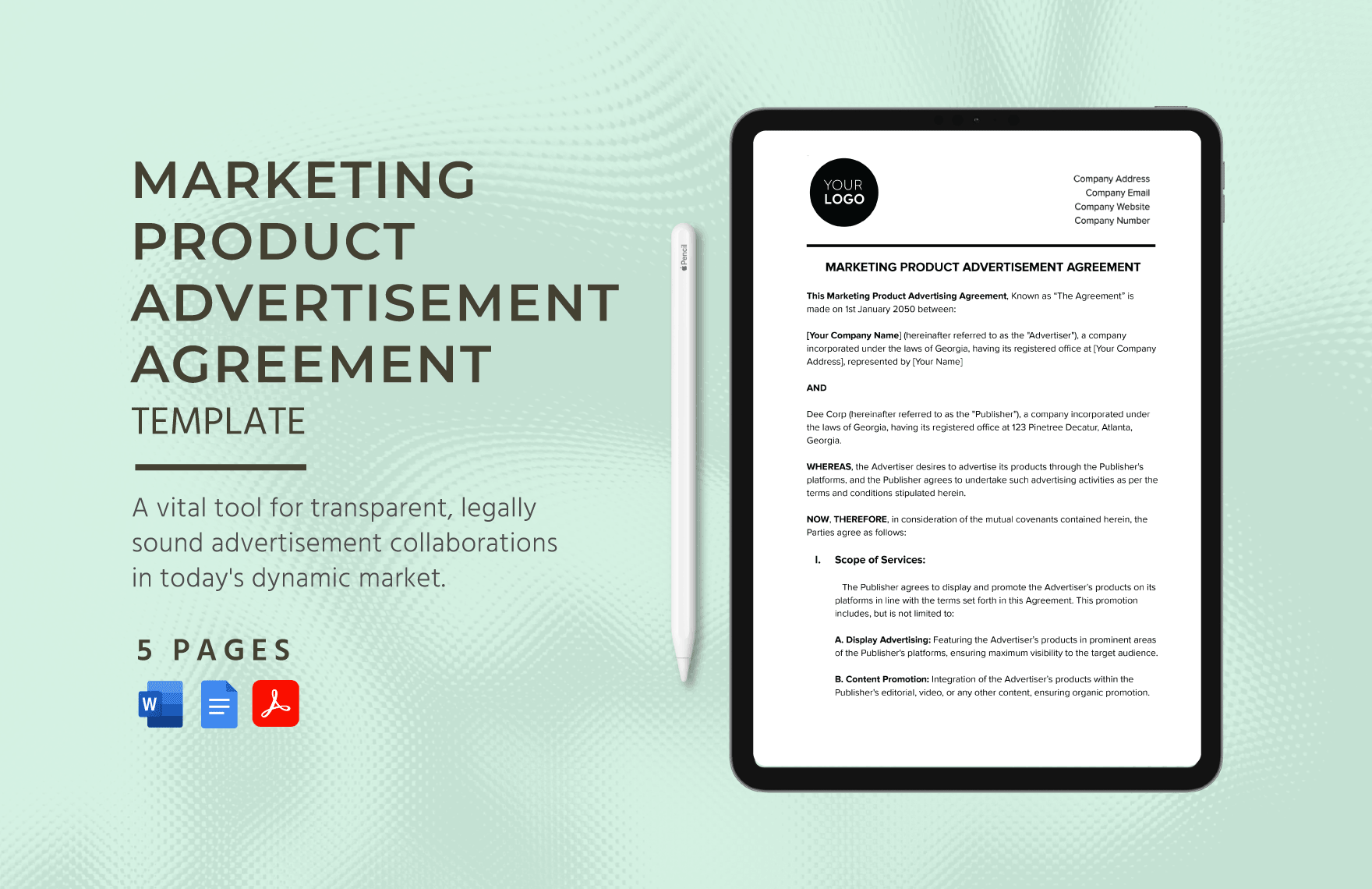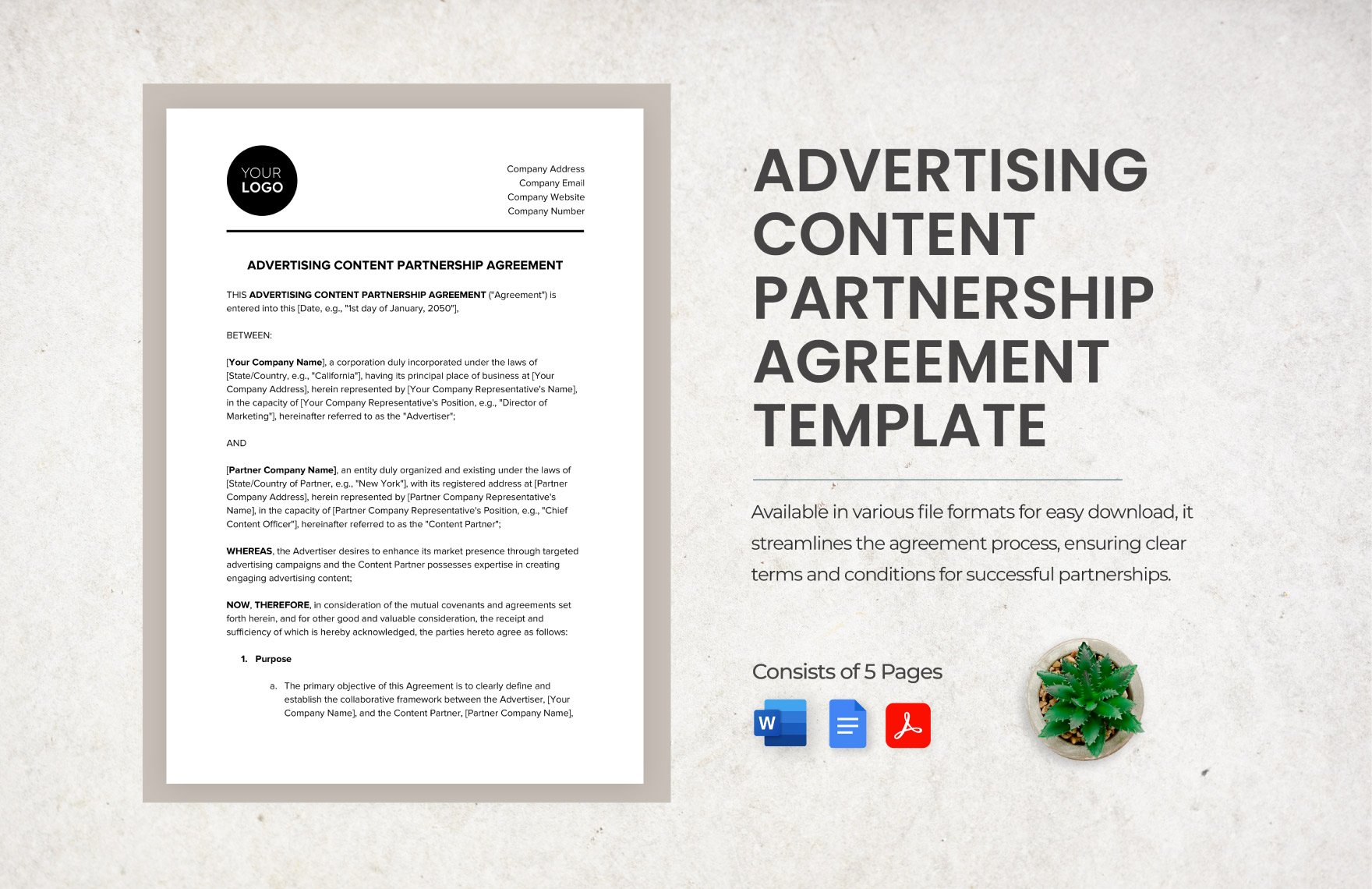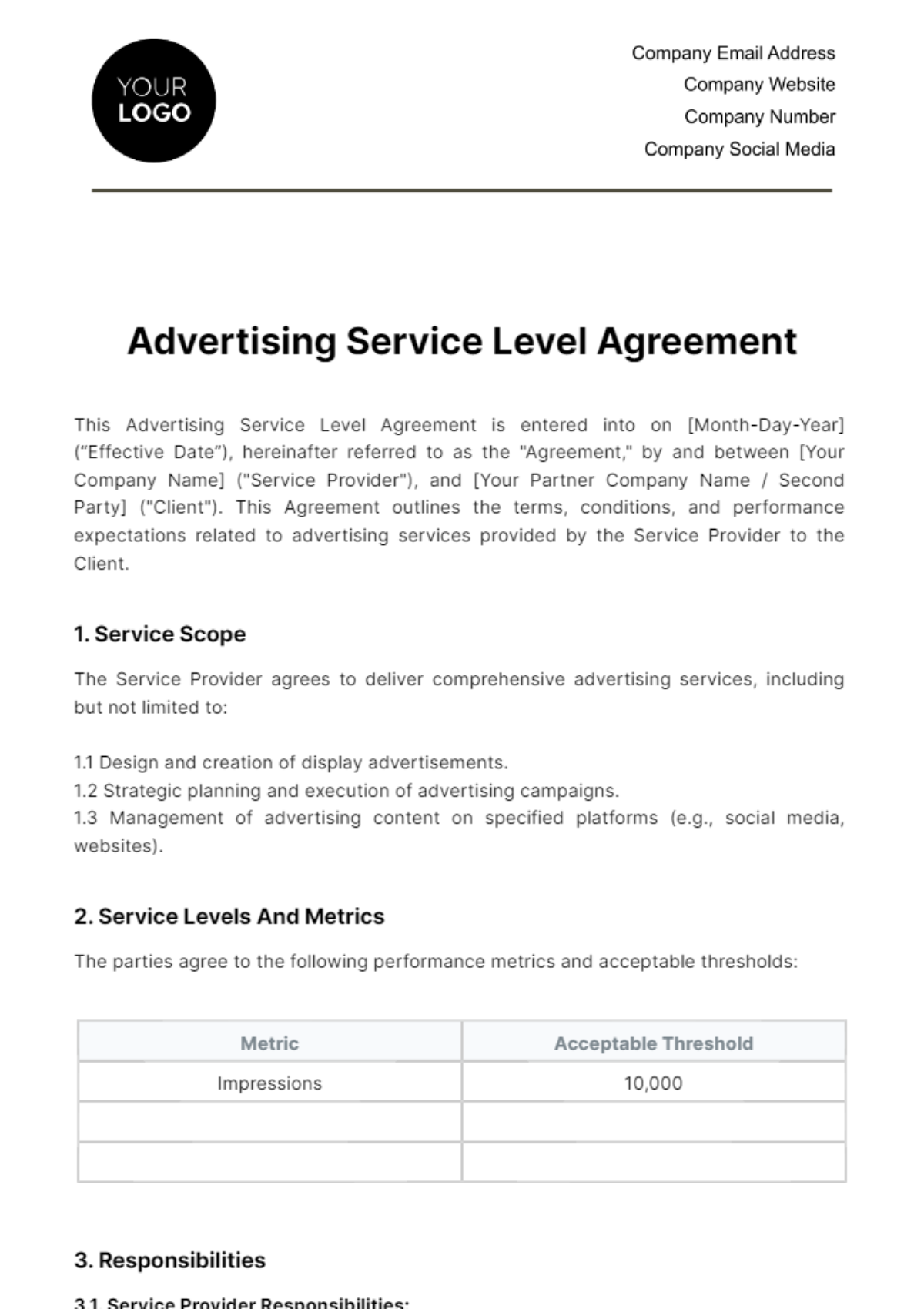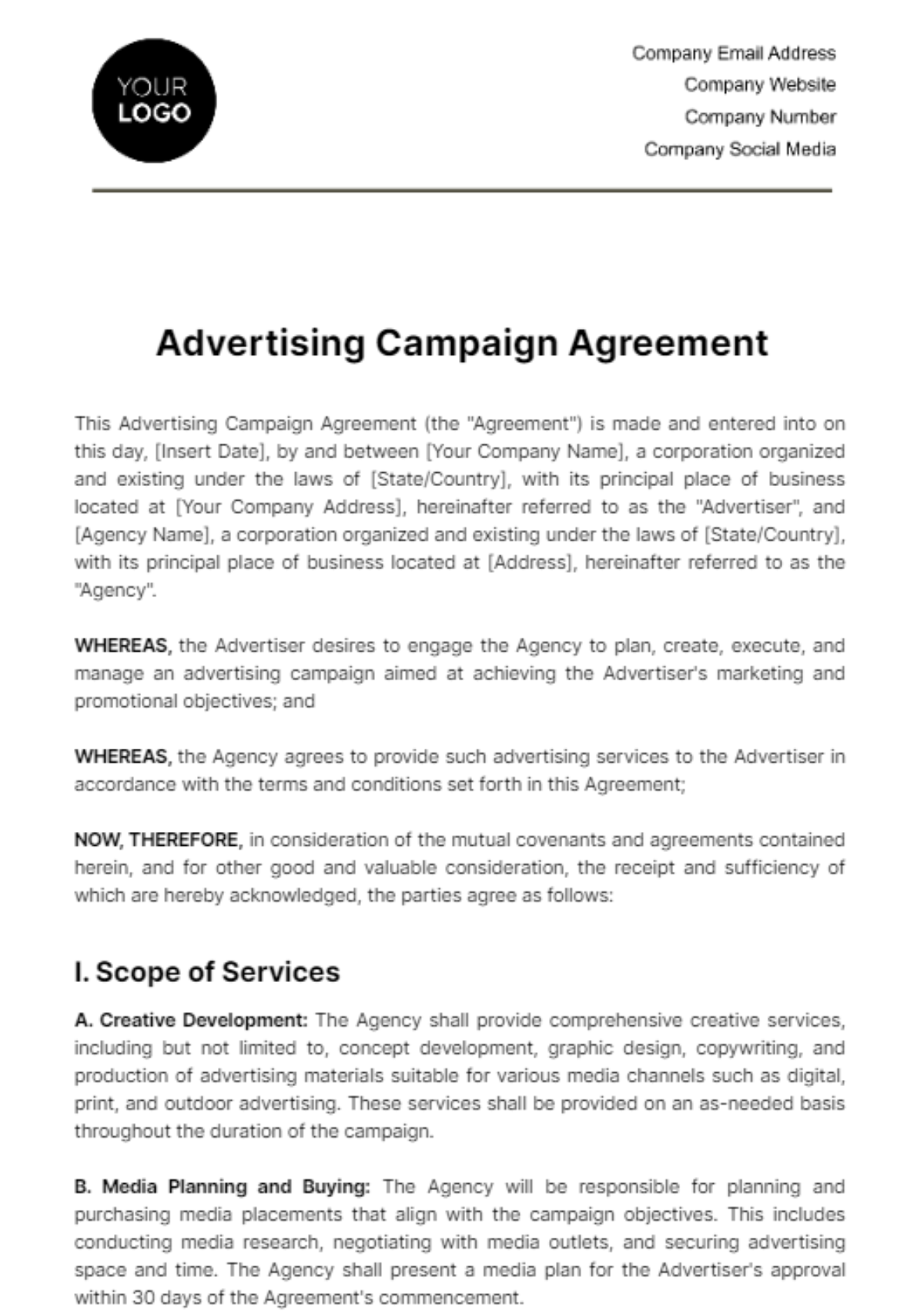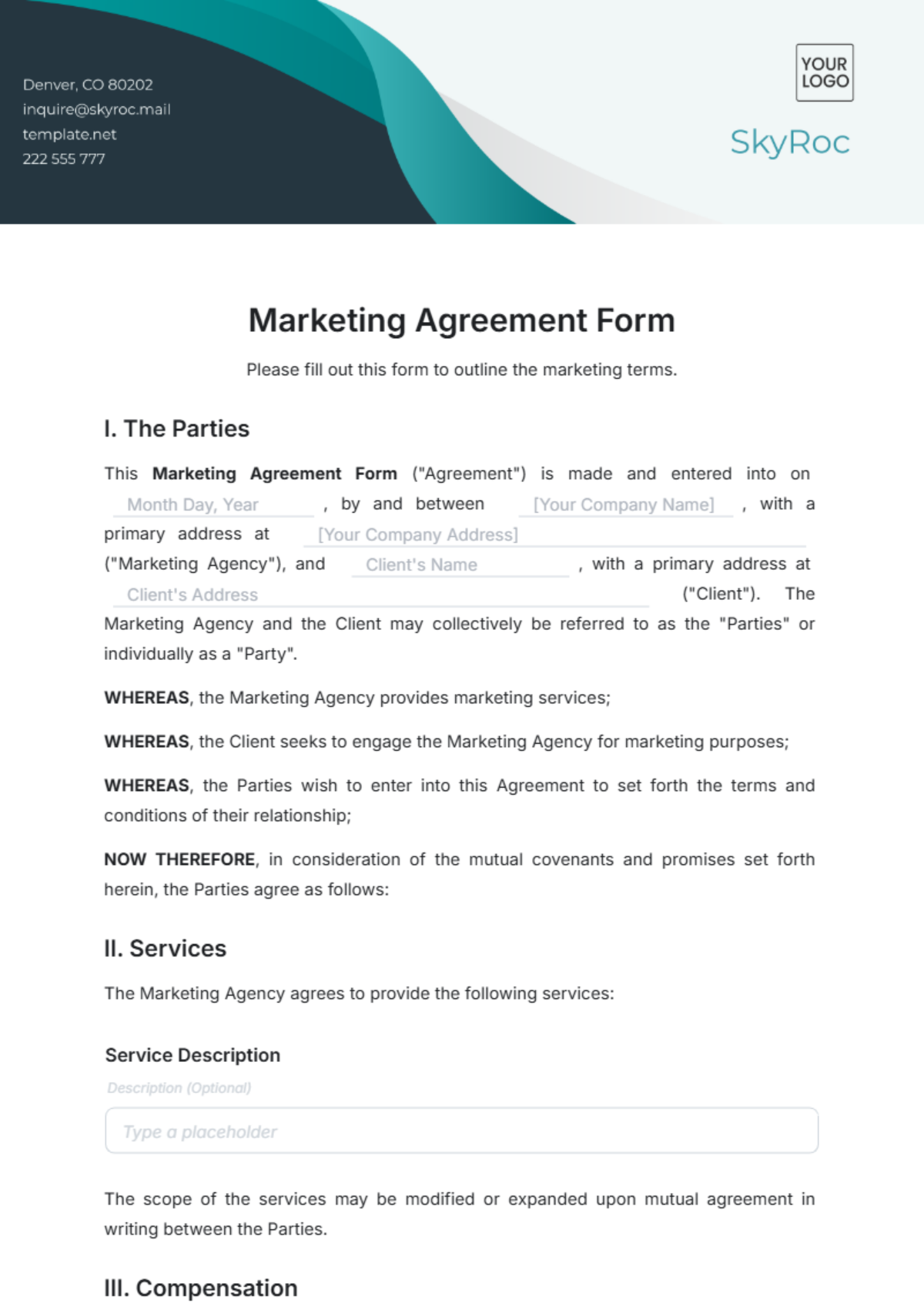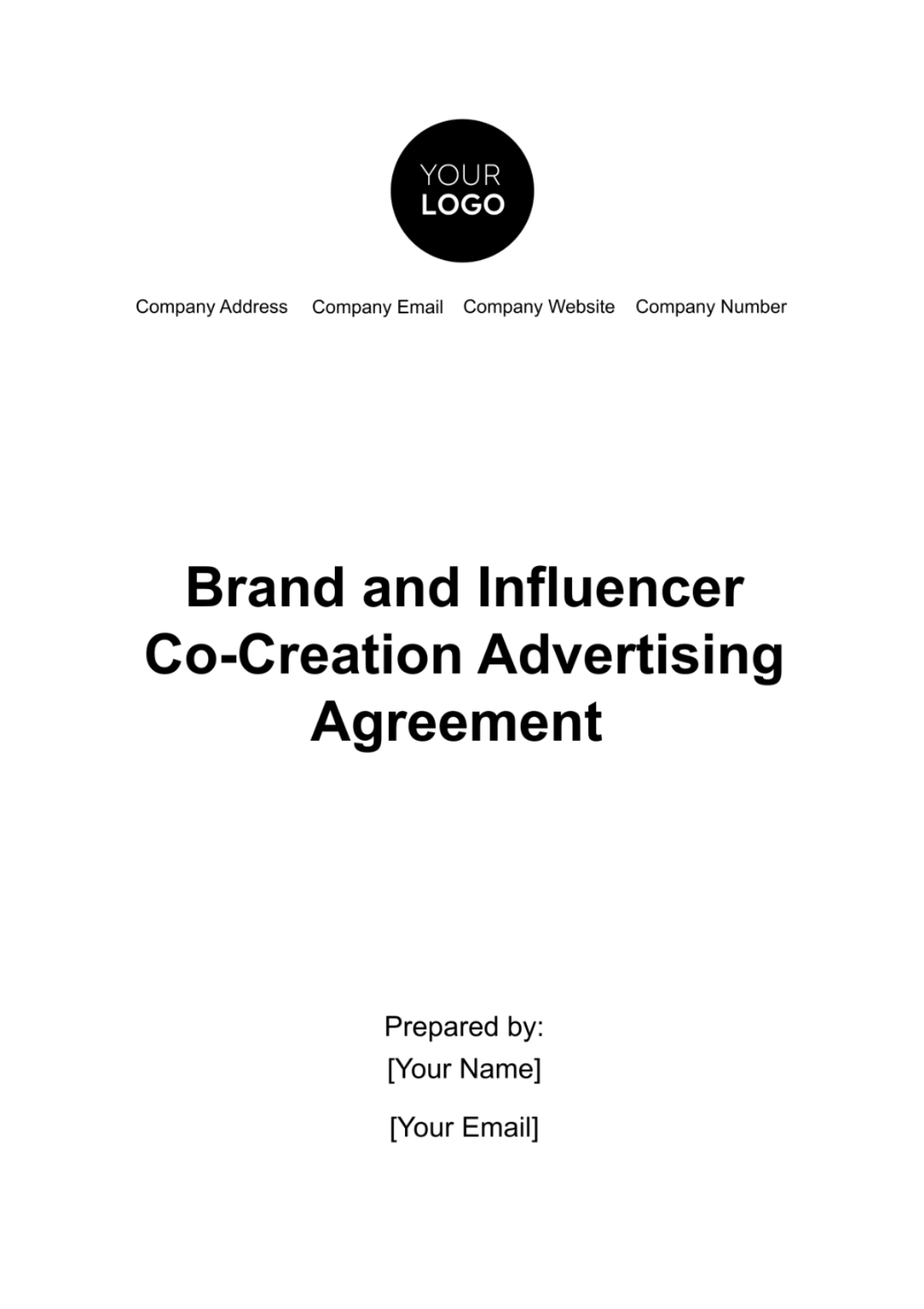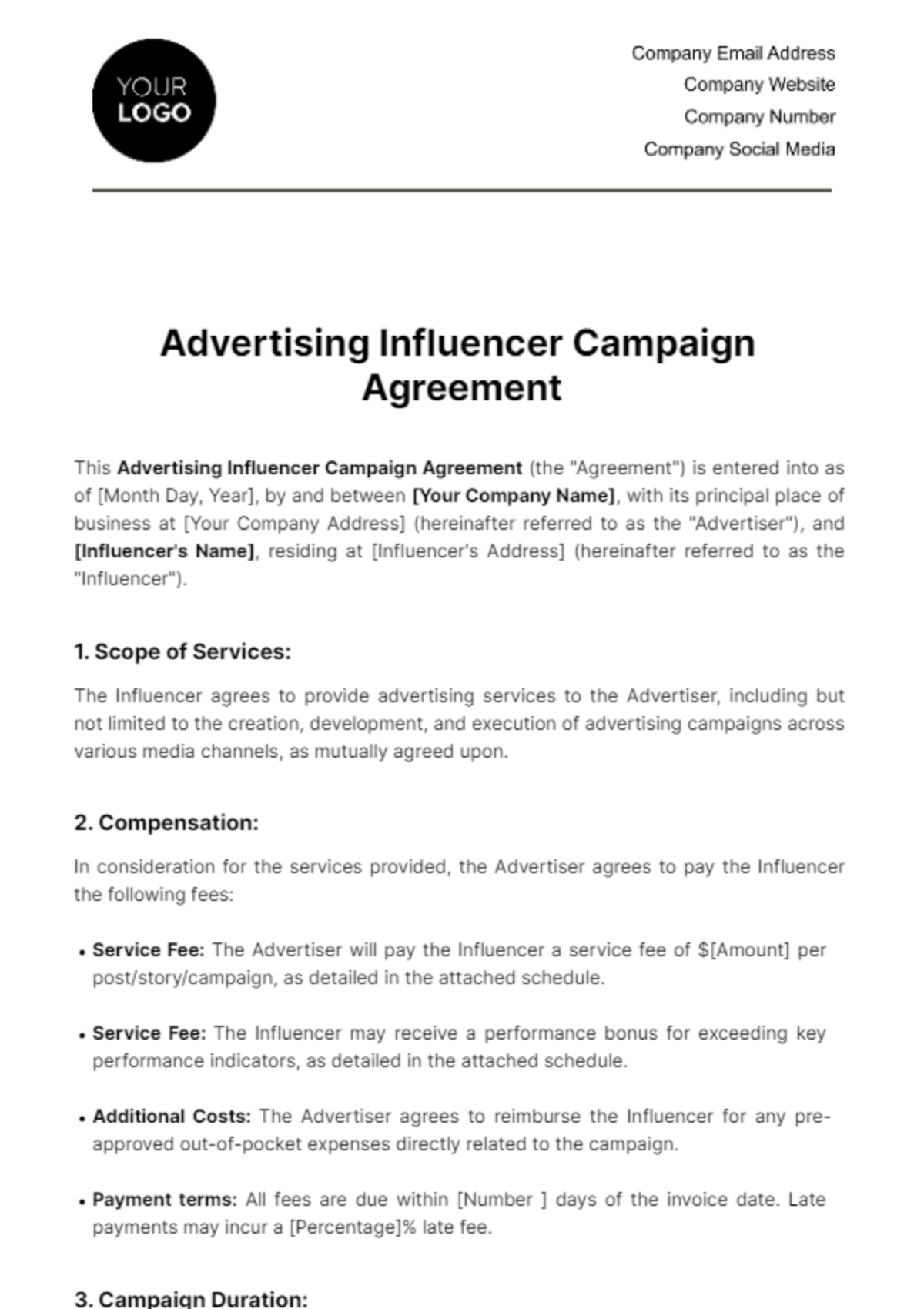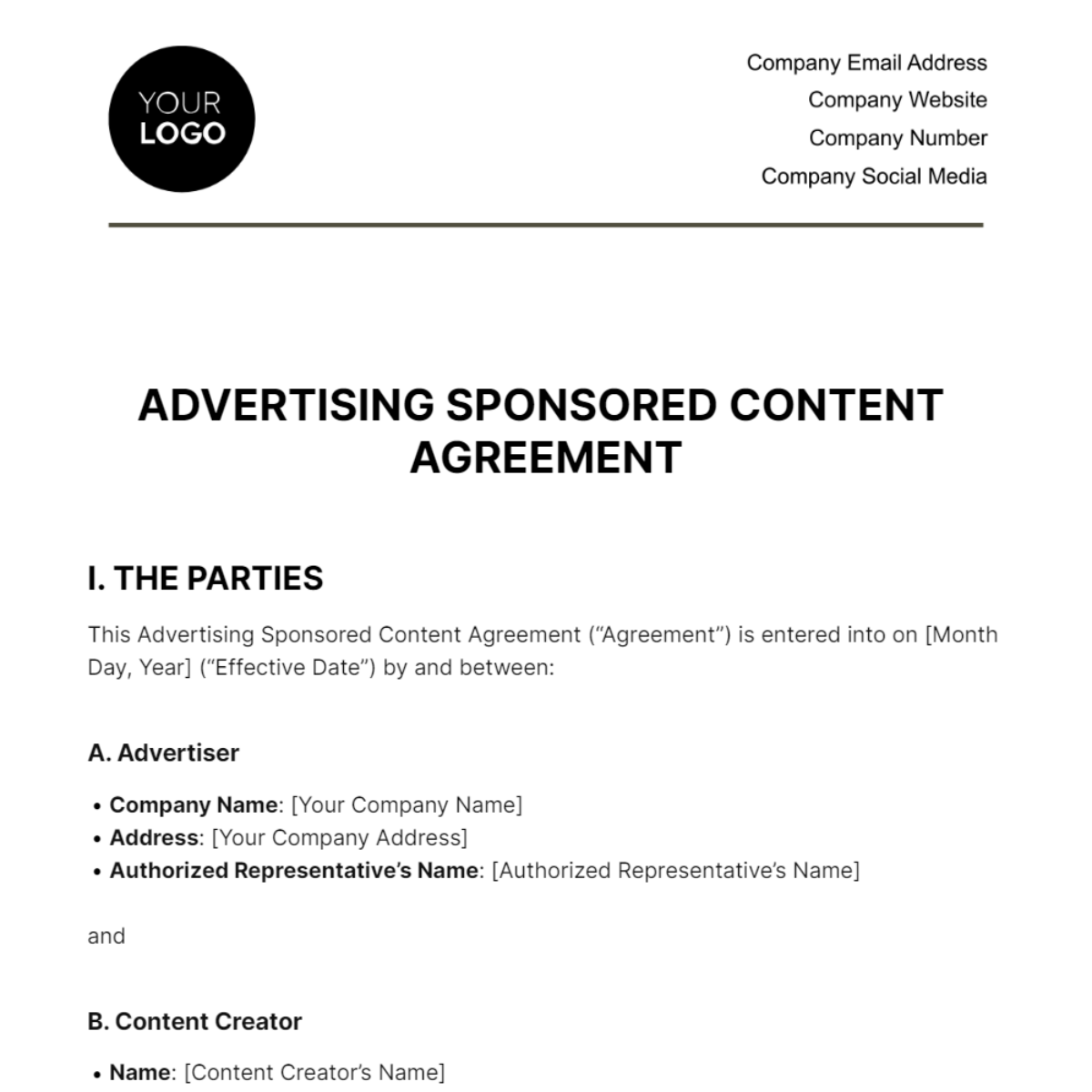
Free Online Advertising Agreement Template is the unsung hero that can turn a chaotic marketing partnership into a smooth, profitable collaboration, and I’m here to show you why it matters, how to make it work for you, and what to watch out for so you never get stuck in a legal quagmire again.
Why a Free Online Advertising Agreement Template Is Essential
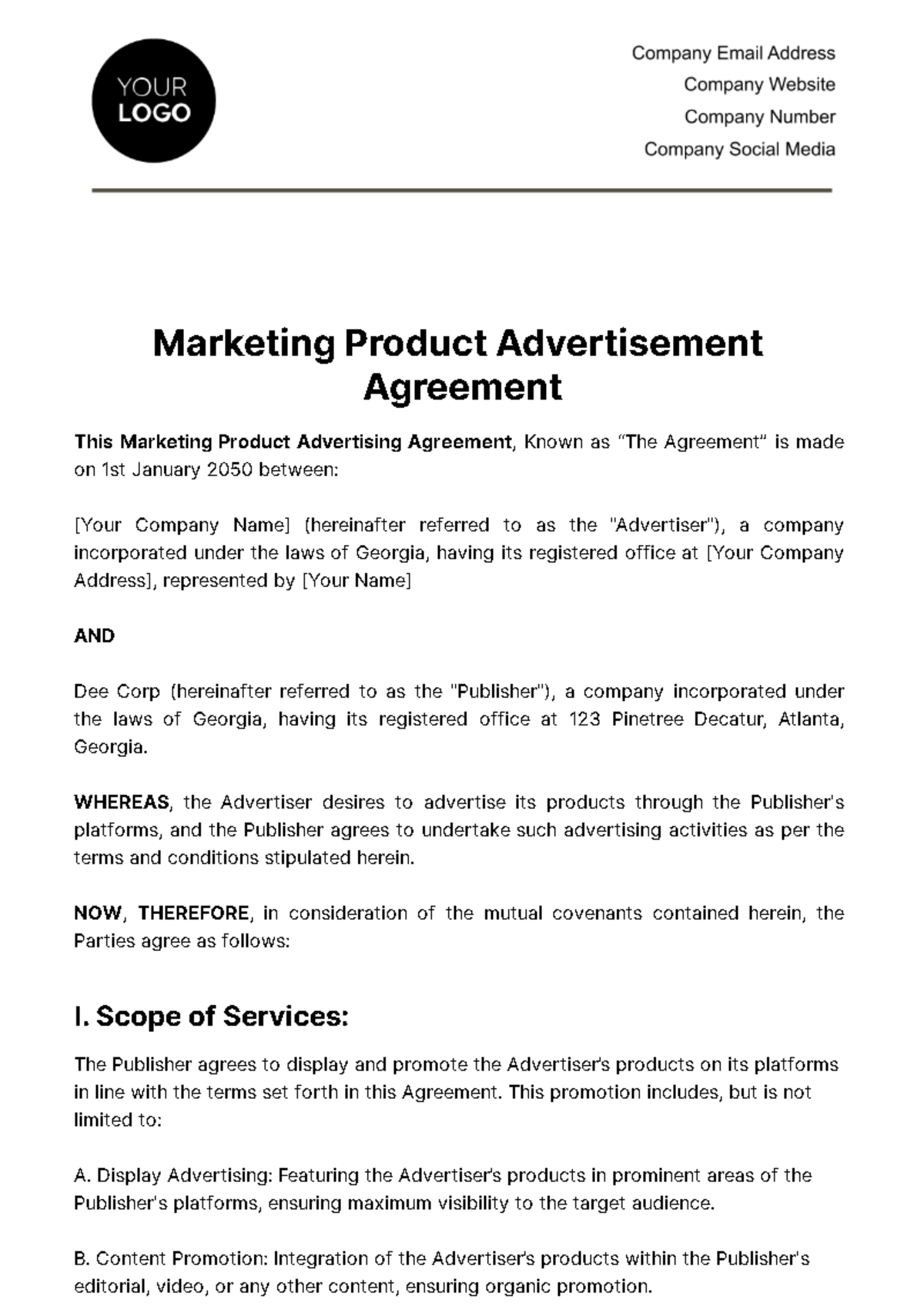
Every marketer, influencer, or small business owner knows that the excitement of landing a new advertising client can quickly evaporate if the expectations aren’t crystal clear from day one. A well‑crafted agreement protects both parties, outlines deliverables, sets payment terms, and prevents misunderstandings that could cost you time, money, and reputation. When the document is free and online, you get the best of both worlds: professional structure without the expense of hiring a lawyer for a basic contract.
Think of it as a safety net. Even the most trustworthy partner can misinterpret a deadline or the scope of work. With a template, you have a proven framework that has been tested across industries, allowing you to focus on creativity instead of legal minutiae.
Key Elements of an Effective Advertising Agreement
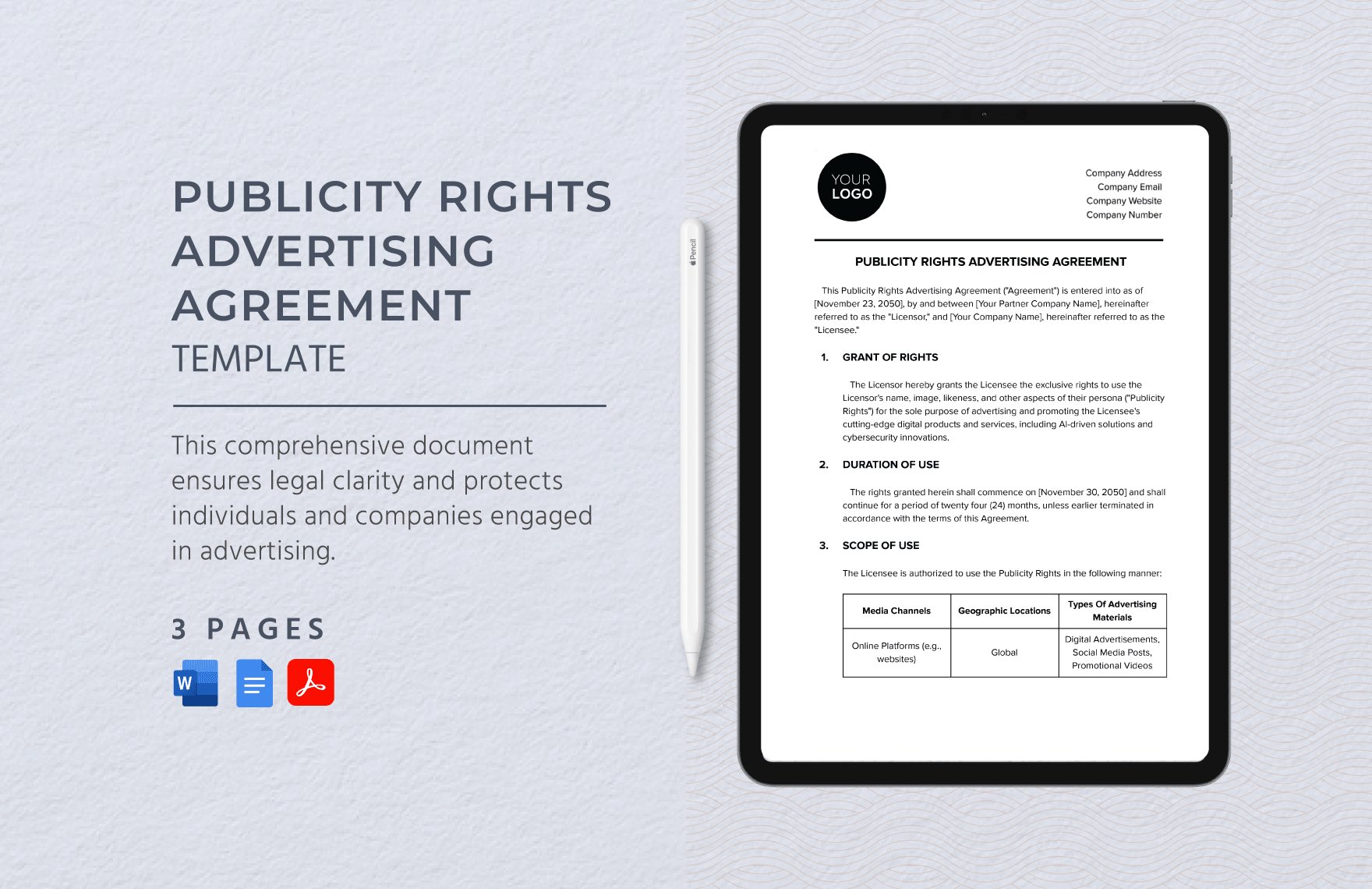
Not all templates are created equal. The most useful ones contain a set of core clauses that address the most common points of friction. Below is a breakdown of those essential components.
Parties and Definitions
The opening section should clearly name the advertiser (client) and the publisher or marketer (you). Define key terms such as “Campaign,” “Deliverables,” and “Metrics” so there’s no room for ambiguity later on.
Scope of Services
Detail exactly what you will provide—ad creative, placement, copywriting, analytics, or a combination thereof. Specify platforms (Google, Facebook, Instagram, TikTok, etc.) and any limits on impressions, clicks, or budget caps. The more precise you are, the less likely a dispute will arise.
Timeline and Milestones
Include start and end dates, as well as any intermediate milestones such as “first draft due,” “creative approval,” and “launch date.” Assign responsibility for each milestone and note any penalties for missed deadlines, which encourages both parties to stay on schedule.
Compensation and Payment Terms
State the total fee, payment schedule (up‑front, milestones, or post‑performance), accepted payment methods, and any late‑fee percentages. If you’re offering performance‑based bonuses, spell those out clearly to motivate the advertiser without surprise.
Performance Metrics and Reporting
Outline the key performance indicators (KPIs) you’ll track—click‑through rate (CTR), cost per acquisition (CPA), return on ad spend (ROAS), etc. Include the frequency of reporting (weekly, bi‑weekly, monthly) and the format (PDF, dashboard link). This transparency builds trust and makes it easy to prove value.
Intellectual Property Rights
Clarify who owns the creative assets once the campaign ends. Most advertisers want full ownership, while marketers may retain the right to showcase the work in their portfolio. A balanced clause protects both interests.
Confidentiality and Data Protection
Both parties will exchange sensitive information—budget numbers, audience data, or proprietary strategies. Include a confidentiality clause and reference any applicable data‑privacy regulations (like GDPR or CCPA) to reassure your client you handle data responsibly.
Termination and Cancellation
Life happens. Provide a clear path for either side to terminate the agreement, whether for breach, non‑payment, or force‑majeure events. Define any notice period and the financial consequences of early termination.
Indemnification and Liability Limits
Protect yourself from lawsuits that could arise from ad content (e.g., false claims, copyright infringement). A standard indemnification clause shifts responsibility for third‑party claims back to the advertiser, while a liability cap limits your exposure.
Governing Law and Dispute Resolution
Specify which state’s law will govern the contract and whether disputes will be resolved through arbitration, mediation, or court. This avoids costly jurisdictional battles down the line.
How to Customize the Template for Your Business
A template is a starting point, not a one‑size‑fits‑all solution. Tailor it to reflect your brand voice, service model, and the unique needs of each client.
Adjust the Scope to Match Your Services
If you specialize in influencer marketing, replace generic “ad placement” language with “influencer outreach, content creation, and audience engagement.” Add sections for brand guidelines compliance and influencer contract approvals.
Insert Your Branding Elements
Replace placeholder logos and headers with your company’s logo, colors, and tagline. This not only looks professional but also reinforces brand consistency every time a client signs the document.
Scale Payment Terms to Fit Cash Flow
For high‑budget campaigns, you might want a 50/50 split—half up front, half upon completion. For smaller clients, a monthly retainer could be more manageable. Adjust the payment schedule in the template to reflect these variations.
Localize Legal Language
If you operate in multiple states or countries, make sure the governing law clause aligns with the jurisdiction where you’ll enforce the contract. You may need to add a clause for cross‑border data transfers if you’re handling EU user data.
Add Optional Add‑Ons
Consider including an “Optional Services” appendix where you can list additional offerings—like A/B testing, landing page design, or retargeting—each with its own pricing. This makes upselling seamless and documented.
Common Pitfalls and How to Avoid Them
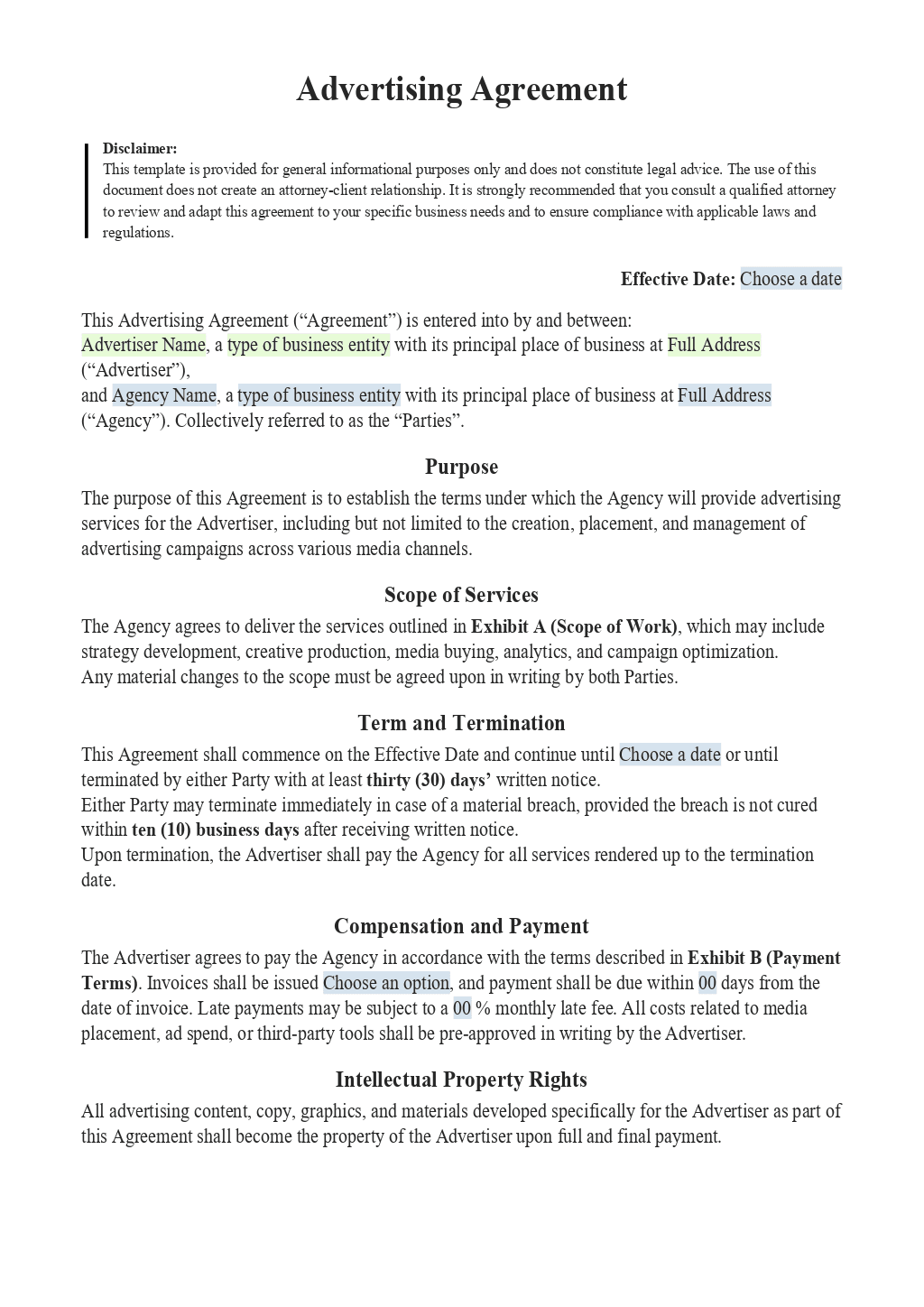
Even with a solid template, mistakes can slip in if you’re not vigilant. Below are the most frequent errors and practical ways to sidestep them.
Vague Deliverables
Never leave a deliverable open‑ended. Instead of “provide social media ads,” write “create three 15‑second video ads for Instagram Reels, each accompanied by two static image posts.” Specificity eliminates guesswork.
Overlooking Revision Limits
Clients often request multiple rounds of revisions. Set a clear limit (e.g., “two rounds of revisions per creative asset”) and specify additional fees for extra changes. This protects you from endless loops of edits.
Missing Signature Fields
It sounds simple, but forgetting to include signature lines for both parties can invalidate the agreement. Ensure you have a space for printed name, signature, date, and title for each signatory.
Ignoring Confidentiality Nuances
If you’re handling proprietary ad strategies, be explicit about what constitutes confidential information. Use bullet points to list examples, such as “target audience demographics,” “budget allocations,” or “campaign performance data.”
Failing to Update the Template
Legal standards evolve. Periodically review your template—especially clauses related to data protection and advertising disclosures—to keep it compliant with the latest regulations.
Step‑by‑Step Guide to Using the Free Online Advertising Agreement Template
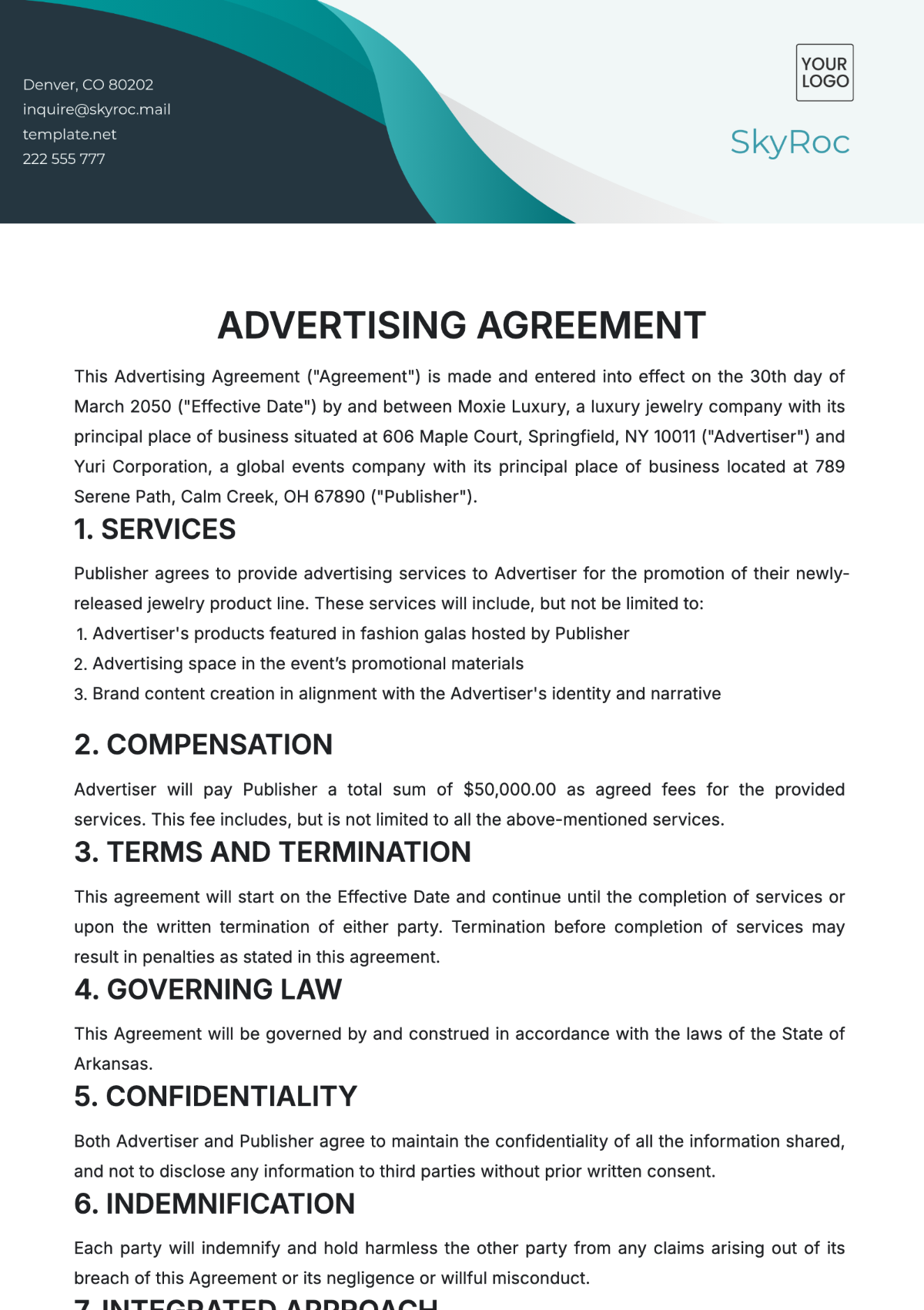
Now that you understand the anatomy of a solid contract, let’s walk through the actual process of turning a free template into a signed agreement.
Step 1: Download and Open the Template
Locate a reputable source that offers a free template in a format you’re comfortable editing—Word, Google Docs, or PDF. Open the file on your computer and save a copy with a unique name that includes the client’s name and date.
Step 2: Fill in the Parties Section
Enter your full legal business name, address, and contact information. Then add the client’s business name, address, and the name of the primary contact person. Double‑check spelling; a typo here can cause legal headaches later.
Step 3: Customize the Scope of Services
Copy the generic scope paragraph and replace it with your bespoke description. Use bullet points for each deliverable to enhance readability. For example:
- Develop three carousel ads for Facebook, each with custom copy and imagery.
- Run a 30‑day A/B test on two ad variations to determine optimal CTR.
- Provide weekly performance reports via email in PDF format.
Step 4: Set the Timeline
Insert specific dates for each milestone. Include a buffer for client review to avoid rushed approvals. For instance, “Creative concepts due by June 5, 2026; client feedback due June 10, 2026; final assets delivered June 15, 2026.”
Step 5: Define Compensation
Write the total fee in both numbers and words (e.g., “$5,000 (Five Thousand Dollars)”). Outline the payment schedule: “50% due upon signing, 25% due on launch, 25% due upon final delivery.” Add any late‑payment interest rates, such as “1.5% per month on overdue amounts.”
Step 6: Insert Performance Metrics
Agree on measurable goals that align with the client’s business objectives. If the client wants a minimum ROAS of 400%, state that explicitly and note how it will be calculated.
Step 7: Add Legal Clauses
Copy the standard confidentiality, indemnification, and termination clauses from the template. Then tailor them to reflect your specific situation—especially any jurisdictional nuances.
Step 8: Review and Proofread
Read the entire agreement aloud. Look for missing placeholders, inconsistent terminology, or grammatical errors. A fresh set of eyes—perhaps a trusted colleague—can spot issues you might have missed.
Step 9: Send for Client Review
Export the document as a PDF to preserve formatting, then email it to the client with a brief note asking for any questions or revisions. Give the client a deadline for feedback (typically 3–5 business days).
Step 10: Sign and Store
Once both parties agree, sign electronically using a reputable e‑signature platform or print, sign, and scan the document. Save a copy in a secure, organized folder—preferably both locally and in the cloud—for easy retrieval.
Real‑World Examples of Template Success
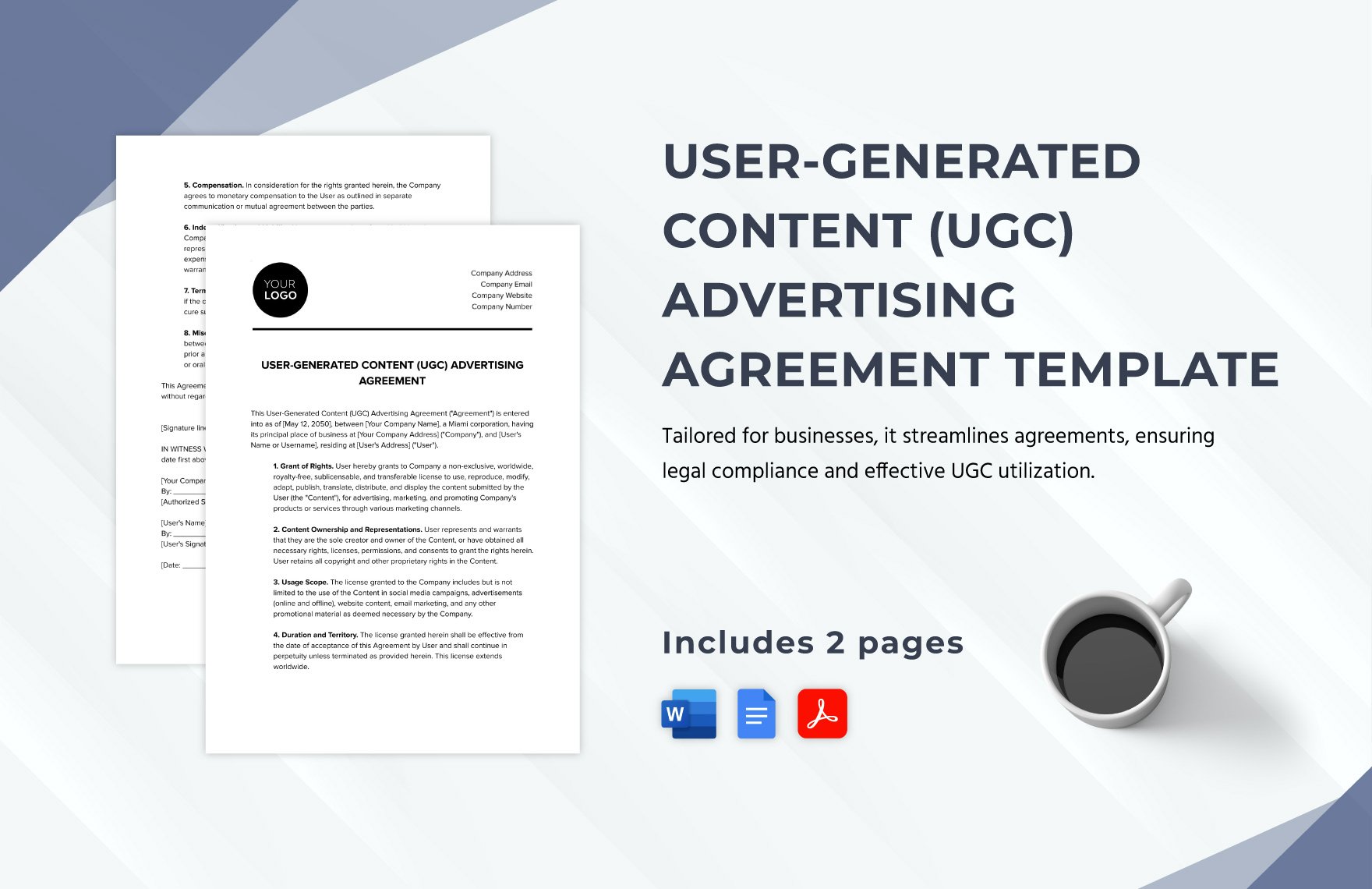
Seeing how others have leveraged a free template can spark ideas for your own contracts. Below are two anonymized case studies that illustrate the template’s flexibility.
Case Study: Boutique Fitness Studio
A local gym wanted to launch a summer promotion on Instagram and TikTok but had no legal expertise. Using a free advertising agreement template, they defined a scope that included three short‑form videos, influencer collaborations, and weekly analytics reports. By customizing the payment schedule to a 30% upfront deposit, the studio secured the budget while keeping cash flow manageable. The clear termination clause allowed them to pause the campaign when the influencer’s engagement dropped, avoiding wasted spend.
Case Study: SaaS Startup
A software‑as‑a‑service company needed a comprehensive PPC campaign across Google Ads and LinkedIn. The startup adapted a free template by adding a performance bonus clause tied to a CPA target. They also included a data‑protection addendum to meet GDPR requirements for European users. The resulting agreement gave both parties confidence, and the campaign exceeded the CPA goal by 12%, triggering the bonus and strengthening the partnership for future projects.
Frequently Asked Questions About Free Advertising Agreements
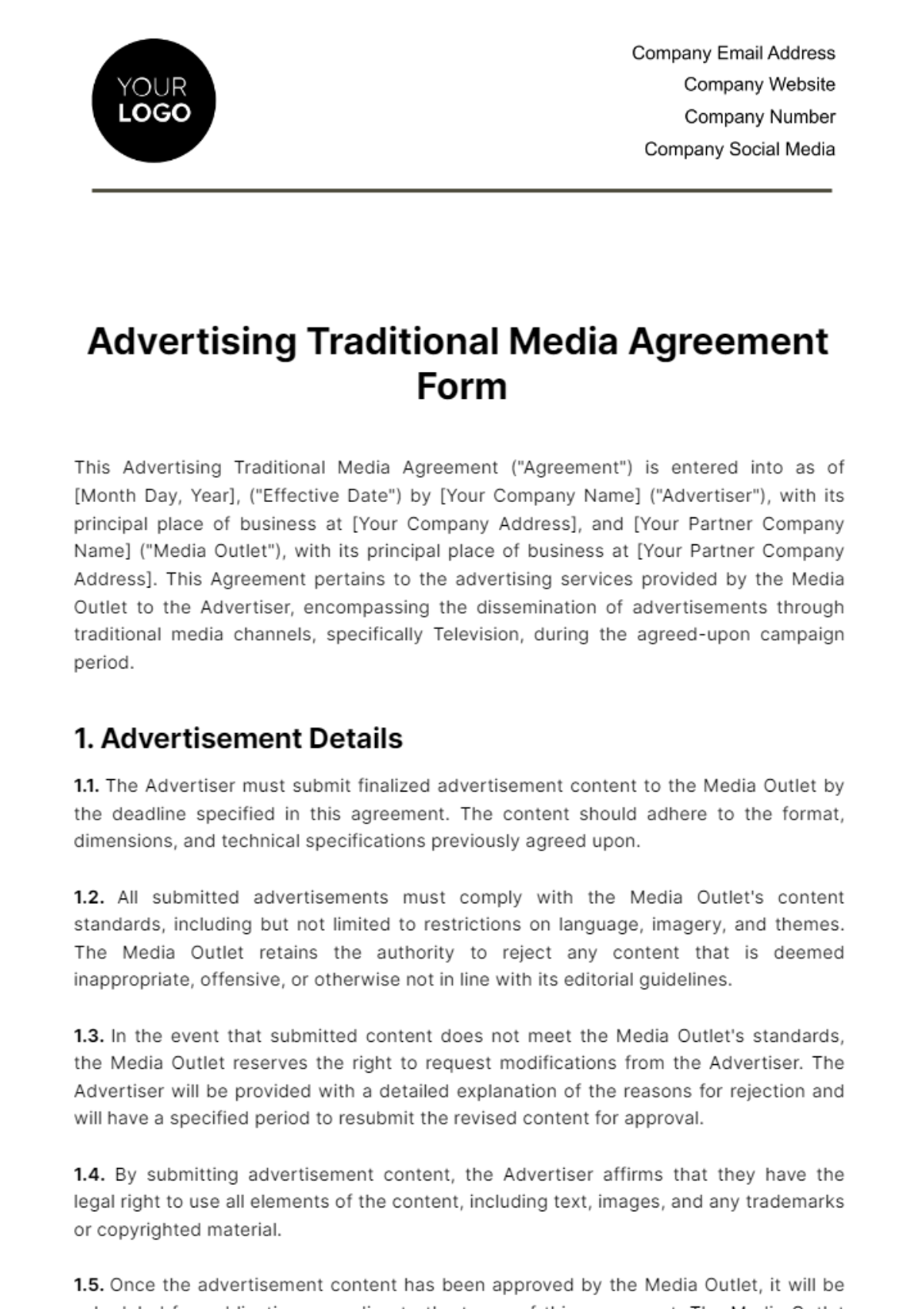
Below are the most common queries from marketers who are new to using templates.
Is a free template legally binding?
Yes, as long as the document includes the essential elements of a contract—offer, acceptance, consideration (payment), and mutual intent to be bound. However, it’s wise to have a legal professional review the final version, especially if you operate in a highly regulated industry.
Can I use the same template for every client?
You can start with the same base, but you should always tailor the scope, payment terms, and jurisdiction clauses to each client’s specific situation. A one‑size‑fits‑all approach can leave gaps that cause disputes later.
What if a client refuses to sign?
Explain that the agreement protects both parties and outlines the deliverables they’ll receive. If they have concerns, use the document as a negotiation tool—adjust clauses where reasonable while keeping your core protections intact.
Do I need to register the agreement with any agency?
No, private contracts between businesses do not require registration. Just ensure both parties retain a signed copy for their records.
How often should I update the template?
At least once a year, or whenever there are changes to relevant laws (e.g., new data‑privacy regulations) or your service offerings. Regular updates keep the contract current and reduce risk.
Conclusion
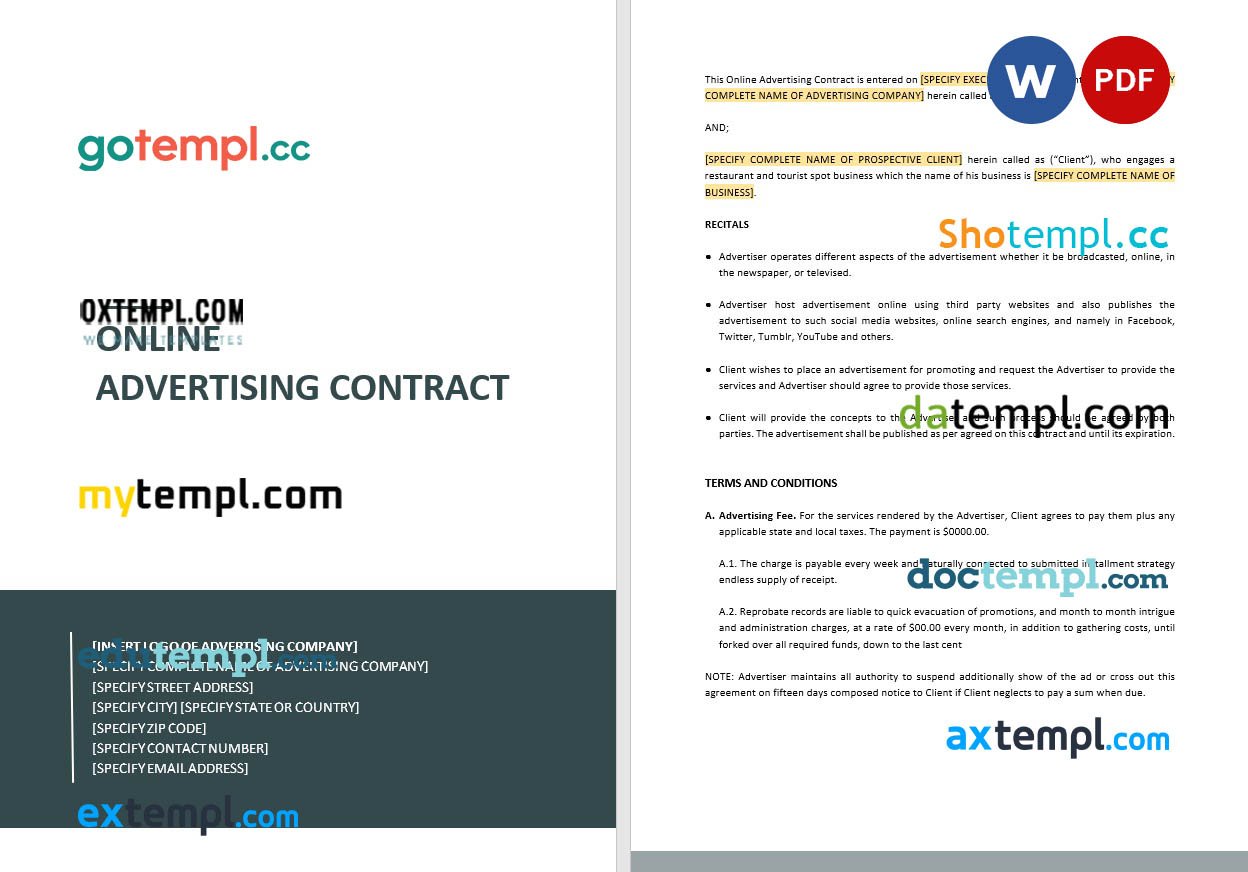
Investing a few hours to customize a Free Online Advertising Agreement Template can save you countless headaches, protect your revenue, and enhance professional credibility. By focusing on clear definitions, detailed scopes, realistic timelines, and solid legal clauses, you create a roadmap that guides both you and your client from the first concept to the final report. Remember to personalize each version, stay vigilant about common pitfalls, and treat the agreement as a living document that evolves with your business. With these practices in place, you’ll not only secure fair compensation but also build lasting relationships based on trust and transparency—exactly the foundation every successful advertising partnership needs.